
Last updated November 2, 2026
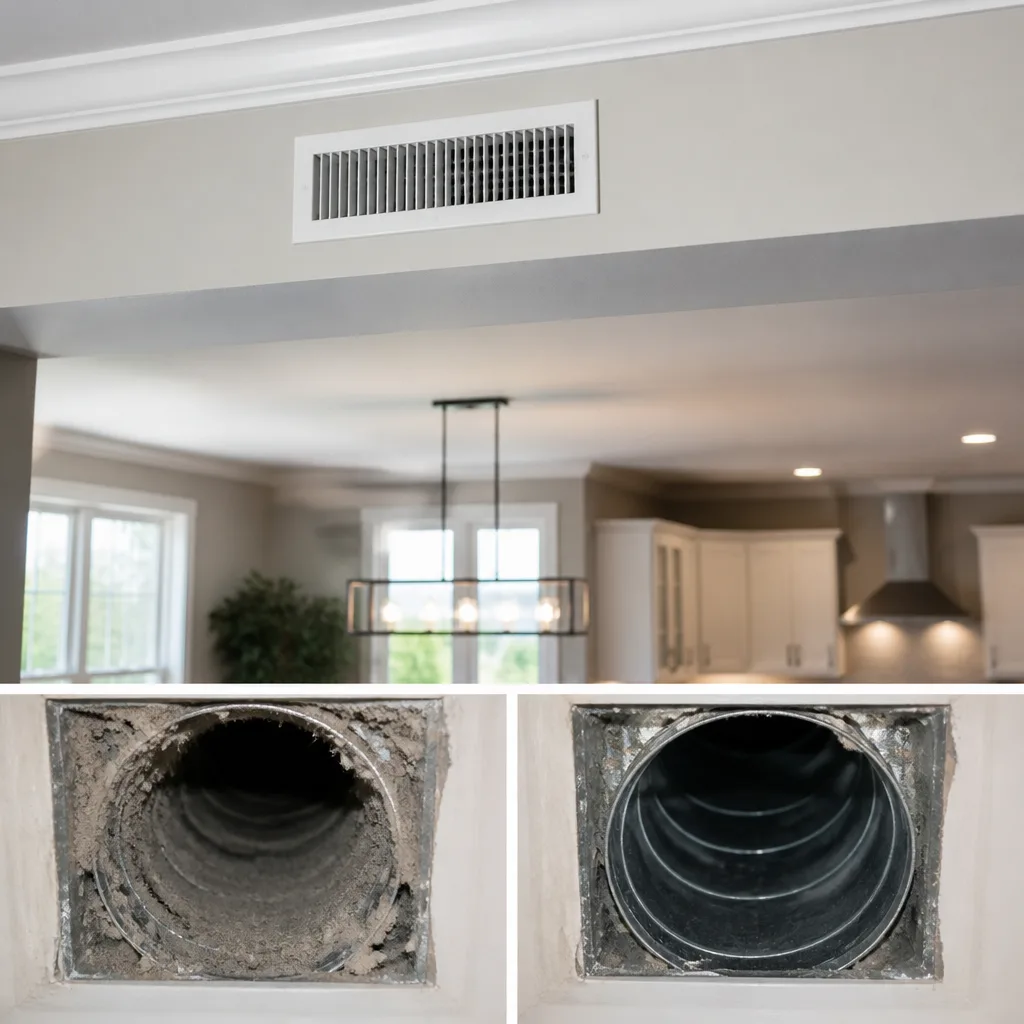 Whole-home duct cleaning
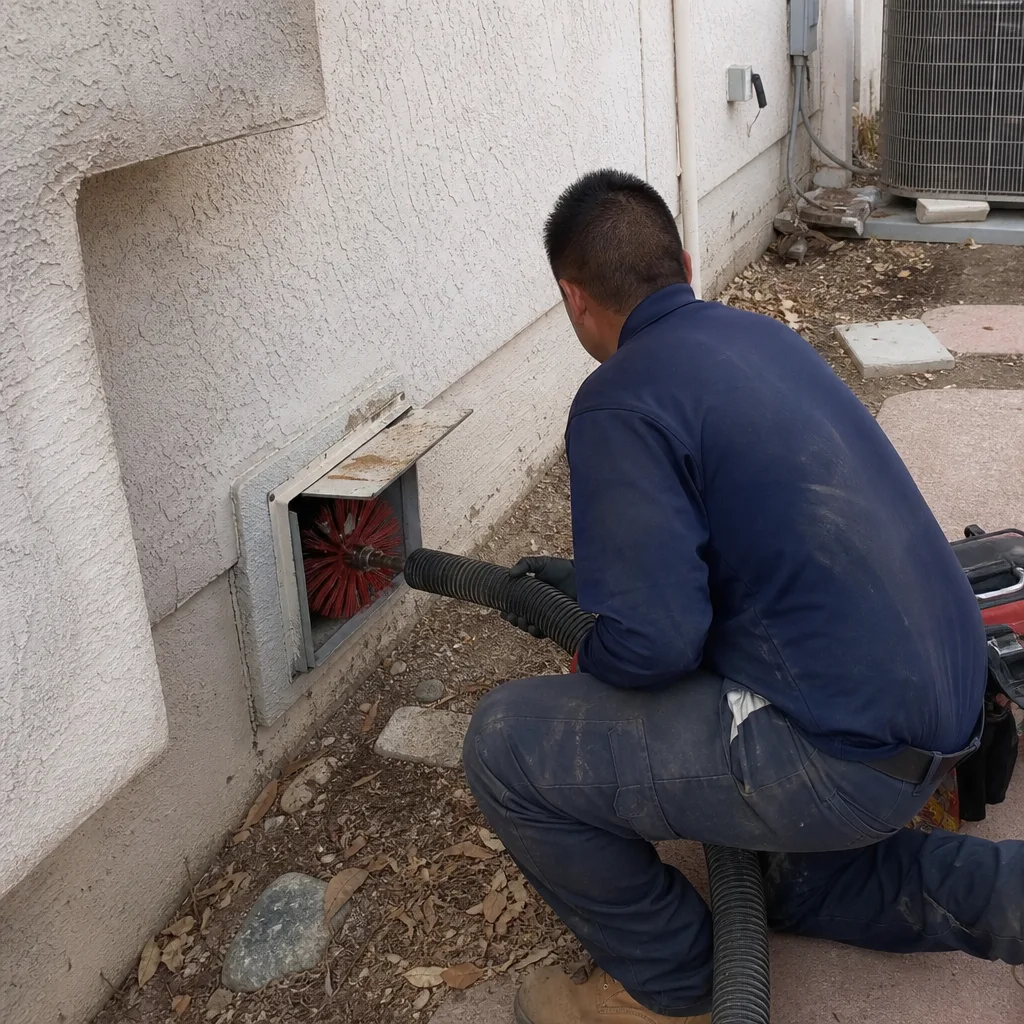
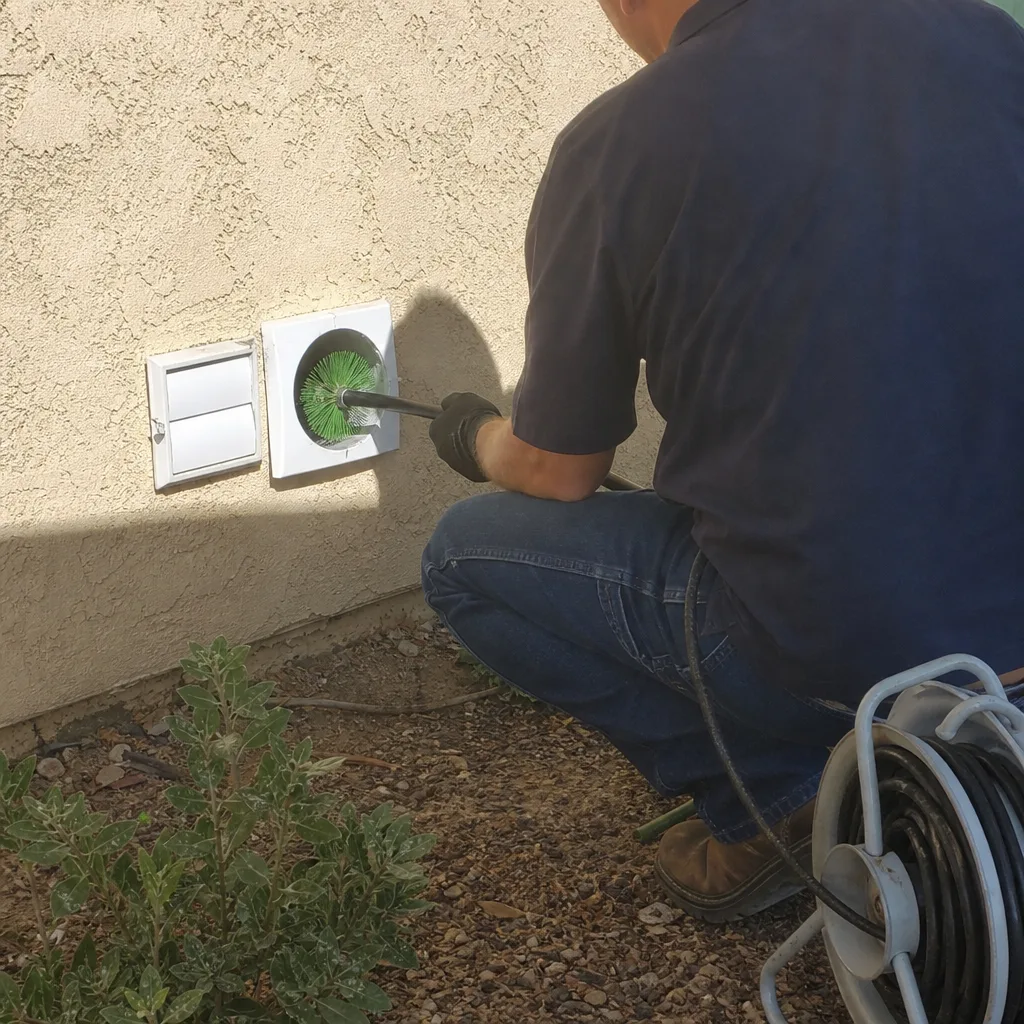
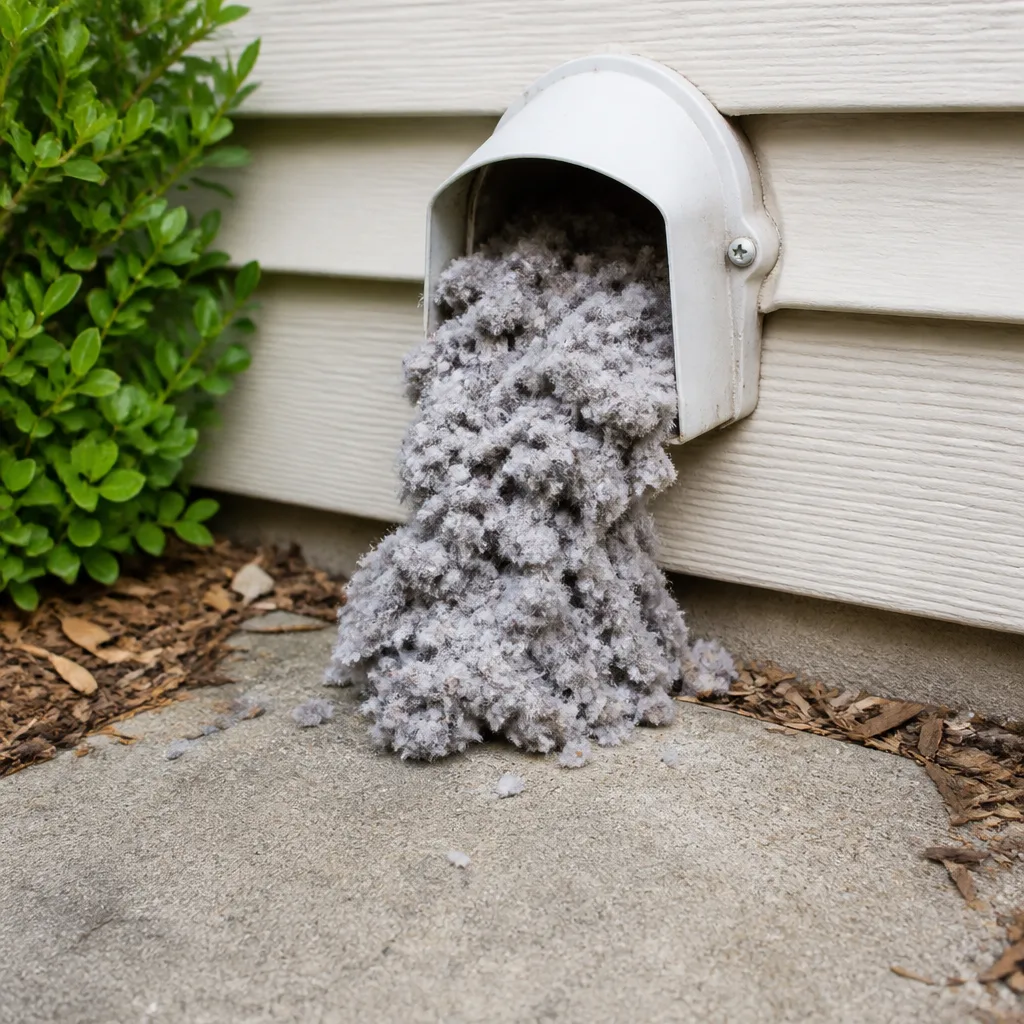 Dryer vent cleaning
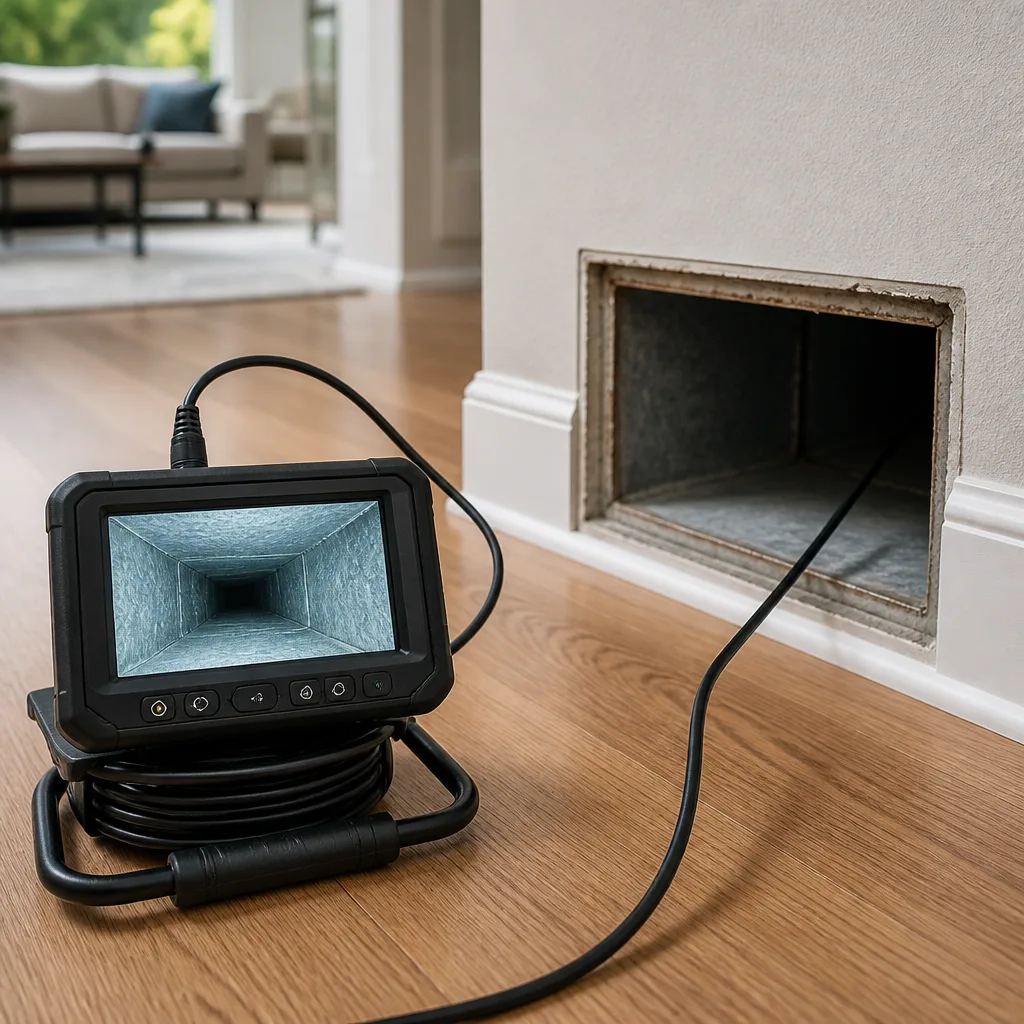 Camera inspection
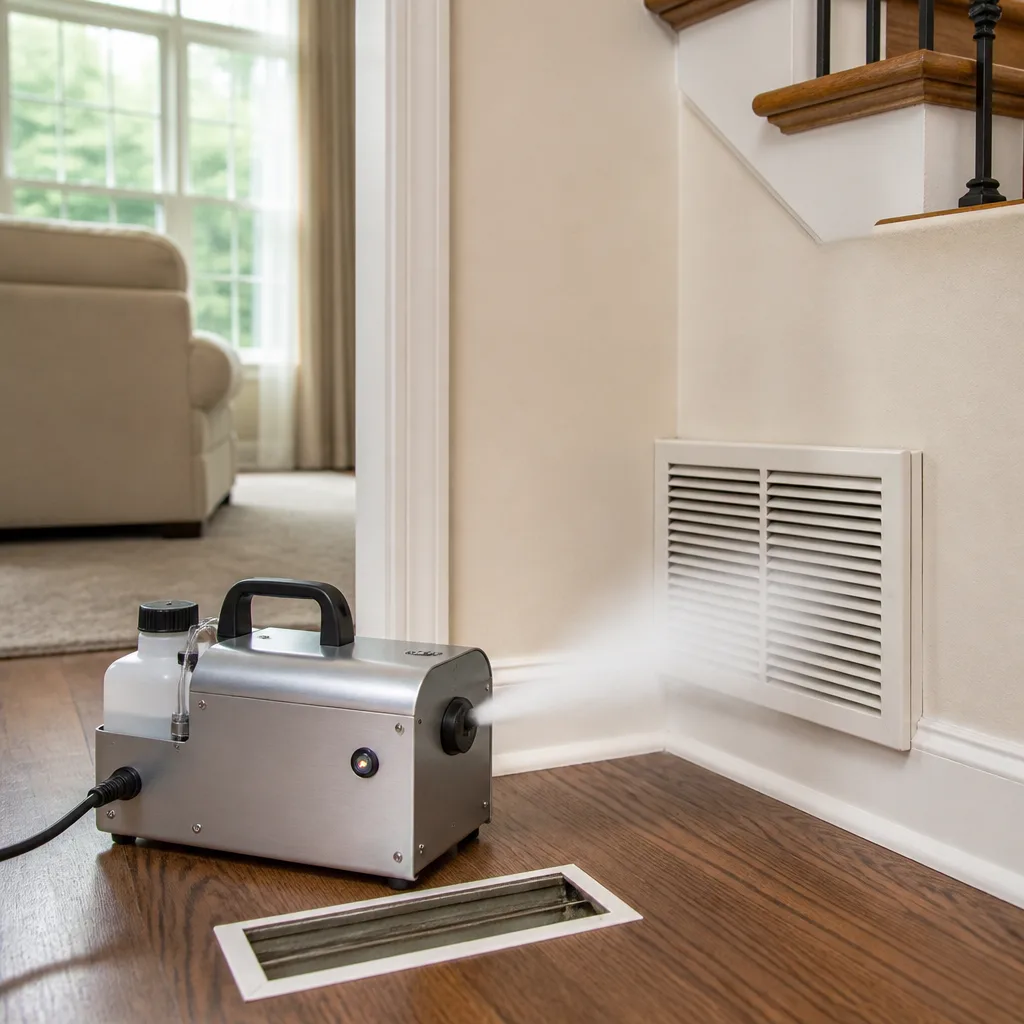 Sanitizing & deodorizing
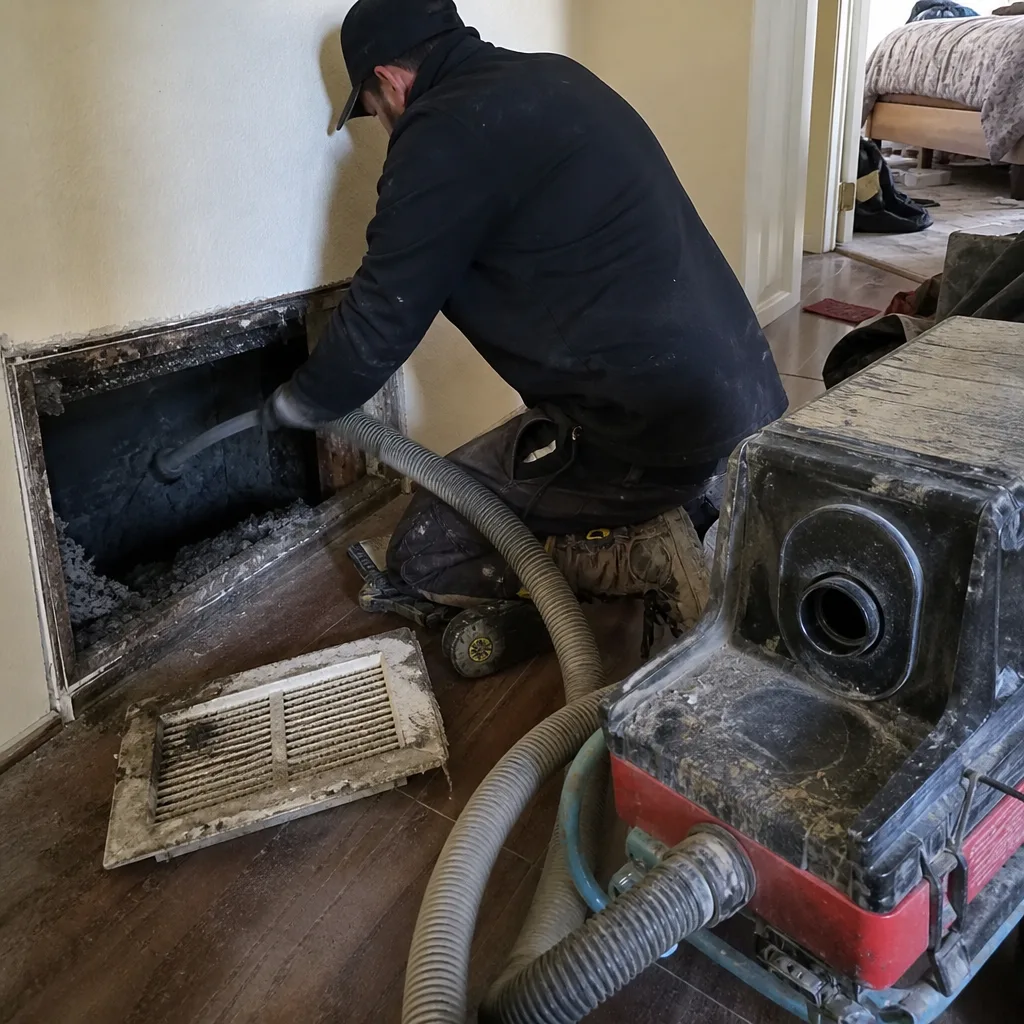
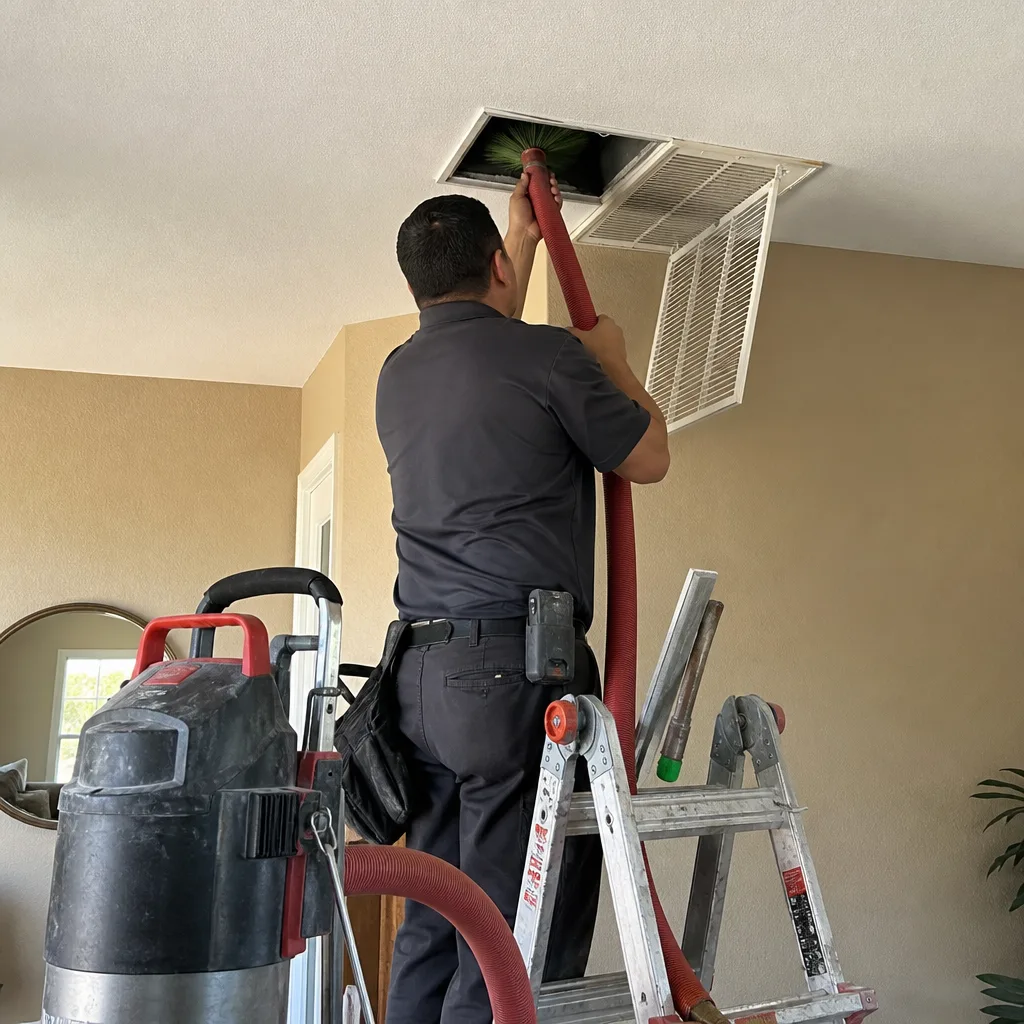
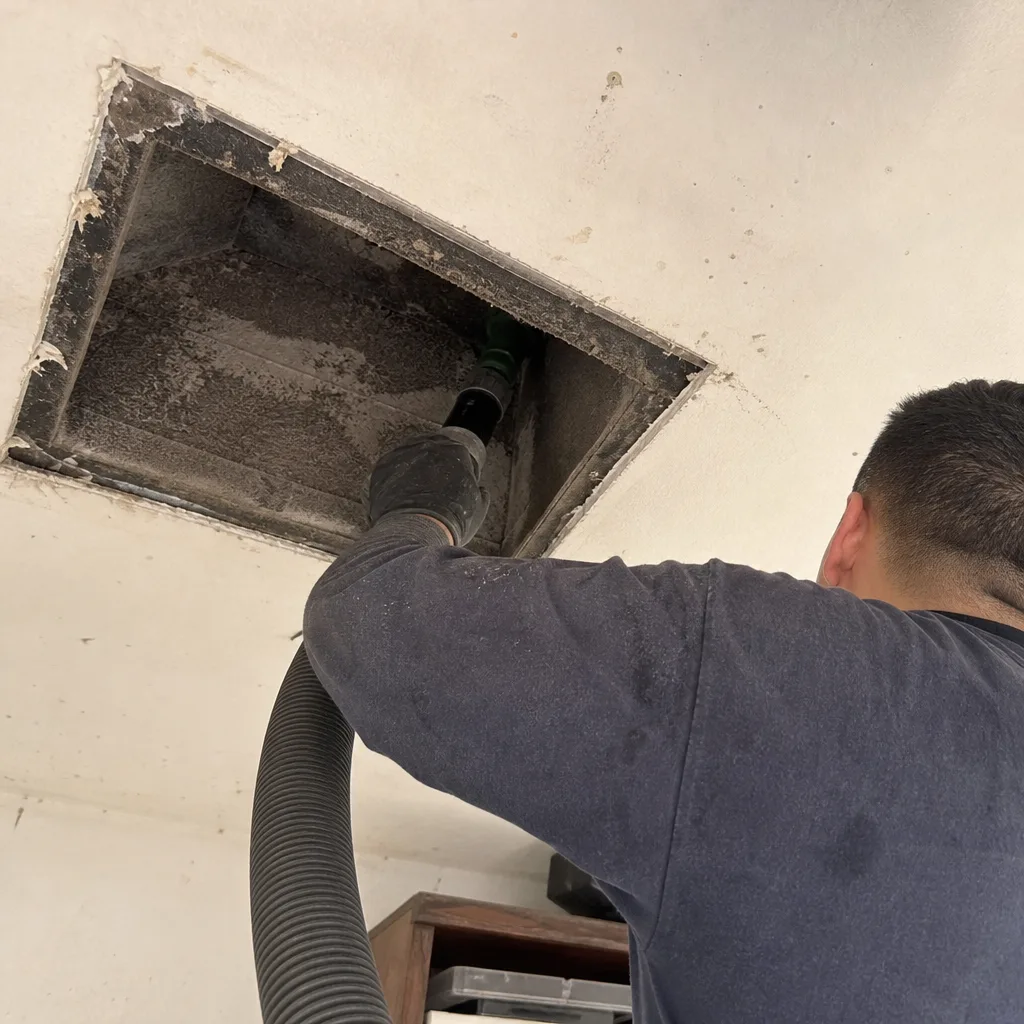
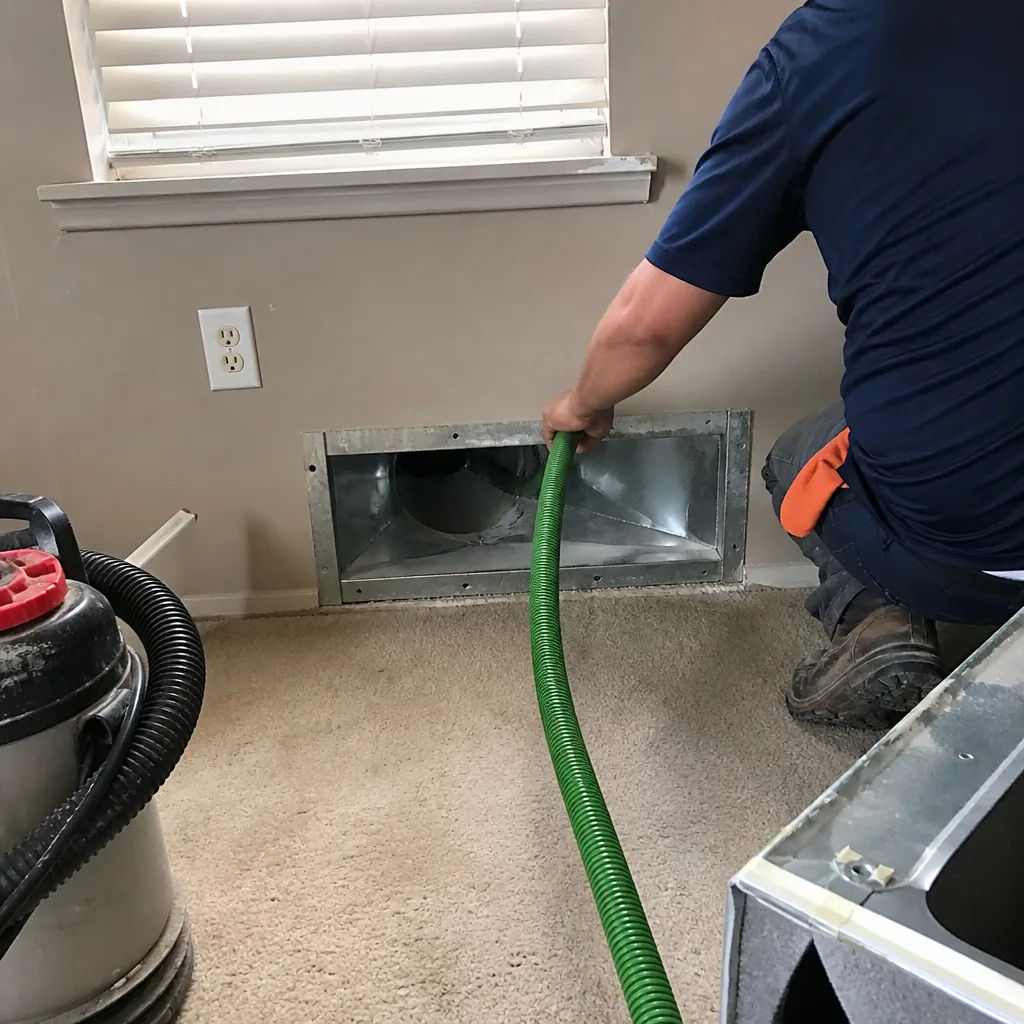
Whole-system duct and dryer vent check with before-and-after photos - you see exactly what came out of your vents
That "$99 whole-house special" is a bait ad - the real number appears once they are in your hallway, or the "clean" is a shop-vac at the register. We photograph the inside of your ducts before and after instead.
Air Duct Cleaning Warning Signs: An Apple Valley Homeowner’s Reference Guide
Visible dust at a supply register is not the first warning sign that your ducts need attention. It’s one of the last. By the time debris is being actively expelled into your living space, the internal duct surfaces and air handler compartment have typically been contaminated for months. This The Complete Air Duct Cleaning Guide for Apple Valley Homeowners explains the subtle, early indicators that Apple Valley homeowners most often overlook, why they matter, and what to do about them before a $300 cleaning becomes a $1,800 repair. You’ll learn how to read your system’s behavior, not just its appearance, and how to distinguish a duct problem from an HVAC equipment problem.
Styles & brands we work with
- Whole-home duct cleaning
- Dryer vent cleaning
- Camera inspection
- Sanitizing & deodorizing
Quick Answer
The most common air duct cleaning warning signs in Apple Valley are uneven room temperatures, filters loading faster than their rated interval, a musty odor that appears only when the system first starts, and visible debris at supply registers. Any one of these can indicate accumulated dust, construction debris, or biological growth inside the ductwork. If you notice two or more, schedule our Air Duct Cleaning services for a professional inspection.
Table of Contents
- The First Warning Signs Apple Valley Homeowners Miss
- How to Distinguish a Duct Problem from an HVAC Equipment Problem
- Apple Valley-Specific Triggers: Renovation, Roof Work, and Rodents
- What Visible Mold at a Register Actually Indicates
- The Documentation Habit: Photographing Your Grilles Annually
- The Real Cost of Ignoring Warning Signs in Apple Valley
- Common Mistakes to Avoid
- When to Call a Professional
- Frequently Asked Questions
- The Bottom Line
The First Warning Signs Apple Valley Homeowners Miss
Most people wait until they see dust blowing out of a register before they think about duct cleaning. That’s understandable, but it’s also upside down. The earliest indicators are behavioral, not visual. They show up as small changes in how your HVAC system performs day to day, and they’re easy to rationalize away as normal wear or seasonal variation.
In Apple Valley, where summer temperatures routinely exceed 100°F and the cooling season runs from May through October, your AC system works harder than it would in most of California. That means duct contamination compounds faster here. High desert dust, fine enough to stay suspended in air, gets drawn into the return side of the system whenever outdoor air infiltrates through the building envelope. Once inside, it doesn’t leave on its own.
Uneven Room Temperatures That Develop Gradually
One room has always been a little warmer than the others. That’s normal for most houses and usually reflects distance from the air handler, sun exposure, or insulation differences. What’s not normal is when a room that used to be comfortable gradually becomes warmer over one or two cooling seasons.
Duct contamination restricts airflow. As dust, pet hair, and construction debris accumulate on interior duct surfaces, the effective diameter of the duct shrinks. A 8-inch round duct with a half inch of accumulated material on its walls has lost roughly 14% of its cross-sectional area. That’s enough to reduce airflow to the farthest register on that branch. The room it serves gets warmer. The thermostat, located in a different room, doesn’t notice. Your energy bill does.
If you’ve ruled out a closed damper, a dirty supply register face, and a failing window seal, restricted airflow from duct contamination should be next on the list. Ask for an Air Duct Cleaning in Apple Valley assessment that includes a visual inspection of branch runs, not just the main trunk line.
Filter Loading Faster Than Its Rated Interval
Your filter has a rated service life, usually one to three months depending on the MERV rating and manufacturer. If you find yourself changing it more often than the rating suggests, something is adding particulate load to the system beyond normal household activity.
That something is usually one of three things: a return leak pulling in attic or crawlspace air, duct contamination being recirculated, or a disconnected return duct. All three are duct problems. None are fixed by changing the filter more often.
Here’s the diagnostic sequence we recommend to Apple Valley homeowners:
- Note the filter brand, MERV rating, and install date when you put in a new filter.
- Check it after 30 days, regardless of the rated interval.
- If the filter is visibly loaded at 30 days, inspect the return grille for gaps or loose connections.
- Remove a supply register in the same room and look inside with a flashlight. Gray or brown accumulation on the duct walls confirms contamination.
- Call a contractor who can inspect the return plenum and branch runs, not just sell you a filter subscription.
A Musty Odor That Only Appears at Startup
This is one of the most commonly ignored warning signs because it’s intermittent. The system kicks on, you catch a faint musty smell for a minute or two, and then it’s gone. It’s easy to tell yourself it’s just condensation or an old house smell.
What’s actually happening is this: when the blower shuts off, humid air in the ductwork settles. If organic material is present inside the ducts, that material holds moisture. When the blower starts again, the first few seconds of airflow carry that odor into the room. Once the system has been running for a minute or two, the odor dissipates because the material has been dried by moving air.
The organic material is often years of accumulated skin cells, pet dander, and dust. It can also be something more concerning: rodent nesting material, mold growth on accumulated dust, or a dead insect population inside the air handler cabinet. The odor is the first detectable sign. It won’t get better on its own. It will get worse as humidity increases during the brief Apple Valley monsoon season in July and August.
How to Distinguish a Duct Problem from an HVAC Equipment Problem
Ducts and equipment are both part of one system, but they fail differently. A coil leak, a failing compressor, or a bad blower motor produces a specific set of symptoms: no cooling, insufficient cooling, strange noises from the equipment cabinet, or refrigerant line icing. A duct problem produces subtler symptoms that are often misattributed to the equipment.
This matters because the fix is different. A homeowner who misreads a duct problem as an equipment problem may pay for a service call and get told the system is fine, while the actual problem continues. Or worse, they may be sold a new condenser when the real issue is a collapsed return duct.
Register Airflow Patterns as a Diagnostic Tool
Airflow at the register is one of the most useful diagnostic signals available to a homeowner. You don’t need instruments. You need a piece of tissue paper and five minutes.
Step 1: With the system running, hold a single ply of tissue paper about one inch from each supply register in the house. Note whether the tissue is pushed firmly, flutters weakly, or barely moves.
Step 2: Compare registers on the same floor. In a correctly functioning duct system with no contamination, airflow should feel similar across registers on the same level. Branch runs in an Apple Valley single-story home are usually short enough that pressure drop differences are minimal.
Step 3: If one register shows significantly weaker airflow than its neighbors, mark it. Then remove the register face and check whether the duct boot is full of dust or the damper is partially closed. If neither is obvious, the restriction is likely in the branch run itself.
Step 4: Check return airflow. Hold a tissue near the return grille with the system running. It should be pulled firmly against the grille. Weak return suction suggests a blocked or disconnected return duct, which causes a cascade of problems including negative pressure that pulls in attic dust and insulation through any available gap.
The key distinction: if airflow is weak at every register, the problem is likely the equipment (blower, filter, coil) or a severely collapsed trunk line. If airflow is weak at one or two registers only, the problem is localized to those branch ducts. That’s a duct issue, and it’s what Air Duct Repair in Apple Valley addresses.
Symptoms That Point to Equipment, Not Ducts
- No airflow at any register while the system is running: blower failure, seized motor, or total duct collapse at the plenum.
- Airflow is strong but not cold: refrigerant charge, compressor, or coil issue, not a duct issue.
- Ice on the refrigerant line at the outdoor unit: airflow restriction somewhere in the system, which can be a dirty coil, a blocked filter, or severe duct restriction. In this case the duct issue may be the root cause, but the immediate problem is equipment-level.
- Banging or rattling from the air handler cabinet: blower wheel or motor bearing issue.
- Airflow is weak at every register but the filter is new: blower capacitor, motor, or coil restriction.
Here’s the practical takeaway from Choosing the Right Air Duct Cleaning Brand: A Buyer’s Guide for Apple Valley: if you have an equipment failure, you need an HVAC technician. If the system runs fine but specific rooms are uncomfortable, the filter loads early, or there’s a startup odor, you need a duct specialist. And if the duct work is damaged, disconnected, or leaking, cleaning alone won’t solve it. The repair has to come first.
Apple Valley-Specific Triggers: Renovation, Roof Work, and Rodents
Apple Valley’s housing stock is predominantly single-family homes built between the 1960s and early 2000s, with a significant share of flex-duct systems running through unconditioned attics. That’s important because the attic is where most duct problems begin, and most homeowners never look there.
Three Apple Valley-specific triggers account for a large share of the contaminated systems we see. None of them are caused by daily living. All of them are preventable or at least detectable early if you know what to look for.
Post-Renovation Debris Infiltration
Apple Valley has an active remodeling market, with kitchen and bathroom renovations, garage conversions, and room additions happening across neighborhoods from Sycamore Rocks to Desert Knolls. Any renovation that involves drywall cutting, flooring removal, or attic access produces fine particulate that finds its way into the duct system.
During a remodel, return registers often get covered with plastic and tape, but supply registers rarely do. The blower kicks on during construction, pulls dusty air through the return, and distributes it through the entire duct network. Drywall dust is especially troublesome because it’s fine enough to coat duct interior surfaces and sticky enough to adhere.
If you’ve had renovation work done in the last 12 months and haven’t had the ducts inspected, assume they’re contaminated. The question is how badly. A visual inspection with a camera will answer that in about 20 minutes.
Duct Contamination After Roof Work or Attic Access
Roof replacement is common in Apple Valley, and every roof job involves some degree of attic disturbance. The same is true for adding insulation, running new electrical, or installing a new bathroom fan. Any time a contractor spends time in the attic, debris gets kicked up and settles on the duct network.
Flex duct is especially vulnerable because its outer jacket is thin. If a worker steps on a flex run, the inner liner can tear or separate from the end fitting without the outer jacket showing obvious damage. That creates a path for attic insulation and dust to enter the airstream directly.
After any attic work, do this:
- Remove two or three supply registers and look inside the duct boot with a flashlight.
- Check for pink or yellow fiberglass insulation particles, which are visually distinctive.
- Photograph what you see so you have a baseline.
- If you find insulation inside the boot, call a duct specialist. This is not a filter problem.
Signs of Rodent Activity in Attic-Run Flex Duct
Apple Valley’s high desert location means rodent pressure is real. Rats and mice seek out attics for warmth in winter and shade in summer. Flex duct is an inviting material: the outer jacket is easy to chew through, and the inner liner provides nesting material.
Here’s what to look for:
- Rub marks or droppings near the attic access hatch.
- Scratching sounds from the attic, particularly at dawn and dusk.
- Visible tears or holes in flex duct runs visible from the attic access point.
- Debris falling out of supply registers: small bits of insulation, nesting material, or rodent droppings.
- A persistent odor that doesn’t match any known source inside the house.
If rodents have been in the ductwork, cleaning must include more than surface vacuuming. The contaminated duct sections may need replacement. Rodent debris carries hantavirus risk in the high desert, and no amount of vacuuming makes contaminated liner safe. This is a case where Air Duct Repair in Apple Valley is the starting point, not an afterthought.
What Visible Mold at a Register Actually Indicates
Visible mold at a supply register is alarming, and it should be. But it’s also a symptom of conditions that have been present in the system for a while. Mold doesn’t grow on clean metal surfaces in 24 hours. By the time you see it at the register, the interior of the duct system has been holding enough moisture and organic material to support fungal growth for weeks or longer.
Here’s the sequence, in order: dust and organic debris accumulate on duct surfaces. The system cools the air, and condensation forms on the inside of the duct during the cooling season. The accumulated dust absorbs that moisture. Fungal spores, always present in outdoor air, land on the moist organic material and begin to grow. The colony spreads across the duct surface, and eventually becomes visible at the register face where air exits.
What you’re seeing at the register is not the beginning of the problem. It’s the leading edge of a biological contamination issue that has already established itself inside the system.
Why Surface Cleaning Without Negative-Pressure Extraction Makes It Worse
This is the single most important point for Apple Valley homeowners to understand about mold at a register. If you hire someone to clean the visible mold without proper containment and negative-pressure extraction, you can make the problem worse.
Here’s why: mold reproduces by spores. When you agitate a mold colony mechanically, you release spores into the air. If the cleaning is done without negative-pressure containment, those spores are distributed through the living space or remain suspended in the duct system to recolonize later.
Professional-grade remediation uses equipment designed to prevent that. We run Nikro HEPA vacuum equipment and Abatement Technologies negative-air containment, which creates a controlled negative pressure environment inside the duct system during cleaning. Spores and particulates are drawn into HEPA filtration rather than released into the home. That is the difference between removing contamination and redistributing it.
The Nikro HEPA units we use filter down to 0.3 microns at 99.97% efficiency. Mold spores range from 3 to 40 microns. The math works. But only if the equipment is actually running and the containment is set up correctly.
If you see mold at a register, do not attempt a DIY cleaning. Do not run the system on fan-only in the hope of drying it out. Call a contractor who can inspect the extent of the contamination, determine whether the duct material can be cleaned or must be replaced, and perform the work under negative pressure.
The Documentation Habit: Photographing Your Grilles Annually
Warning signs are only recognizable when you have a baseline to compare against. Most Apple Valley homeowners can’t tell you whether a register looked cleaner or dirtier a year ago because they never looked at it. Memory is unreliable. Photographs are not.
Here’s the practice we recommend: once a year, at the start of the cooling season in April or May, photograph every supply register and return grille in your home. Remove each register face and take two photos: one of the face itself, and one looking into the duct boot with a flashlight. Save them in a folder on your phone with the date.
Why April or May? Because it’s before the peak cooling season starts, when the system is about to run hard for six months. You’re documenting the condition at its cleanest, assuming regular filter changes. Six months later, if you take the same photos, the difference will tell you something useful.
This practice turns subjective impressions (“I think the ducts are getting dirtier”) into objective comparison data. When a contractor tells you the ducts are contaminated, you can look at your own photos and know whether that’s true. When a contractor tells you the ducts are clean, you can verify that against your photos too.
The documentation habit also helps with home sales. Buyers in Apple Valley increasingly ask about duct condition during inspections. If you’ve been photographing your registers for three years, you have evidence that the system has been maintained. That’s a selling point in a market where disclosure matters.
On the flip side, if you’re buying a home in Apple Valley and the seller can’t provide any duct maintenance history, schedule a duct inspection before closing. The cost is trivial compared to buying a house with a contaminated or damaged duct system. Our team at Duct Cleaning Apple Valley home service area includes inspection and camera documentation as part of every estimate.
The Real Cost of Ignoring Warning Signs in Apple Valley
Warning signs are cheap to address early and expensive to ignore. The math is straightforward once you understand what actually happens when contaminated ducts keep operating.
Restricted airflow from accumulated dust forces the blower to work against higher static pressure. The system runs longer to satisfy the thermostat. Energy consumption increases. In Apple Valley, where air conditioning runs for thousands of hours annually, a 10% efficiency loss translates to a measurable increase in summer utility bills. Pacific Gas & Electric rates have risen steadily over the past decade in the high desert, which makes every percentage point of efficiency worth more than it was a few years ago.
Beyond energy cost, there’s equipment cost. A blower motor that runs against high static pressure runs hotter. Motor windings degrade faster. A blower motor replacement in Apple Valley typically costs between $600 and $1,200 installed, depending on the system. That’s more than most professional duct cleaning jobs in this market.
If damaged duct work goes unrepaired, the cost escalates further. A disconnected return duct pulls attic air into the system 24 hours a day, loading the coil with fine dust and forcing the compressor to work harder. A failed compressor in a residential split system can cost $1,800 to $3,500 to replace, and sometimes the whole condenser is condemned instead. The original cause might have been a $400 duct repair.
And if mold or rodent contamination spreads through the system, the remediation cost dwarfs cleaning. Duct replacement in a typical Apple Valley single-story home runs $3,000 to $8,000 depending on system size and accessibility. The cleaning that might have prevented it would have cost a fraction of that.
The sequence is almost always the same: subtle early symptoms ignored for one or two seasons, then a visible problem appears, and by then the internal damage is done. We see it repeatedly in homes throughout Apple Valley, from more established neighborhoods near Kiowa Road to newer construction east of Apple Valley Road.
Common Mistakes to Avoid
- Treating filter loading as a filter problem. A filter that loads early is telling you something about the air upstream. Changing the filter more often masks the symptom without addressing the contamination in the duct system.
- Assuming new construction means clean ducts. New homes in Apple Valley often have significant construction debris inside the ducts because the HVAC system runs during the final finishing stages when drywall dust is everywhere. New construction is not clean construction.
- Hiring the cheapest available cleaning service. Duct cleaning is an equipment-driven process. A brush-and-shop-vac approach cannot extract contaminants under negative pressure. If the quote is dramatically below market, ask what equipment will be used and whether it includes HEPA extraction.
- Ignoring a startup odor because it fades quickly. A musty smell that disappears after two minutes is still a contamination marker. The moisture cycle that produces it doesn’t fix itself.
- Cleaning without first addressing duct damage. If a return duct is disconnected or a branch run is collapsed, cleaning the system is wasted effort. The damage must be repaired first, or contamination will return within months.
- Assuming duct cleaning is always a DIY project. Some maintenance tasks are DIY-friendly. Removing biological contamination or rodent debris from an enclosed duct system under negative pressure is not one of them. The equipment matters.
- Skipping the post-cleaning inspection. If a contractor won’t show you before-and-after photos from inside your own ducts, you can’t verify the work was done. Request camera documentation of the cleaned surfaces.
When to Call a Professional
Call a professional when you have two or more of the warning signs described in this guide occurring simultaneously, or when any single sign is severe enough to suggest biological contamination or duct damage. Weak airflow at specific registers that persists after replacing the filter, a musty startup odor that won’t resolve, visible debris at register faces in more than one room, or any sign of rodent activity in the attic all warrant a professional inspection.
If you’ve had renovation, roof work, or attic access in the last year, schedule an inspection as a precaution even if you haven’t noticed symptoms. The cost of inspection is small compared to the cost of ignoring a developing problem. Dryer Vent Cleaning in Apple Valley is also worth scheduling separately if you haven’t had the dryer exhaust line serviced, since lint accumulation is a fire hazard unrelated to the HVAC ducts.
Duct Cleaning Apple Valley offers free estimates in Apple Valley. Call (855) 619-4509 to schedule an inspection with camera documentation of your duct interiors.
Frequently Asked Questions
Your air ducts likely need cleaning if you notice two or more of these signs: visible dust or debris at supply registers, filters loading faster than their rated interval, uneven room temperatures that developed gradually, or a musty odor at system startup. A professional camera inspection is the only way to confirm the internal condition of the ducts.
For most Apple Valley homes, professional duct cleaning is appropriate every 3 to 5 years, with more frequent cleaning recommended for homes with pets, homes located near dirt roads or active construction, and homes where occupants have respiratory sensitivities. Homes that have undergone renovation should be inspected immediately regardless of the last cleaning date.
A musty odor at system startup indicates that organic material inside the ductwork is holding moisture, which typically means accumulated dust, pet dander, or biological growth on interior duct surfaces. The odor appears when the blower first kicks on and disappears as airflow dries the material. Professional cleaning with mechanical agitation and HEPA extraction removes the organic accumulation and the odor.
Yes. Contaminated ducts restrict airflow, which forces the blower to work harder and the system to run longer to satisfy the thermostat. In Apple Valley’s cooling-heavy climate, this translates to higher electricity bills during the summer months. Cleaning the ducts and replacing a loaded filter restores airflow and reduces the run time needed to maintain temperature.
Duct cleaning removes accumulated dust, debris, and biological growth from inside the duct system. Duct repair addresses physical damage: disconnected sections, collapsed flex runs, torn outer jackets, and leaking connections. If the ducts are damaged, repair must happen before or alongside cleaning. Call (855) 619-4509 to determine which service your system needs.
Yes. Professional-grade duct cleaning uses mechanical agitation, typically a Rotobrush system, combined with Nikro HEPA vacuum extraction and negative-air containment equipment. This captures particulates rather than redistributing them. A brush-and-shop-vac approach cannot create negative pressure and may actually release more contaminants into the living space than it removes. The equipment is the difference.
The Bottom Line
Air duct warning signs in Apple Valley are usually subtle at first: a room that gradually warms, a filter that loads early, a faint smell at startup, or a register that looks dull and dusty. None of these signals fix themselves. Each one indicates that the duct system is accumulating material it wasn’t designed to carry. The good news is that early detection is cheap and the fix is straightforward: professional cleaning with equipment you can name, repair where needed, and a documentation habit that makes future warning signs obvious. If you’ve noticed any of the signs in this guide, schedule an inspection. The cost of looking is small. The cost of waiting is predictable and growing.
Written by the team at Duct Cleaning Apple Valley, serving Apple Valley since 2013.
See the difference
 Before
 After
 Before
 After
 Before
 After