
Last updated November 2, 2026
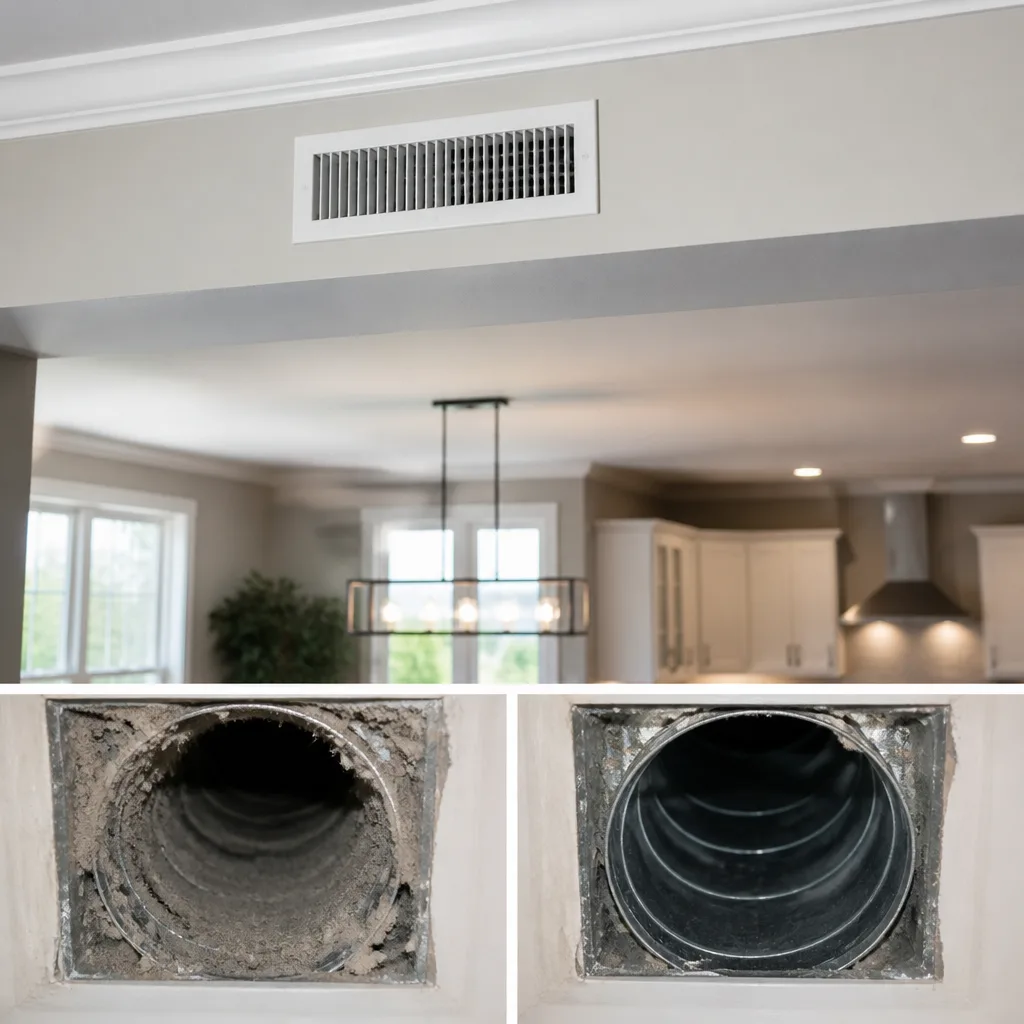 Whole-home duct cleaning
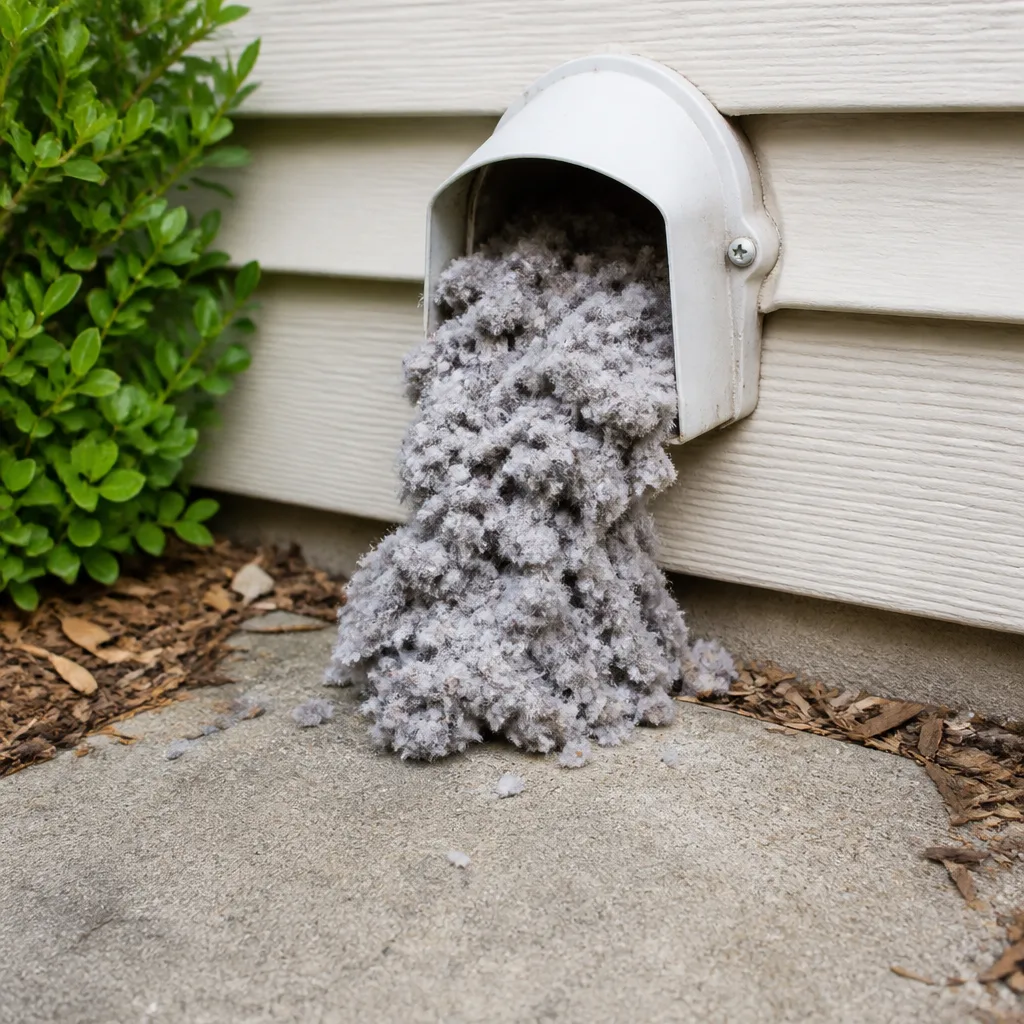 Dryer vent cleaning
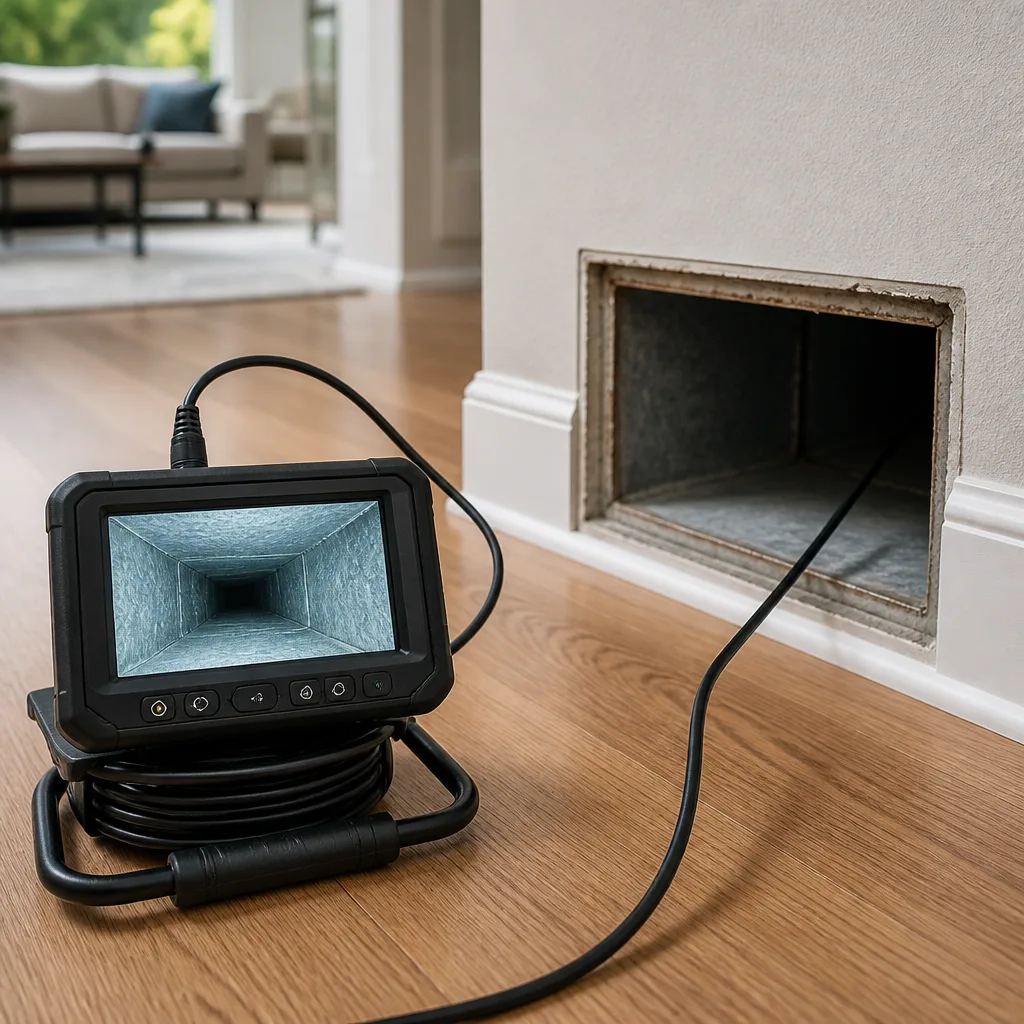 Camera inspection
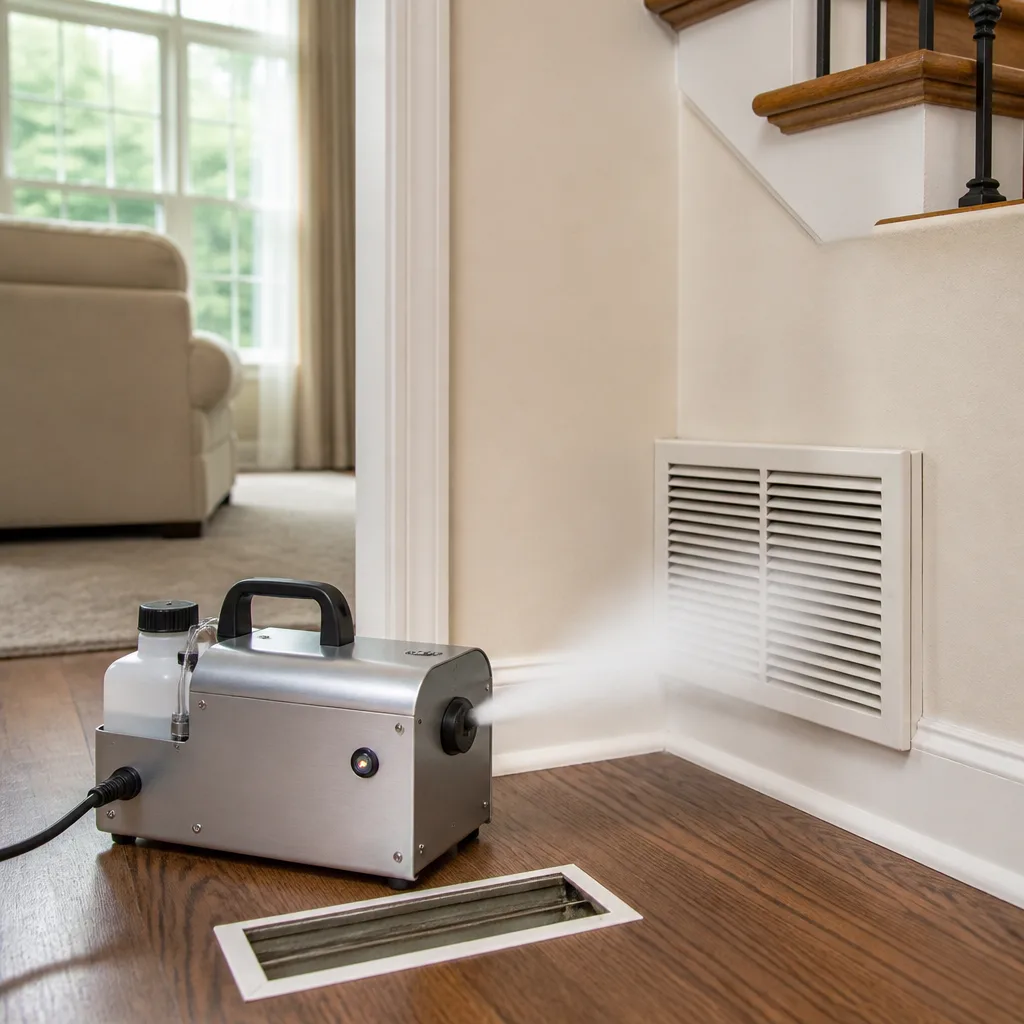 Sanitizing & deodorizing
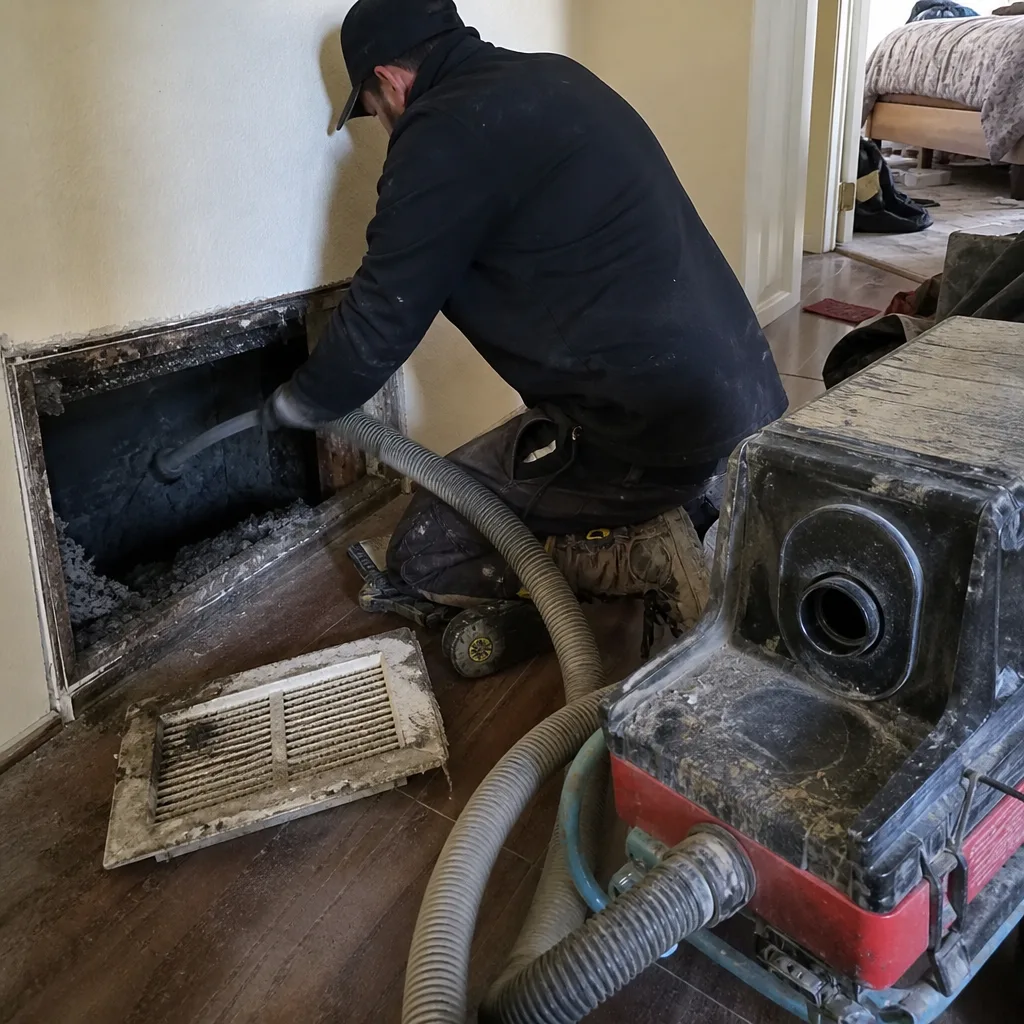
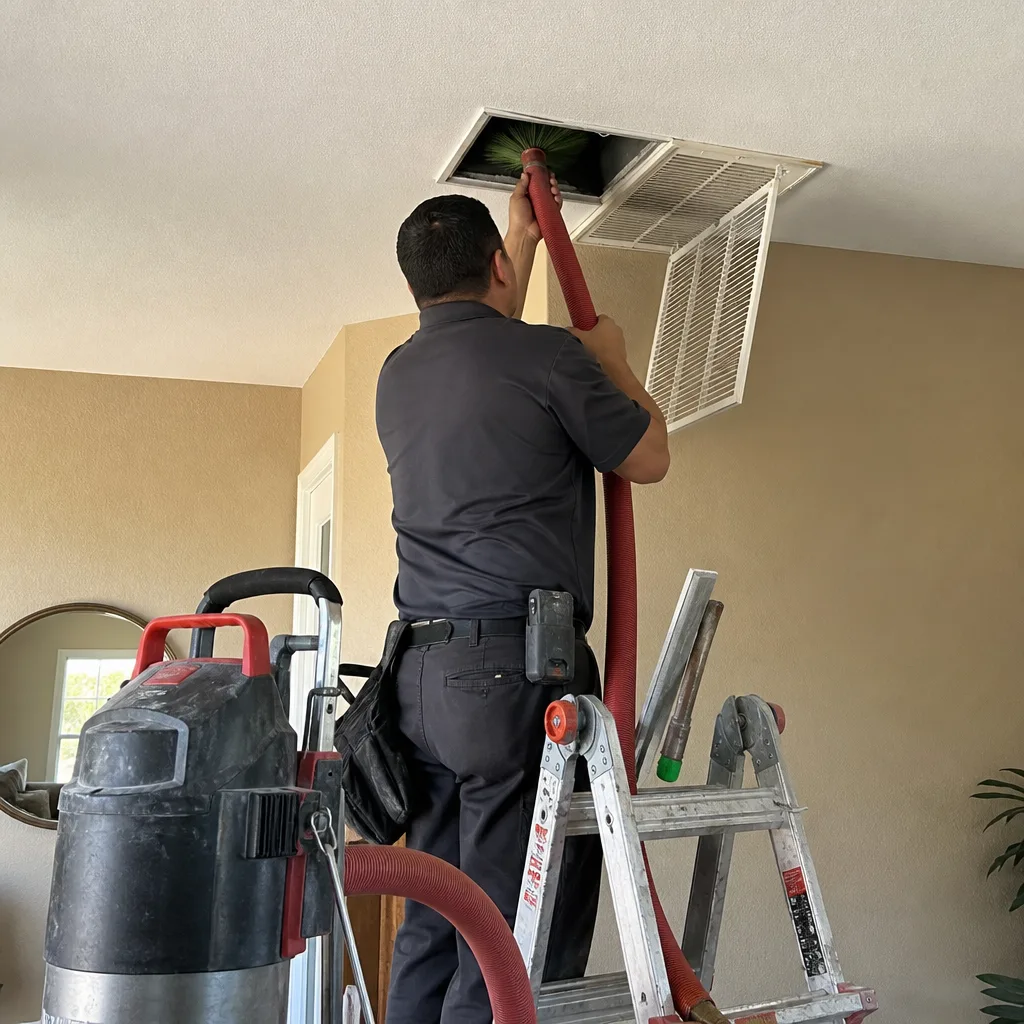
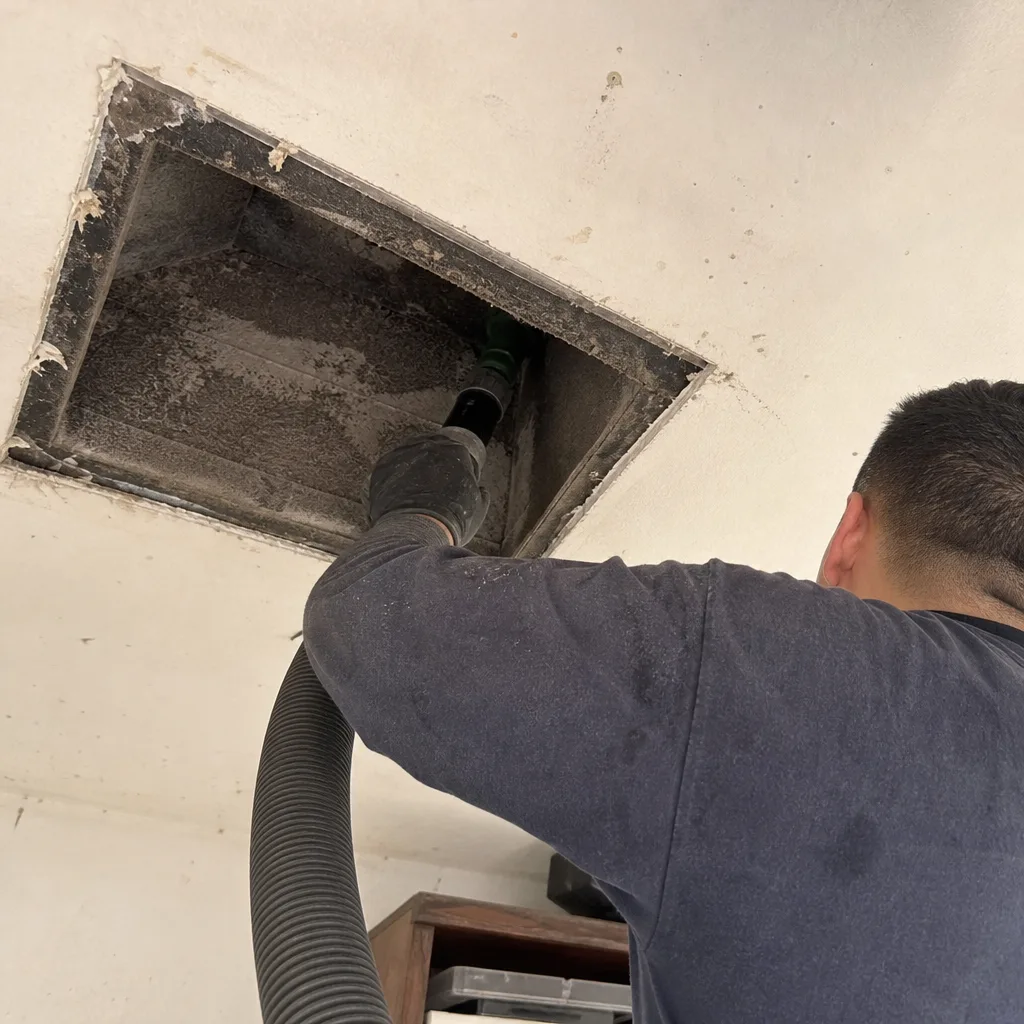
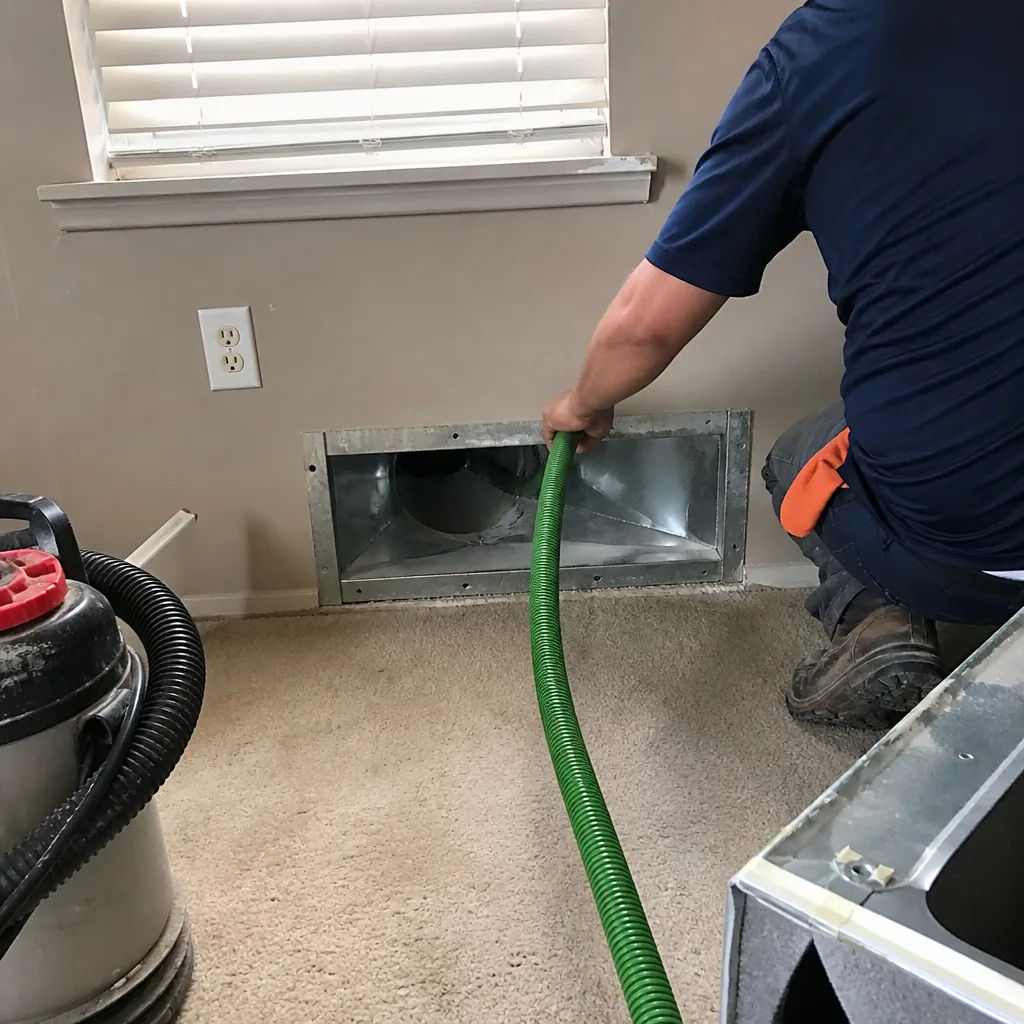
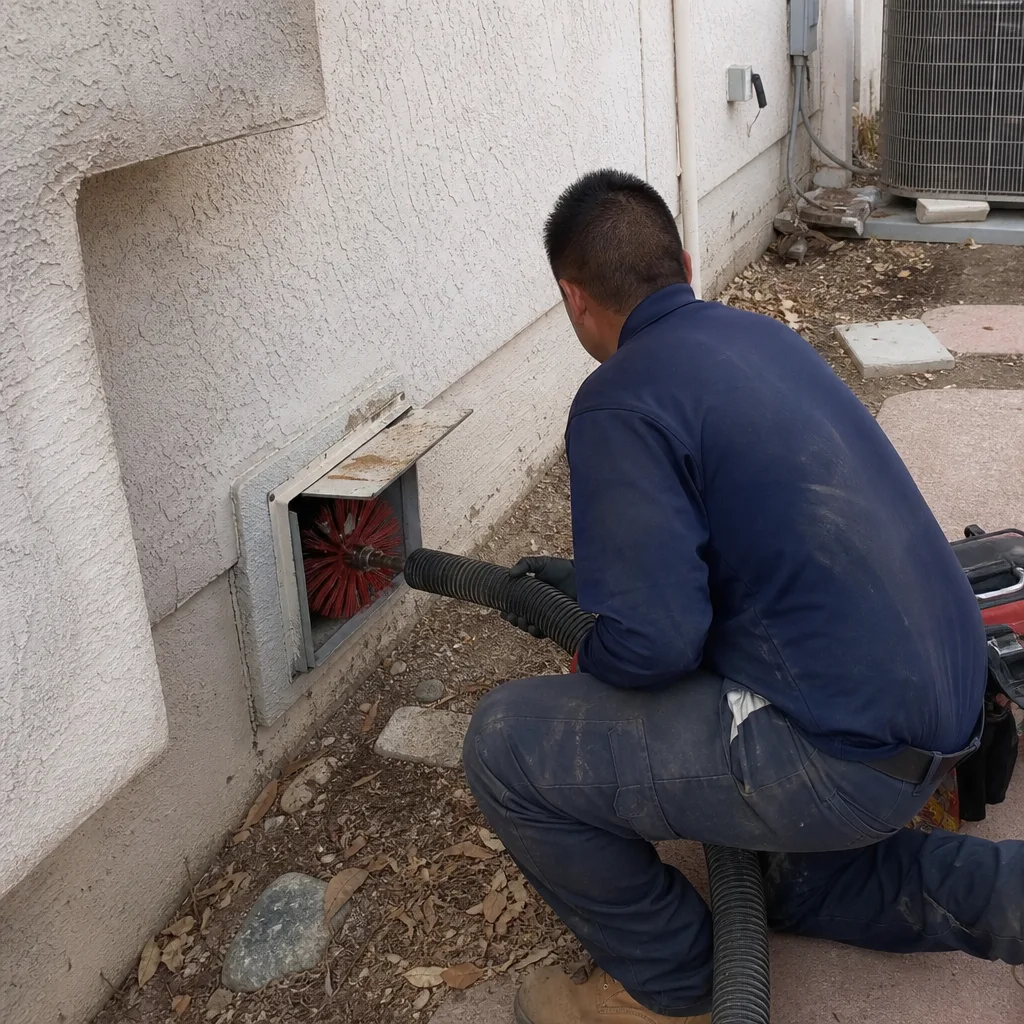
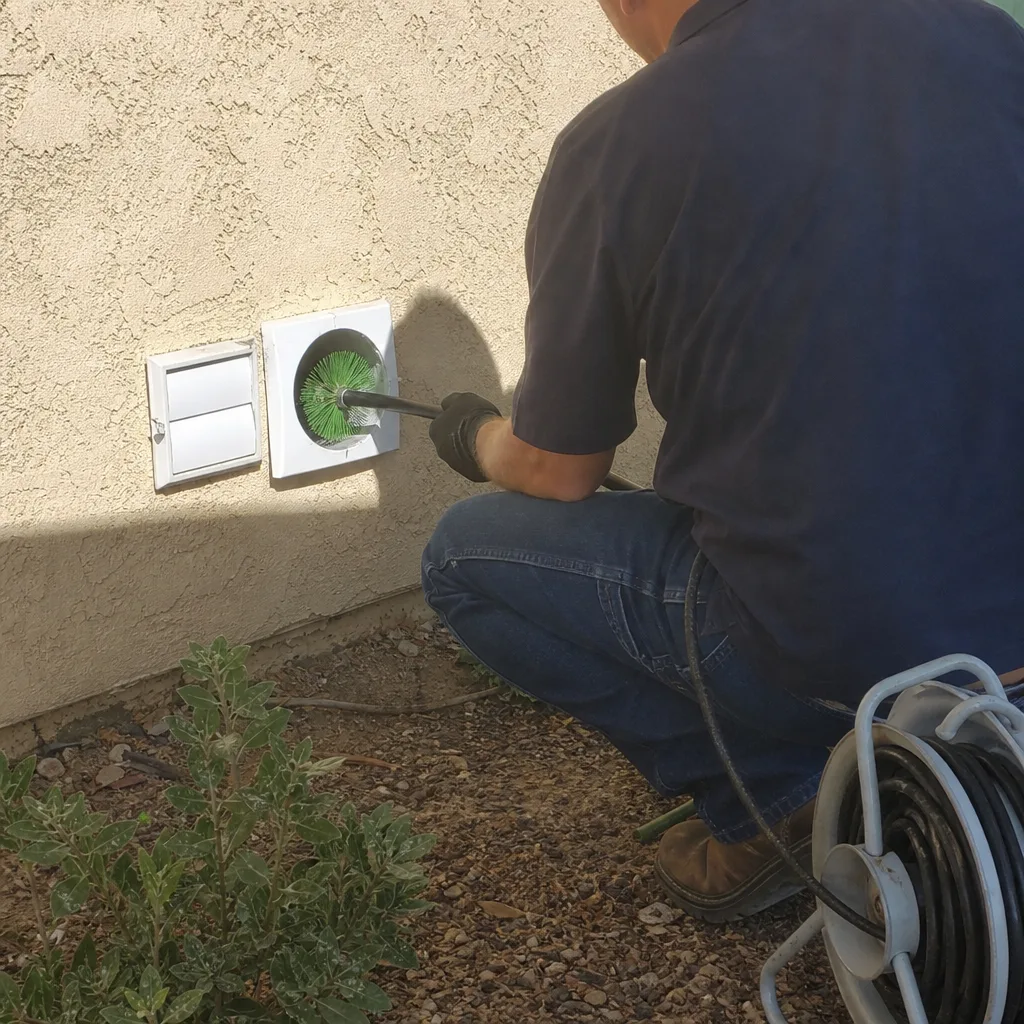
Whole-system duct and dryer vent check with before-and-after photos - you see exactly what came out of your vents
That "$99 whole-house special" is a bait ad - the real number appears once they are in your hallway, or the "clean" is a shop-vac at the register. We photograph the inside of your ducts before and after instead.
Air Duct Cleaning Troubleshooting: Common Problems and How to Fix Them
If you paid for professional air duct cleaning in Apple Valley and your registers are dusty again two weeks later, the technician didn’t necessarily do a poor job. There’s a solid chance the real culprit is a duct breach pulling attic or crawlspace air past the cleaned sections entirely. We’ve walked into hundreds of High Desert homes where a disconnected return plenum or a crushed flex run in the attic was reintroducing debris faster than any cleaning could remove it. This guide reads those symptoms the way a technician does. You’ll learn to identify whether a problem traces back to incomplete agitation, missing containment, a mechanical failure in the HVAC system itself, or a leak in the duct envelope. And you’ll learn what to do about each one.
Styles & brands we work with
- Whole-home duct cleaning
- Dryer vent cleaning
- Camera inspection
- Sanitizing & deodorizing
Quick Answer
Most recurring air duct problems after a cleaning trace to one of four causes: the previous contractor skipped a section of ductwork, the job lacked negative-pressure containment so loosened debris resettled, there’s a disconnected or crushed duct pulling dirty attic or crawlspace air, or the HVAC system itself has a failing component recirculating particulates. The fix depends on correct diagnosis. Dust at registers two weeks post-cleaning means inspect the duct envelope for breaches before scheduling another cleaning. Odors need source identification, not masking. Airflow dead zones point to disconnected runs, not dirty ducts.
Table of Contents
- Dusty Registers Two Weeks After Cleaning: What Actually Happened
- Register-by-Register Airflow Diagnosis: Finding Dead Zones
- Odor Identification Matrix: Musty, Burned, or Chemical Smells
- Did Your Last Cleaning Use Negative-Pressure Containment? Here’s Why It Matters
- Access Panels Most Technicians Skip in Apple Valley Tract Homes
- Call Back the Cleaner, the HVAC Contractor, or Mold Remediation?
- Common Mistakes to Avoid
- When to Call a Professional
- Frequently Asked Questions
Dusty Registers Two Weeks After Cleaning: What Actually Happened
You watched the crew run hoses, heard equipment humming, and wiped down your furniture afterward. Then the dust came back. Before you assume the cleaning was botched, understand how debris re-enters a duct system. Cleaned ducts don’t generate new dust. Something is delivering it. In Apple Valley, with our wind-driven sand and the fine alkaline dust that settles on every horizontal surface, that something is usually a separation somewhere in the duct envelope that lets attic air bypass the cleaned sections altogether.
Here’s what a proper cleaning does. Mechanical agitation, the kind performed with a Rotobrush rotary contact system, scrubs adhered debris off the interior walls of the duct. Simultaneously, a HEPA-filtered vacuum like the Nikro units we run applies negative pressure to the system, pulling loosened particulates out of the duct rather than letting them drift into living space. If either half of that two-step process is missing, or if the vacuum lacks sufficient airflow to overcome the static pressure of a long residential duct run, debris remains suspended or loosely settled inside the duct. The first time the blower kicks on, that debris exits through the registers.
But there’s a second scenario we see more often in Apple Valley tract homes built in the 1980s and 1990s. The ducts themselves are compromised. A flex duct separated at a trunk line connection, a return plenum that pulled away from the drywall, a crushed section under a stored box in the garage attic. Any of these creates an open pathway for unfiltered attic air to enter the system after the cleaning point. The cleaned sections stay clean. The breach re-contaminates them within days.
How to tell which scenario you’re in: inspect what’s coming out of each register. If every register shows fine, uniform dust, the cleaning likely didn’t achieve full debris capture. If one or two rooms are noticeably worse than others, or if you find insulation fibers at a specific register, you have a breach in the run serving that room. That’s an Air Duct Repair in Apple Valley problem, not a re-cleaning problem.
Register-by-Register Airflow Diagnosis: Finding Dead Zones
Uneven airflow is rarely a cleaning issue. Duct cleaning removes debris from interior surfaces. It does not change the geometry of the duct system. If one bedroom is always stuffy while the hallway runs cold, you’re looking at a mechanical or structural problem: a disconnected run, a collapsed flex duct, a failed damper, or a blower motor that’s losing performance. Here’s a diagnostic process you can run in about twenty minutes with a tissue and a piece of incense.
- Set the thermostat fan to ON – not auto. You want continuous airflow for consistent readings.
- Close all interior doors except the room you’re testing. This is critical in Apple Valley homes where poorly balanced returns create pressure differentials between rooms. Test rooms one at a time, door closed, to isolate each register.
- Hold a tissue at each supply register at the same distance, roughly six inches. A healthy register should push the tissue to at least a 45-degree angle. Note which registers barely move it.
- Light an incense stick and hold it near the return grille in the same room. Watch the smoke. If it pulls steadily toward the return, that return path is functional. If the smoke wavers or drifts, the return is undersized or blocked, which starves the whole room of airflow regardless of supply pressure.
- Compare adjacent rooms. If the master bedroom register is weak but the hallway register three feet away is strong, the branch run serving that bedroom is compromised. Flex duct separated at the trunk line, crushed under attic storage, or pinched by a tight strap.
- Inspect what you can see. In the garage attic of many Apple Valley tract homes, the secondary air handler and a good portion of the supply plenum are visible without crawling through the whole attic. Check for obvious separations, kinked flex, or duct tape that’s lost adhesion. In the High Desert heat, standard duct tape degrades in about five years, the adhesive turning to powder. If you see it, it’s failing.
A dead zone that can’t be explained by a closed damper means air is going somewhere else. The duct run serving that room has either separated, collapsed, or been crushed. Cleaning won’t restore flow. Neither will a bigger blower. The fix is finding the failure point and repairing it. We run into this constantly: homeowners call expecting a cleaning, and the real job is a two-foot section of flex duct that’s been flattened by a Christmas tree box for three years. If you’re seeing airflow problems, get the duct system inspected before paying for cleaning. For a complete look at what a proper cleaning covers in our area, see Air Duct Cleaning in Apple Valley.
Odor Identification Matrix: Musty, Burned, or Chemical Smells
Odors coming from the vents are diagnostic. Each distinct smell points to a different root cause, and treating the wrong one wastes time and money. Here’s how to read what you’re smelling.
Musty / Earthy / Damp-Basement Smell
This is microbial growth, plain and simple. In Apple Valley, where humidity is rarely the issue, musty duct odors usually trace to one of two things: a condensate drain line that’s plugged and holding standing water in the drain pan, or a duct section that’s been getting wet from a roof leak, a compromised swamp cooler pan, or condensation on the outside of an uninsulated supply run in a hot attic. The smell is strongest when the system first kicks on because that’s when air passes over whatever is growing. Fix the moisture source first, then address the affected duct or component. Cleaning alone won’t solve it if water is still entering. If the growth is in the duct liner itself, that section may need replacement rather than cleaning. Fiberglass duct liner that’s been wet is nearly impossible to restore to a clean condition.
Burned / Electrical / Hot-Metal Smell
This is not a duct problem. A persistent burned odor that only appears when the heat runs points to a failing heat exchanger or a heat strip with accumulated dust baking onto the element. In the High Desert, where heating season is short but intense, dust settles on heat strips all summer, then burns off the first few cold nights. That brief burn-off smell is normal and should clear within an hour or two of runtime. A smell that persists beyond that, or smells acrid rather than dusty, warrants an immediate HVAC mechanical inspection. A cracked heat exchanger can release combustion gases. Treat this as an HVAC problem, not a cleaning problem.
Chemical / Plastic / New-Car Smell
This one surprises people. Certain flexible duct products, particularly older or budget-grade flex duct with PVC or vinyl liners, off-gas volatile organic compounds when heated. The smell is strongest during the first season of use and fades over time. If you’re smelling it years after installation, something changed: increased attic temperatures speeding up off-gassing, a liner degradation issue, or a recent HVAC modification that pushed supply temperatures higher. Rarely dangerous in the short term, but persistent VOC odors indicate materials to replace. We’ve replaced flex duct runs in Apple Valley homes where the liner had begun breaking down into a sticky film that trapped dust and off-gassed under heat. A cleaning won’t remove the odor because the liner itself is deteriorating. The only fix is replacement. If you suspect this, Air Duct Repair in Apple Valley addresses liner replacement and duct section swaps specifically.
Did Your Last Cleaning Use Negative-Pressure Containment? Here’s Why It Matters
Not all duct cleanings are created equal, and the difference isn’t how hard the technician worked. It’s whether the equipment could actually capture what it dislodged. This distinction explains a large share of post-cleaning dust complaints.
There are two fundamental approaches to residential duct cleaning. The first, and cheaper, method uses a portable vacuum connected to a single access point, with spinning brushes or air whips inserted through registers. The problem: when you agitate debris loose inside a duct, it becomes airborne. Without sufficient negative pressure pulling it toward the vacuum, a large portion of that airborne debris simply resettles further down the duct run. The duct looks cleaner immediately after the job because the debris moved, not because it left. Within weeks, normal airflow pushes it back to the registers.
The second approach is what we run on every job. A high-CFM HEPA vacuum unit, Nikro equipment in our case, connects to the main trunk line and pulls the entire duct system into negative pressure. Air moves through the ducts toward the vacuum, not out into your home. Mechanical agitation from the Rotobrush system is applied while the system is under that negative pressure. Every particle loosened by the brush is carried by directional airflow toward the capture point. Nothing resettles because the transport velocity exceeds the settling velocity of the particulates involved. For larger homes or more complex systems, we add Abatement Technologies negative-air containment equipment to maintain pressure differential in multi-zone layouts.
How to tell what your last cleaning used: ask for the equipment specifications. If the answer is vague, or the vacuum was a portable unit wheeled into a hallway, you may have received what the industry calls “surface vacuuming” rather than true HEPA extraction. That doesn’t mean the technician was dishonest. It means the equipment couldn’t do what the job required. If you’re shopping for a cleaner in Apple Valley, ask one question: “What negative pressure do you hold on the system during agitation?” A professional who runs containment equipment will have a clear answer. More importantly, they’ll be able to show you the capture point and the containment setup before they start.
Access Panels Most Technicians Skip in Apple Valley Tract Homes
Every residential duct system has specific points that must be opened for a complete cleaning: the supply plenum, the return plenum, and each main trunk line. In theory. In practice, access is the first thing that gets compromised on a tight schedule. We service hundreds of homes in Apple Valley’s tract housing stock, and there are two specific locations where less thorough crews consistently cut corners.
The return plenum behind hallway drywall. In many Apple Valley tract homes from the 1980s and 1990s, the return air path is built into a stud bay in the hallway. The only access is a metal panel set into the drywall or sheetrock that must be cut open, cleaned, and patched. Some crews skip it because the access is unfamiliar or because they’re not equipped to do a clean sheetrock patch. But the return side of the system carries every cubic foot of air that passes through your blower. A dirty return plenum re-contaminates the entire supply side within weeks. Before you book a cleaning, ask whether the crew accesses the return plenum itself, not just the return grille. If they hesitate, keep looking.
The secondary air handler in the garage attic. Many Apple Valley homes have two systems: one for the main living area, one for the master suite or a converted garage. The secondary unit lives in the garage attic, where the access is tight and the workspace is uncomfortable. Skipping it means half the house was never cleaned, and the homeowner often doesn’t realize it because the techs were in and out in ninety minutes. The garage attic unit runs the same air through the rooms you sleep in. It either gets cleaned or it doesn’t. A professional crew will tell you upfront how many systems the house has and how many access points they’ll open. If they quote you a flat rate without asking about a second system, that’s a red flag.
Call Back the Cleaner, the HVAC Contractor, or Mold Remediation?
So you’ve diagnosed the problem. Dust returning? Airflow dead zones? A smell you can’t identify? Here’s the decision framework we give our own callers in Apple Valley.
Call back the original duct cleaning contractor when:
- You found debris or dust visible inside the ducts when you removed a register and looked, especially within a few months of the cleaning.
- The cleaning skipped an entire system in a two-system house, or didn’t access the return plenum.
- The odor is dusty or stale, consistent with accumulated debris that should have been removed.
- The contractor offered a re-clean or has a workmanship window still active.
Call an HVAC mechanical contractor when:
- The burned smell persists beyond the first hour or two of heat operation.
- Airflow is uneven and you suspect a blower motor, damper, or zoning problem rather than a duct breach.
- Your system is short-cycling, or the blower is noisy, or you’re seeing condensation problems around the air handler.
Call a mold remediation specialist when:
- Visible mold growth is present on duct interiors, insulation, or drywall around registers or returns.
- The musty odor persists after the moisture source is fixed and the ducts are cleaned.
- Anyone in the home has a diagnosed mold sensitivity and visible growth has been confirmed.
Call a duct repair service when:
- You’ve identified a disconnected, crushed, or leaking duct run through your register-by-register airflow diagnosis.
- You find insulation fibers blowing from a specific register, which indicates a breach somewhere in that run.
- Your energy bills have climbed with no change in usage habits, which often signals conditioned air leaking into the attic.
- The duct liner is visibly deteriorating, sticky, or off-gassing chemical odors.
In Apple Valley specifically, our climate adds one factor that changes the math. The temperature differential between conditioned supply air and a 140-degree attic in July is extreme. Any breach in the duct envelope represents a significant energy loss and an entry point for the fine dust that the Mojave wind pushes through every soffit vent. That’s not a future problem. It’s an active one, every day the system runs.
Common Mistakes to Avoid
- Re-cleaning without diagnosing the source. If a duct breach is pulling attic air into the system, a second cleaning will last exactly as long as the first one did. Investigate before you pay.
- Masking odors with air fresheners or scented filters. A musty or burned smell is a diagnostic signal. Covering it with fragrance doesn’t fix the problem and can make identifying the source harder when you finally call a professional.
- Assuming airflow issues will be fixed by cleaning. Cleaning removes debris. It doesn’t reconnect a separated flex run, replace a crushed duct section, or fix a failing blower. Those are mechanical problems with mechanical fixes.
- Judging a cleaning quote on price alone. A $99 whole-house special almost certainly can’t cover the labor for proper agitation and HEPA extraction in a two-system Apple Valley home. You’re buying surface vacuuming, not debridement and capture.
- Ignoring the return side. Homeowners tend to focus on supply registers because that’s where dust appears. But the return side carries the same air volume and can be equally loaded with debris. A thorough cleaning covers both.
- Waiting until the ducts are visibly dirty at the registers. By the time debris is exiting the registers, the system has been circulating it for months. The register is the last point in the path, not the first. Regular inspection beats reactive cleaning.
- Skipping the dryer vent because it’s a different service. Your dryer vent is a contained duct system that carries lint, heat, and moisture. In Apple Valley homes where the laundry is central to the floor plan, a clogged dryer vent pushes moisture and lint into living space and increases fire risk. Full-service companies handle it. Ask. We cover this in more detail at Dryer Vent Cleaning in Apple Valley.
When to Call a Professional
Some duct problems are visible and some are not, but all of them share one trait: they rarely fix themselves. Call a professional if you’ve confirmed dust returning within weeks of a cleaning, if airflow is dramatically different between rooms with no damper explanation, if a persistent odor smells burned or chemical rather than dusty, or if you’ve found visible mold or water stains on duct surfaces or surrounding drywall. If you removed a register and you can see standing debris inside the duct, that’s a straightforward call. Duct Cleaning Apple Valley offers free estimates in Apple Valley. Call (855) 619-4509 and we’ll inspect your system, identify what’s actually wrong, and tell you honestly whether cleaning, repair, or an HVAC mechanical visit is the right next step. For a full overview of what our cleaning process covers, start at the Duct Cleaning Apple Valley home page.
Frequently Asked Questions
For a typical single-family home in Apple Valley with one HVAC system, expect to pay $450 to $900 for a professional cleaning that includes mechanical agitation and HEPA extraction. Homes with two systems, older ductwork with significant buildup, or accessibility challenges run $800 to $1,500. The price difference reflects equipment, access points, and time. A crew that’s in and out in 45 minutes for $199 is not performing the same service as a contractor who opens the return plenum, accesses every trunk line, and holds negative pressure during agitation. Call (855) 619-4509 for an exact quote on your system. Estimates are free.
Cheaper quotes almost always reflect reduced scope and lighter equipment. A $99 or $199 whole-house cleaning typically means a portable vacuum, agitation through registers only, no return plenum access, and no negative-pressure containment. The technician shows up, moves some debris around, and the problem returns within months. Professional-grade equipment like the Rotobrush and Nikro systems we run represents a six-figure investment that low-cost operators don’t carry, and Abatement Technologies containment protocols require training and time. You’re not paying for a brand name. You’re paying for the debris to actually leave your ducts. Call (855) 619-4509 for a straightforward quote.
The most reliable verification is visual. A professional crew should offer before-and-after photos taken through the same access points, showing the duct interior before agitation and after HEPA extraction. You can also confirm the process by asking what equipment will be used: rotary-contact agitation, HEPA vacuum with negative pressure, and whether the return plenum gets opened. During the job, you should be able to see the HEPA unit connected to the system and hear the brush operating inside the ducts. If none of those things are visible, the work probably isn’t happening at the depth you paid for. Call (855) 619-4509 and ask us to walk you through our process before you book.
In Apple Valley, with our wind-driven dust and the fine particulate load from the Mojave, we recommend every three to five years for most homes. Homes with pets, occupants with respiratory conditions, recent construction or renovation, or a history of water intrusion should lean toward the three-year mark. Homes just built or with a recent full system replacement can stretch to five or seven. The honest answer is that no universal schedule applies. Inspect your return plenum annually. If you can see visible debris accumulation, it’s time. If your registers show dust within weeks of wiping them down, it’s past time. Call (855) 619-4509 for an inspection and we’ll tell you where your system stands.
No. Duct cleaning removes debris from the interior surfaces of the duct system. It does not restore airflow to a room that’s starved because the duct run serving it is disconnected, crushed, or improperly sized. You need an airflow diagnosis first: the tissue test we described earlier in this guide will tell you whether the run is delivering air. If it’s not, the fix is repair, not cleaning. That’s why we built our company around three services rather than one. See what’s involved at Air Duct Repair in Apple Valley. Call (855) 619-4509 if you’re not sure which service you need.
Clean ducts don’t show up in a standard home inspection, so a duct cleaning won’t directly affect your sale price. But a completely different service does show up: dryer vent cleaning. Home inspectors in Apple Valley routinely flag clogged dryer vents, and mortgage underwriters increasingly require verification before closing. Dryer vent cleaning also documents a fire-risk reduction, which matters to insurers. If you’re selling, prioritize Dryer Vent Cleaning in Apple Valley over duct cleaning. If you’re staying, clean the ducts for your own air quality. Call (855) 619-4509 and we’ll help you prioritize based on what your sale timeline actually needs.
The Bottom Line
Duct cleaning problems are almost never mysterious once you look at them closely. Dust returning points to either incomplete capture during the last cleaning or a breach in the duct envelope pulling outside air into the system. Airflow dead zones indicate disconnected or crushed runs that need repair, not cleaning. Odors are a diagnostic system unto themselves: musty means moisture, burned means mechanical, chemical means liner degradation. The single most important step before paying for any service is determining which problem you actually have. In Apple Valley, with our extreme attic temperatures and wind-driven dust, a compromised duct system acts like an open window to the attic. Diagnosis first. Then fix the right thing. If you want a professional opinion grounded in equipment and process rather than marketing, call Duct Cleaning Apple Valley at (855) 619-4509. We’ll tell you what’s actually wrong and what it will take to fix it.
Written by the team at Duct Cleaning Apple Valley, serving Apple Valley since 2013.
See the difference
 Before
 After
 Before
 After
 Before
 After