
Last updated November 2, 2026
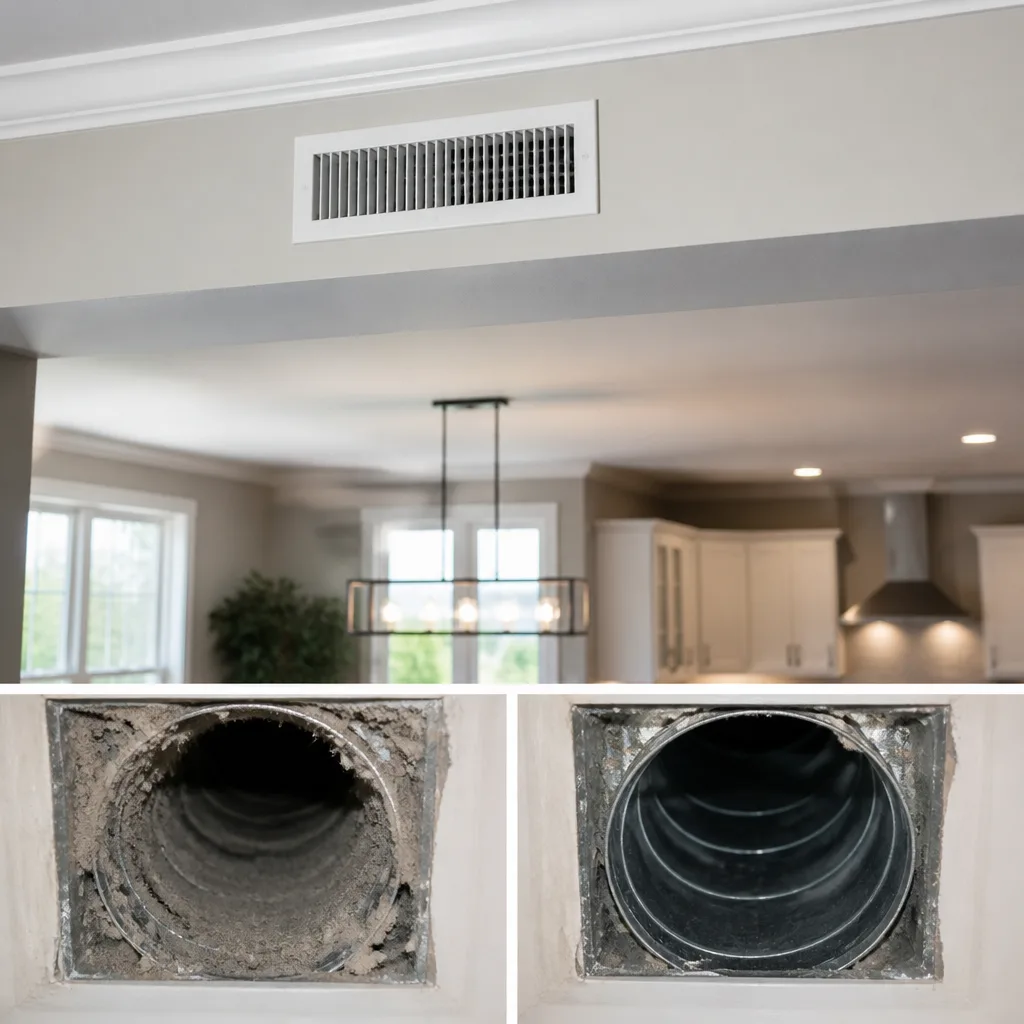 Whole-home duct cleaning
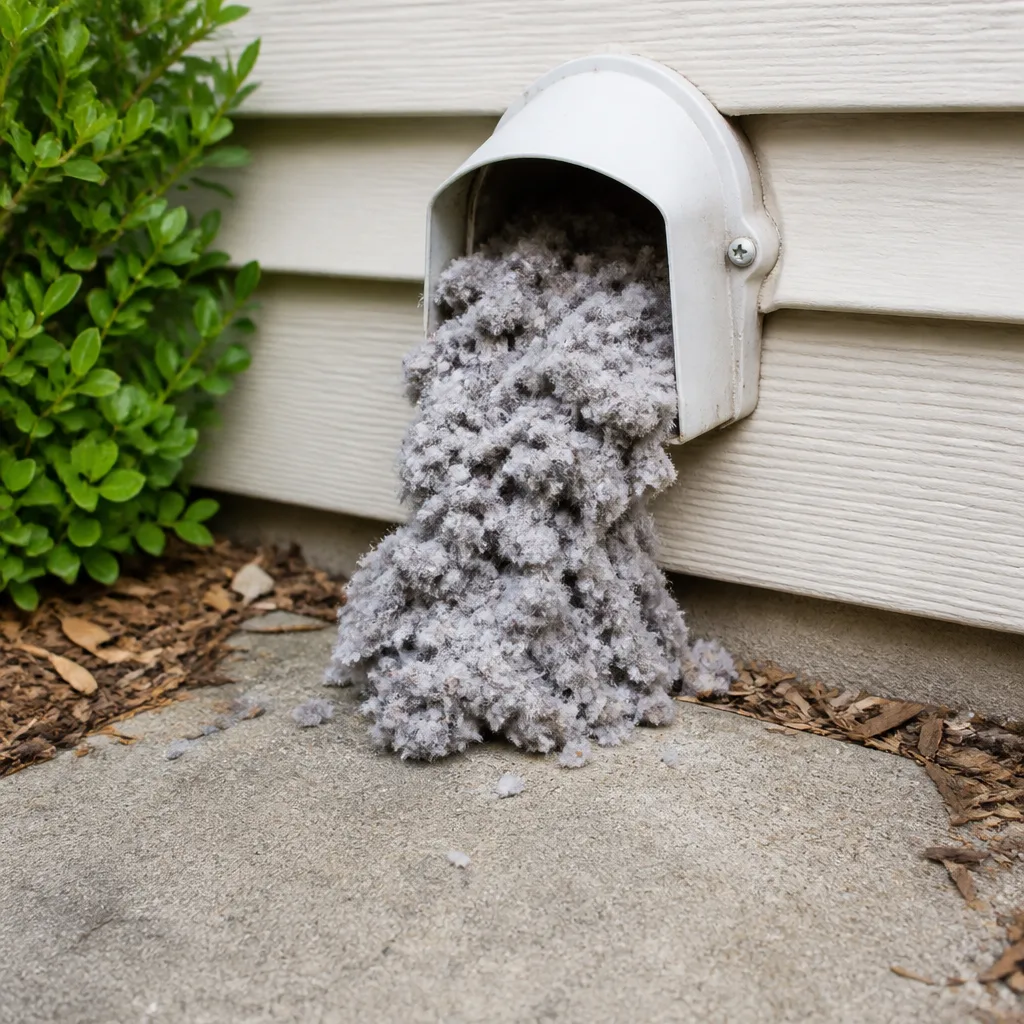 Dryer vent cleaning
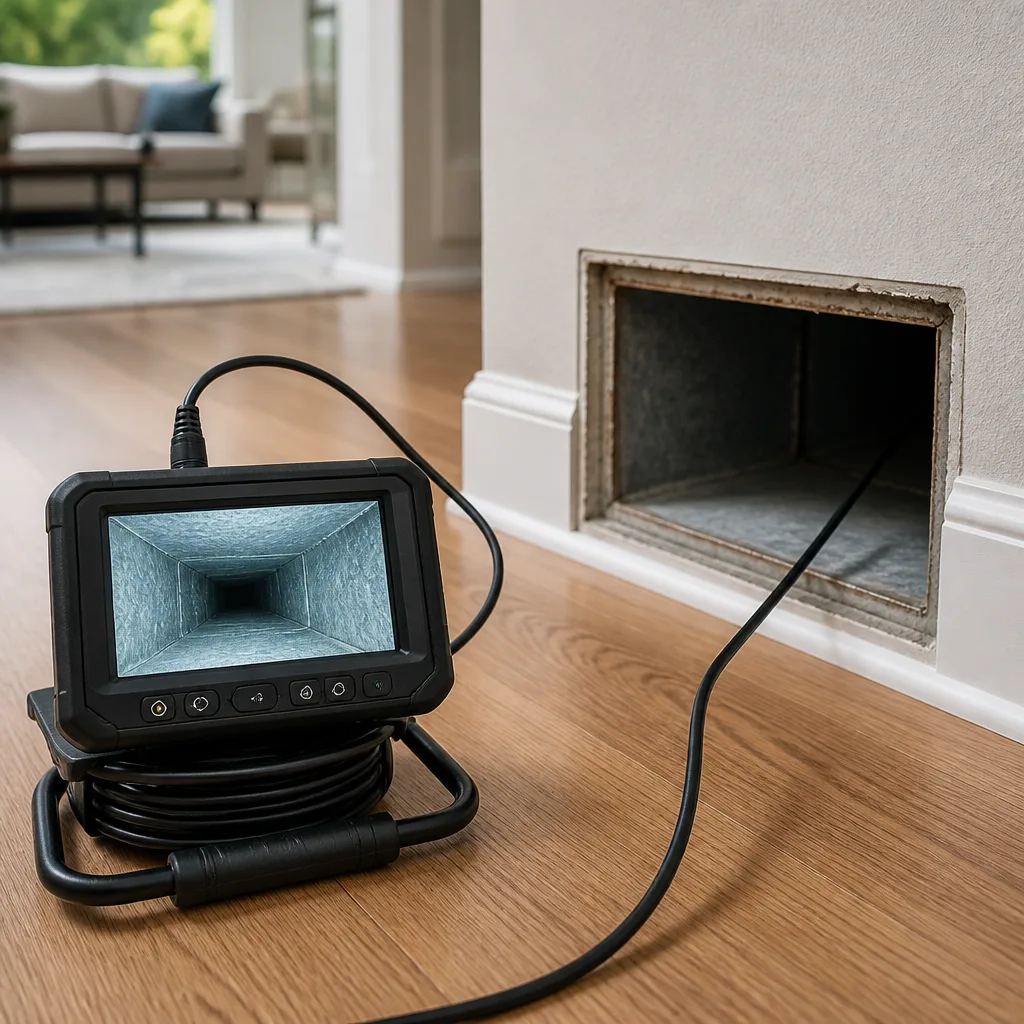 Camera inspection
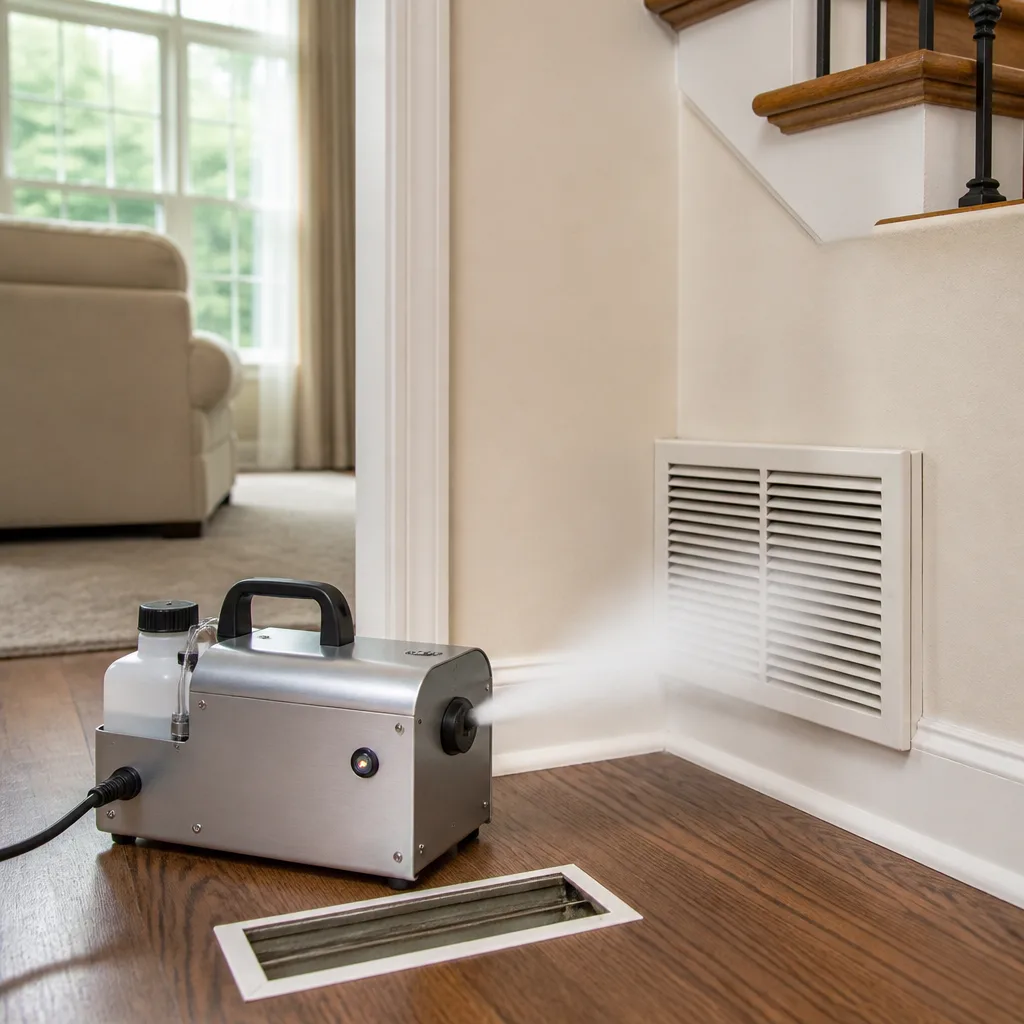 Sanitizing & deodorizing
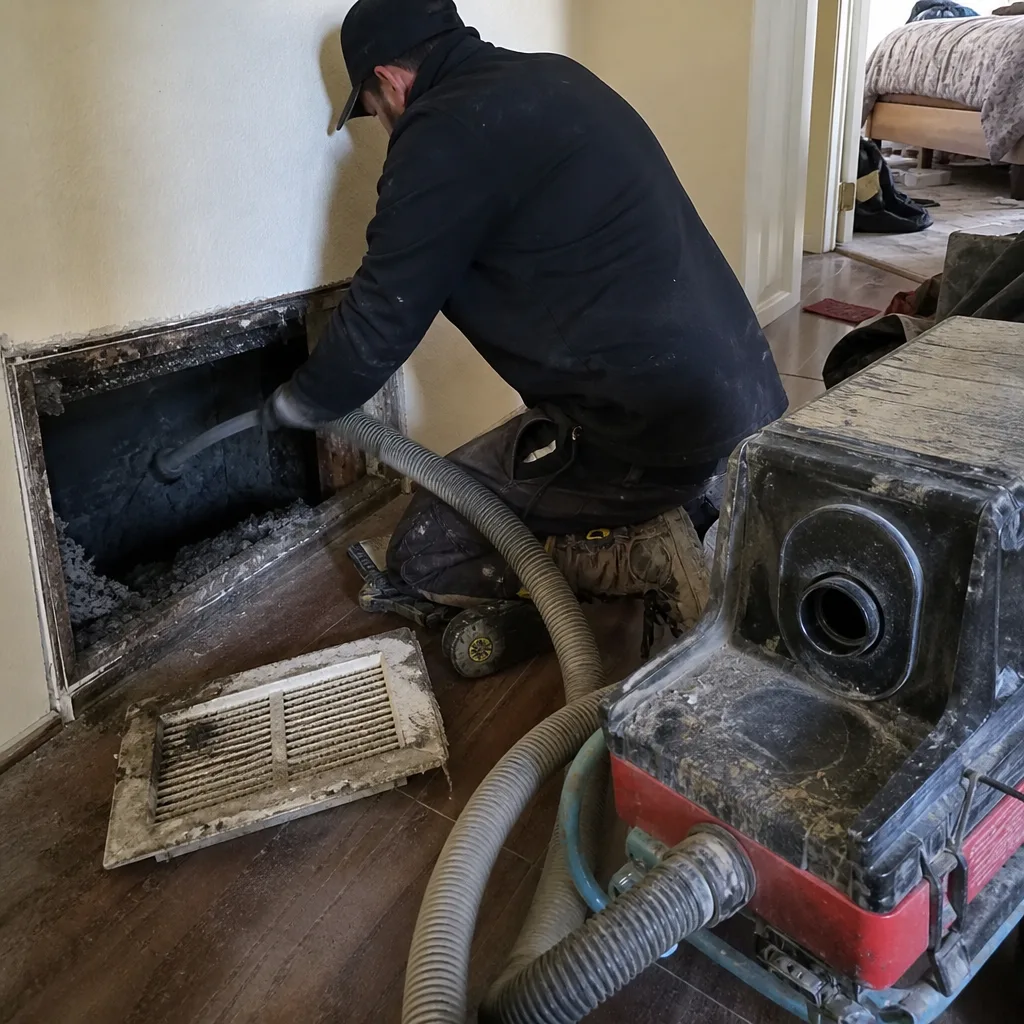
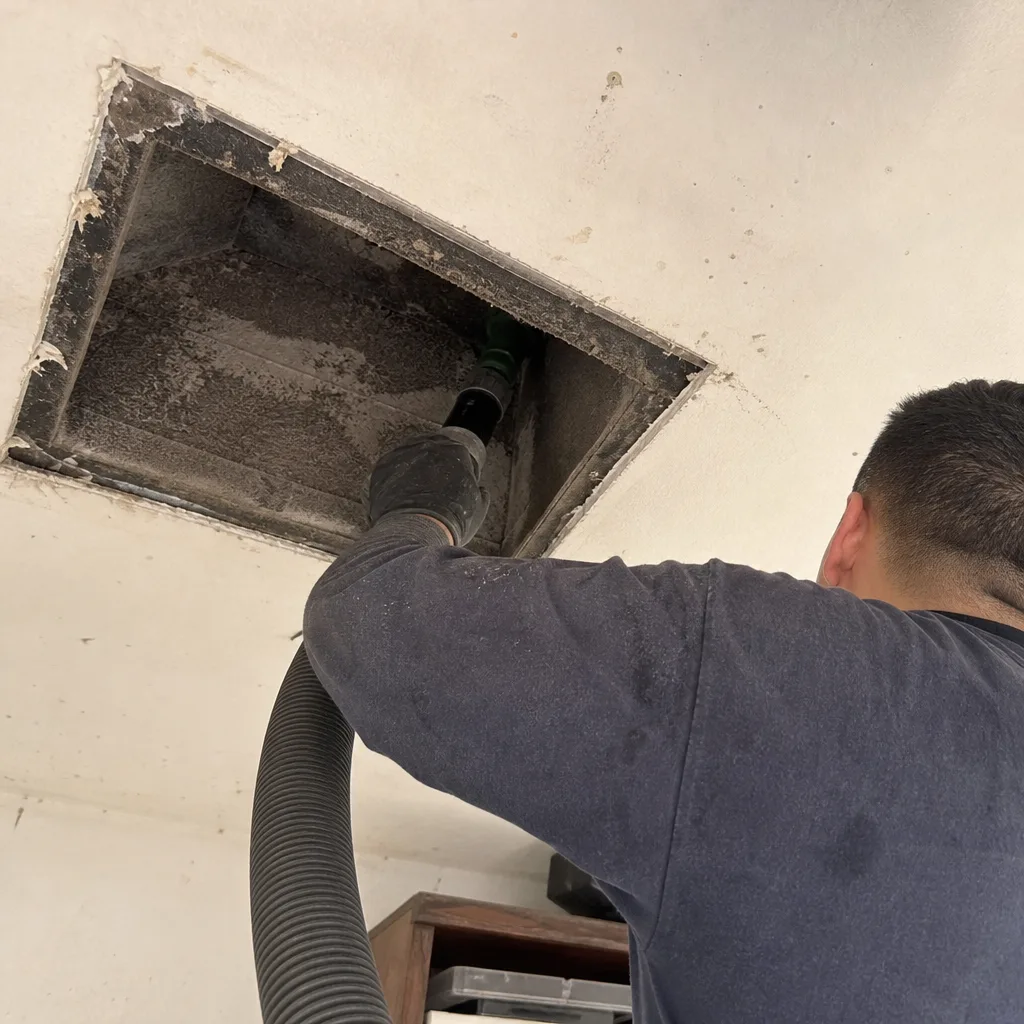
Whole-system duct and dryer vent check with before-and-after photos - you see exactly what came out of your vents
That "$99 whole-house special" is a bait ad - the real number appears once they are in your hallway, or the "clean" is a shop-vac at the register. We photograph the inside of your ducts before and after instead.
Air Duct Cleaning Permits, Codes & Inspections in CA: What You Need to Know
Here is a scenario we see regularly in Apple Valley. A homeowner hires a duct cleaning crew. During the job, the technician finds a section of flex duct that is torn, crushed, or disconnected. The technician offers to patch it on the spot. Most homeowners say yes, because it sounds like a courtesy. Two years later, that homeowner goes to sell. The buyer’s inspector looks at the air handler, sees non-original ductwork, checks county records, and finds no permit on file. Now a $150 repair has become a disclosure problem, a negotiation point, and possibly a lender objection. The cleaning itself was never the issue. The undocumented repair was the issue from the moment it happened.
This guide explains where that regulatory line sits in California, how Title 24 and the California Mechanical Code apply to duct work, what San Bernardino County actually requires for Apple Valley properties, and what to ask any contractor who recommends repairs alongside Air Duct Cleaning services. You will leave knowing exactly which duct services require a permit, which ones never do, and how documentation from a legitimate cleaning protects you later.
Styles & brands we work with
- Whole-home duct cleaning
- Dryer vent cleaning
- Camera inspection
- Sanitizing & deodorizing
Quick Answer
Air duct cleaning itself does not require a permit anywhere in California, including Apple Valley in San Bernardino County. A permit becomes necessary when a contractor alters the duct system – replacing sections, changing geometry, relocating registers, modifying the air handler, or applying mastic in a way that constitutes a repair rather than a cleaning. Legitimate cleaning with mechanical agitation and HEPA extraction stays permit-free. Alteration work does not.
Table of Contents
- The Regulatory Line: Cleaning vs. Alteration
- How Title 24 and the California Mechanical Code Apply to Ductwork
- San Bernardino County Permit Thresholds for Apple Valley
- Why Documentation From a Cleaning Company Matters More Than You Think
- What to Ask a Contractor Who Recommends Repairs
- How Inspections and Verification Actually Work
- Common Mistakes to Avoid
- When to Call a Professional
- Frequently Asked Questions
- The Bottom Line
The Regulatory Line: Cleaning vs. Alteration
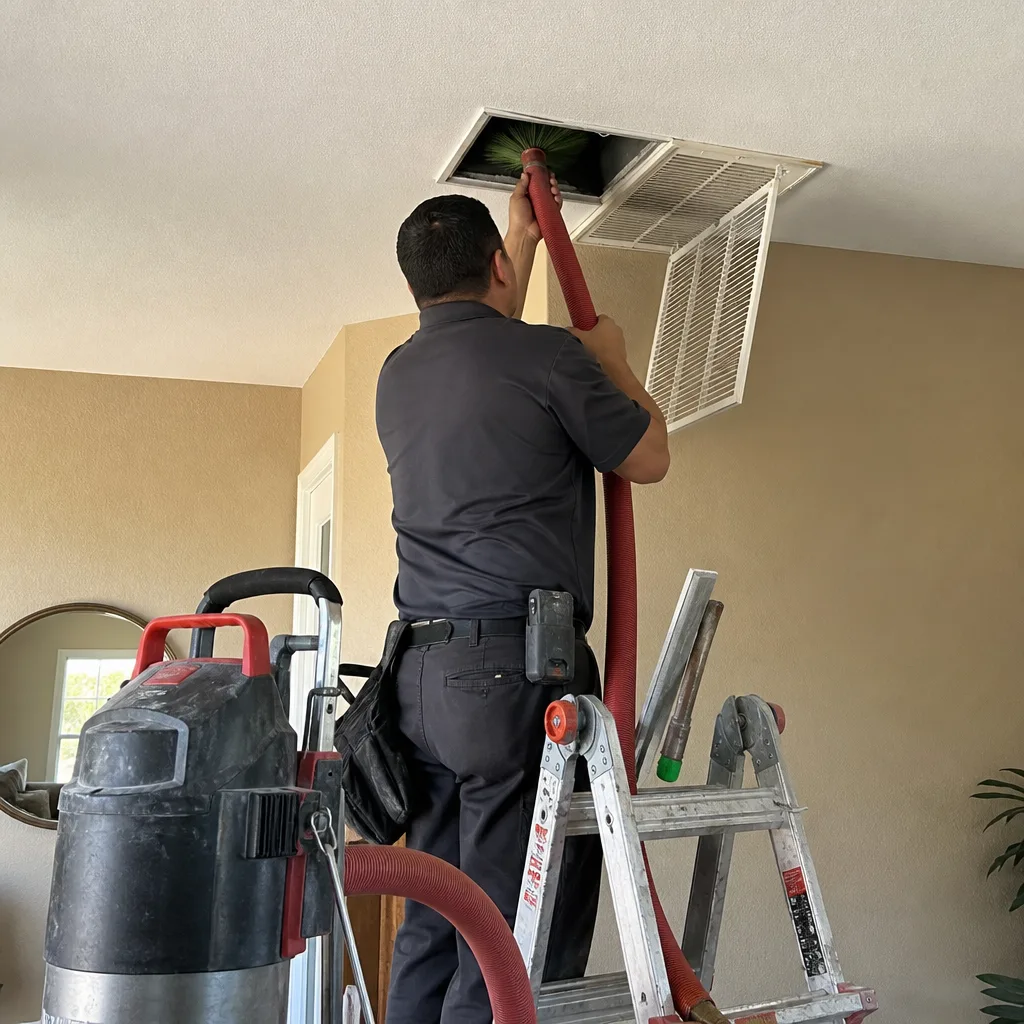
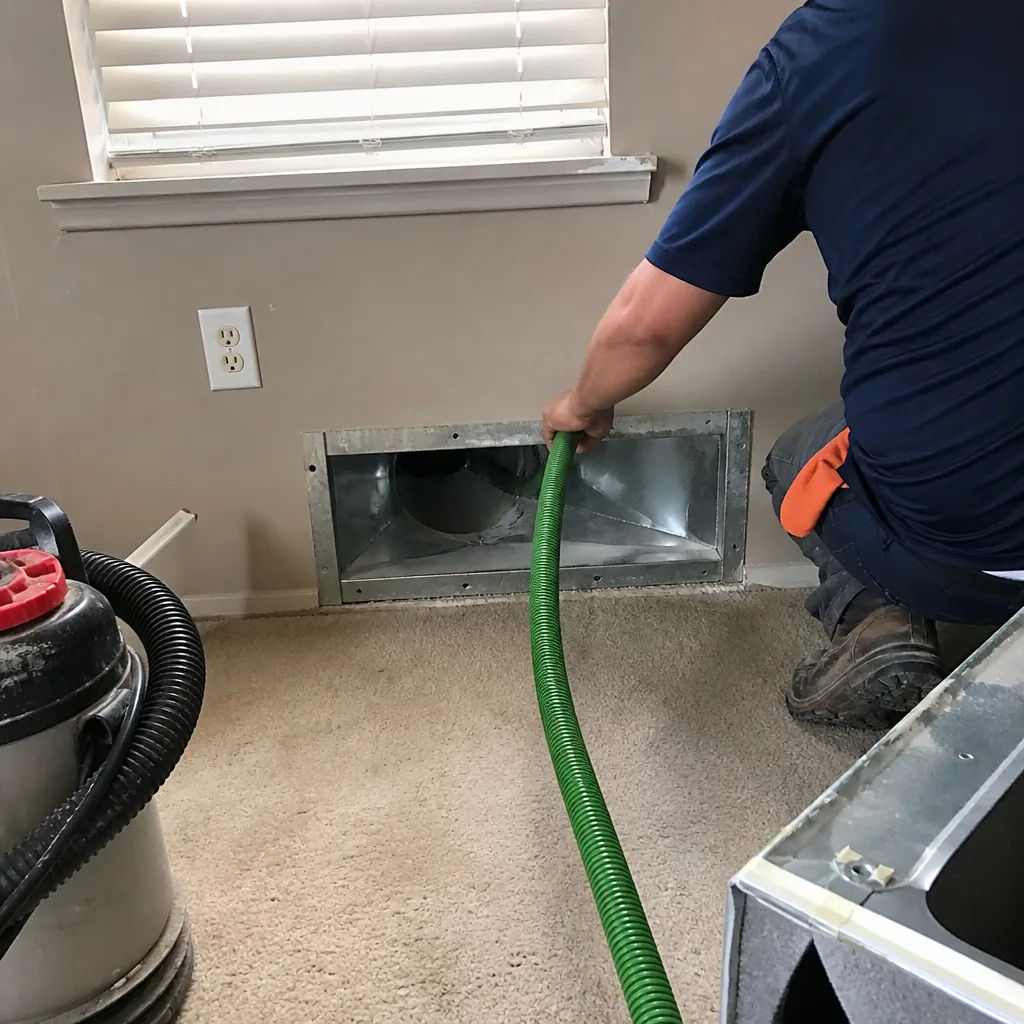
The single most important distinction in California duct work is this: cleaning and inspection are not construction, but repair and replacement are. The California Mechanical Code (CMC), which forms the basis of Title 24 enforcement in most jurisdictions, defines mechanical work that “modifies, adds to, or removes” any part of a conditioned air system as an alteration requiring oversight. Cleaning removes debris. It does not modify the system. That distinction is why a full-service duct cleaning in Apple Valley – the kind that uses a Rotobrush rotary-contact system for interior agitation plus Nikro HEPA extraction for capture – requires no permit, no county notification, and no inspection sign-off.
But here is where the line gets sharp. If a technician during that same visit finds a disconnected flex duct and reattaches it with new sheet metal screws and mastic, that is a repair. In most California jurisdictions, repairs that restore a system to its original design condition are exempt from permits. Repairs that change the configuration – rerouting a branch line, replacing a collapsed section with a different diameter, adding a new register, or sealing a section in a way that changes airflow characteristics – are not exempt. They are modifications, and modifications trigger the permit requirement.
We see this gap exploited in both directions. Some low-bid cleaning companies will quietly do unpermitted repair work because writing a permit takes time and money. Others refuse to touch any repair at all, even a simple reconnection, because they do not want to deal with local building departments. Neither approach serves the Apple Valley homeowner. The correct answer is knowing exactly what work falls on which side of the line before the van rolls up.
What Never Requires a Permit
- Visual inspection of duct interiors using a camera or borescope
- Mechanical brush agitation inside existing duct walls
- HEPA vacuum extraction from registers and plenums
- Replacement of standard air filters
- Sealing small air gaps at register faces with removable caulk (not duct mastic)
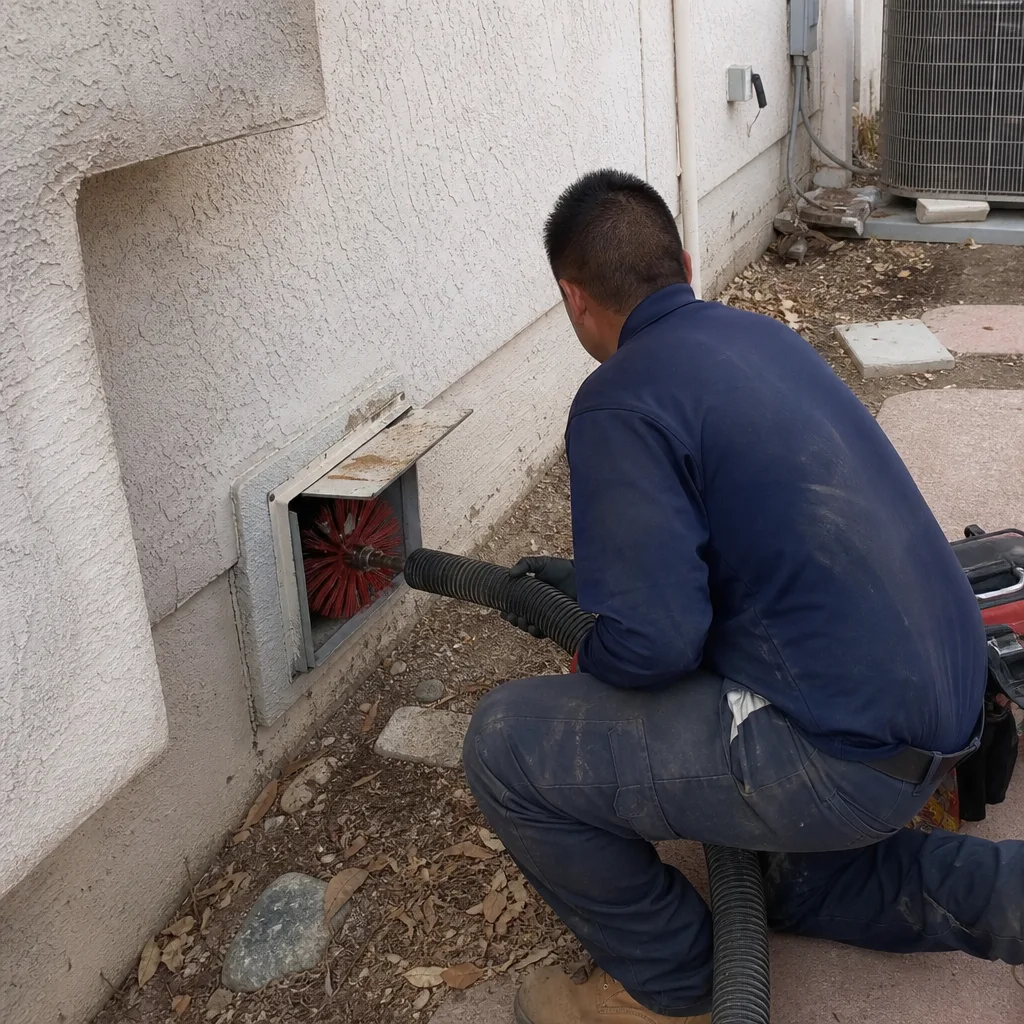
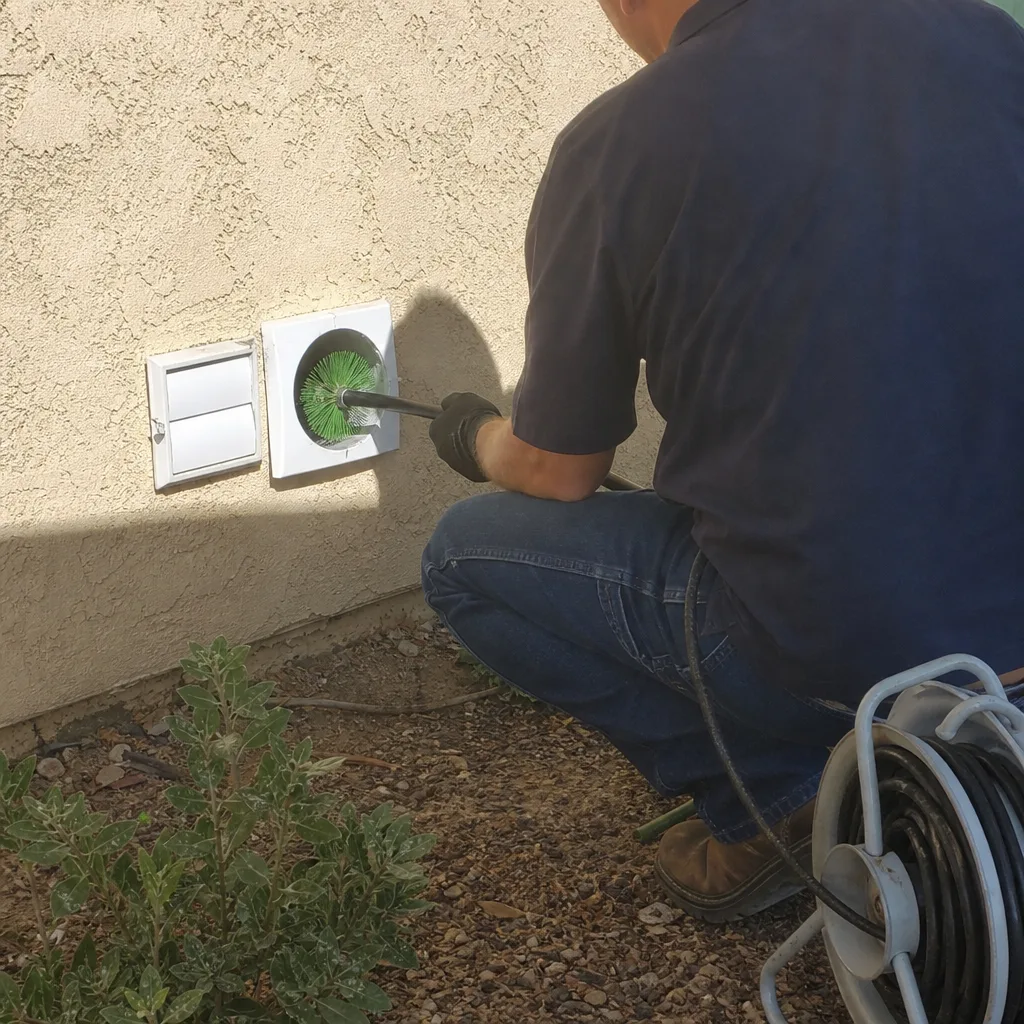
- Cleaning of dryer vents using rotary brush equipment
What Typically Does Require a Permit
- Replacing any section of duct, even a short connector, with new material
- Relocating a supply register or return grille
- Adding a new branch line or extending existing duct runs
- Modifying the air handler cabinet, coil, or internal plenum
- Permanent duct sealing that changes system static pressure characteristics
- Any repair that involves opening a wall, ceiling, or soffit to access ductwork
If you are dealing with damaged ductwork and want it corrected the right way, Air Duct Repair in Apple Valley covers the full scope of what a service that does this work properly looks like.
How Title 24 and the California Mechanical Code Apply to Ductwork
California’s Title 24 building standards are not a single code. They are a set of codes, and the California Mechanical Code sits inside Title 24 Part 4. The CMC governs every component of a mechanical system: furnaces, air handlers, ducts, registers, flues, combustion intakes, ventilation, and more. The CMC applies statewide, but local jurisdictions – including San Bernardino County, which covers Apple Valley – adopt it with amendments. Those amendments are where homeowners get surprised.
For duct systems, the CMC has two relevant mandates. First, all duct material must be listed and labeled for its intended use. Flex duct, rigid galvanized, duct board – each has performance requirements. Second, any person performing work “for compensation” must either hold a contractor license in the appropriate classification (C-20 for warm-air heating, ventilating, and air conditioning) or work under someone who does. This second point matters a great deal in duct cleaning. A cleaning-only contractor does not need a C-20 if they do not touch the system mechanically. A contractor who repairs ductwork does.
Title 24 also imposes energy performance standards. Duct sealing, duct insulation levels, and system airflow minimums are all in the code. This is why a “quick patch” with foil tape that violates Title 24’s sealing requirements creates a bigger problem than a clean permit record. If a contractor does unpermitted work that fails to meet Title 24 energy standards, the correction later costs more than the original repair. In Apple Valley’s high-desert climate, where summer static pressure and winter temperature delta put real strain on duct systems, that failure rate is higher than the state average. We have opened plenums in this market that had been “patched” with tape that was never rated for duct interiors and had failed within 18 months.
For the homeowner, the practical takeaway is that California’s code posture is design-and-performance driven, not process-driven. The state does not care how clean a duct is. It cares that the system moves air at the designed rate without leakage. Cleaning never changes that equation. Modification always does. That is the clean line to remember.
San Bernardino County Permit Thresholds for Apple Valley
Apple Valley is a town within San Bernardino County, and the county building and safety department is the enforcement authority for mechanical permits there. The county operates under California code with local amendments, and their mechanical permit process follows a specific structure that affects duct work decisions.
San Bernardino County issues mechanical permits for any work that “erects, installs, enlarges, alters, repairs, removes, converts, or replaces” any mechanical system. That is broad. The word “repairs” is in the list, which sounds like everything needs a permit. But the county, like most California jurisdictions, applies a practical test: repairs that are minor, that restore original design condition, and that do not affect structural or fire-resistance elements are generally administrative – not permit-triggering. Replacing a section of flex duct with the same diameter and same routing falls under this minor-repair exemption. Changing that same section to a larger diameter, adding a balancing damper, or moving a register to a different room does not.
For Apple Valley homeowners specifically, the key thresholds are these:
- Duct cleaning, video inspection, and filter replacement: No permit. No county involvement. No record created.
- Minor duct repair restoring original condition: Generally exempt, but documentation of what was done matters for later resale. Take photos. Keep the work order.
- Duct replacement or system reconfiguration: Permit required. The contractor pulls it, the county inspects, and the work goes on record.
- Air handler modification or replacement: Permit required. This is not a duct question – it is a mechanical equipment question, and it always triggers county review.
- Dryer vent replacement or rerouting: Often exempt if the vent is exterior-mounted and the run configuration does not change. Rerouting a dryer vent through a wall or roof cavity is a permit item.
The permit cost in San Bernardino County for minor mechanical work is modest – often under $200 depending on valuation – but that is not really the point. The point is the record. A permitted duct repair that appears in county files removes every future sales objection before it starts. An unpermitted one creates a documentation gap that buyers and lenders in Apple Valley treat more seriously than they did ten years ago.
If the cleaning itself is what you need, our Air Duct Cleaning in Apple Valley page explains the equipment and process, and what a documented cleaning should include.
Why Documentation From a Cleaning Company Matters More Than You Think
The fastest way to understand the value of documentation is to think about what happens during a real estate transaction. The seller disclosures for an Apple Valley home ask whether any “alterations, modifications, repairs, or replacements” have been made to the property’s systems. Most homeowners do not know how to answer that question for their HVAC. A legitimate duct cleaning company solves that problem by providing a before-and-after record of exactly what was done – and, equally important, what was not done.
A professional cleaning service should be able to give you three things at the end of the visit:
- Scope of work documentation: A written description of which ducts were cleaned, which tools were used, and the condition found. If mechanical agitation with a Rotobrush system was done, that appears. If HEPA extraction with Nikro equipment was used, that appears too.
- Photo or video evidence: Interior duct photos before and after. Not optional. A company using camera inspection can show you dust load, debris, and final condition. Those photos are evidence of what existed and what changed.
- Completion report: A summary that includes the date, the technician, the equipment used, and a statement of scope – specifically noting that no modifications were made. That final phrase is the one that matters if a buyer’s inspector raises a question later.
This documentation does not replace a permit where one is required. But it serves as proof of the negative – evidence that a duct cleaning was a cleaning and nothing else. In a dispute, a disclosure, or a resale negotiation, that is exactly what you want. We have seen Apple Valley homeowners produce three-year-old cleaning reports that resolved an inspector’s question in a single email.
What to Ask a Contractor Who Recommends Repairs
This is where most homeowners lose control of the situation. A cleaning technician opens a return register, sees a damaged flex section, and says “we can fix that while we’re here.” The homeowner, understandably, wants the problem solved. The price sounds reasonable. Here is the problem: at that moment, the homeowner has no idea whether the proposed fix is permit-exempt or permit-required. The technician is often guessing too.
Before agreeing to any repair recommended during a cleaning, ask these five questions:
- “Does this repair restore original condition, or does it change the system?” The answer determines the permit question. If the contractor hesitates, that is information.
- “Who pulls the permit if one is needed?” In San Bernardino County, the contractor does. If the contractor says “you can pull it as the homeowner,” that is a red flag. Owner-builder mechanical permits exist but are not appropriate for repair work performed by a licensed company.
- “Will the repair be documented with photos and a written scope?” If the answer is no, you will have no paper trail for resale.
- “Does this repair change system performance, airflow, or efficiency in any way?” If yes, it is almost certainly permit-required under Title 24.
- “Can you give me the repair quote separately from the cleaning quote, with the permit cost itemized?” A contractor who is organized enough to separate the line items is organized enough to manage the permit process.
One more thing. If a contractor tells you that permits are never needed for duct work, end the conversation. That statement is false on its face in California. The only honest answer is “cleaning never needs one, but some repairs do.” Any contractor who cannot make that distinction clearly is not the one you want working inside your house.
How Inspections and Verification Actually Work
For the portion of duct work that does require a permit, the process in San Bernardino County follows a consistent pattern. Understanding it removes the anxiety most people feel about county inspections. The sequence is:
- Permit application: The contractor submits the mechanical permit application with a scope description and system details. For simple duct replacements, this is usually an over-the-counter or online process.
- Permit issuance: The county issues the permit with a fee based on the valuation of the work. The contractor or homeowner can pay it.
- Work performed: The contractor completes the duct repair or replacement to code.
- Inspection scheduled: The contractor calls for inspection. For duct work, the inspection is usually a visual one – the inspector verifies that the materials, connections, sealing, and support conform to the approved scope.
- Final sign-off: The county records the final inspection, and the permit closes. The work is now on file.
Most duct repair inspections in this part of San Bernardino County are uncomplicated. The inspector spends 15 to 20 minutes looking at the work, checking fasteners and support straps and sealing, and signs off if it meets code. The longer problem is always the same: someone did work without a permit, and the owner is now trying to get it legalized after the fact. That process – sometimes called a validation or “as-built” permit – involves more paperwork, more photos, often more invasive inspection, and sometimes correction work to bring the old repair up to current Title 24 standard. The short version: doing it right the first time is cheaper.
For cleaning work, verification is different. There is no county inspector looking at how clean your ducts are. The verification is the documentation we described earlier: photos, video, scope of work, equipment used. That is why the equipment matters. A company that uses rotary-agitation tools for surface contact and HEPA extraction maintained under Abatement Technologies negative-air guidance is going to produce verification evidence that a shop-vac company cannot. If you want to see what an equipment-backed process looks like in practice, start at our Duct Cleaning Apple Valley home page, which describes the full approach.
Common Mistakes to Avoid
- Allowing a cleaning technician to do “quick repairs” during a cleaning visit without asking the five questions above. The cleaning is permit-free; the repair may not be. You need to know which is which before the work happens, not after.
- Assuming that any duct work done inside the house is invisible to a future buyer. Inspectors are trained to spot non-original duct runs, mastic fingerprints, mixed duct diameters, and non-standard connections. In Apple Valley’s competitive resale market, they are looking harder than they used to.
- Paying for a duct cleaning and accepting no documentation. Without a scope of work and photos, you have paid for a service you cannot prove happened. If a resale question comes up later, you are holding nothing.
- Using a contractor who cannot explain the cleaning vs. alteration permit rule. That contractor either does not understand California mechanical code or is deliberately blurring the line. Neither answer is acceptable.
- Letting price determine the decision between a real cleaning system and a surface vacuum job. The cost difference in Apple Valley is often a couple hundred dollars. The documentation difference is everything if a sale or insurance claim depends on it.
- Ignoring dry-vent cleaning in the permit conversation. Dryer vent replacement and rerouting have their own code requirements, and a clogged vent is a fire risk regardless of what the county says. Dryer Vent Cleaning in Apple Valley explains the cleaning side of that risk.
When to Call a Professional
You should call a professional duct cleaning company when you can see debris at the registers, when your HVAC system is blowing dust onto surfaces, when airflow has dropped noticeably from the far end of the house, when allergies or respiratory symptoms spike indoors, or when a home inspector has flagged the ductwork in a report. For Air Duct Cleaning Troubleshooting: Common Problems and How to Fix Them, see our dedicated guide. You should call a duct repair professional the moment you see disconnected flex sections, crushed duct, torn insulation, or significant gaps at the plenum connections. These are not cleaning problems. They are mechanical problems that affect system efficiency and can create moisture and air-quality issues inside the house. Duct Cleaning Apple Valley offers free estimates in Apple Valley – call (855) 619-4509 and we will tell you whether your issue is a cleaning, a repair, or both, and whether a permit enters the picture.
Frequently Asked Questions
No. Air duct cleaning – meaning mechanical agitation and vacuum extraction inside existing ductwork – is not a permit-triggering activity anywhere in California, including Apple Valley. A permit becomes relevant only if the work modifies the duct system itself.
Replacing duct sections, changing duct routing or diameter, relocating registers, adding branch lines, and modifying the air handler all trigger mechanical permit requirements in San Bernardino County. Minor repairs that restore original condition are generally exempt. Call (855) 619-4509 if you are not sure where your situation falls.
A company can do permit-exempt minor repairs legally. But any repair that changes system design, geometry, or performance without a permit is unpermitted work, and that creates resale and disclosure problems in Apple Valley when buyers inspect the property.
Ask for a written scope of work, before-and-after photos or video from the interior of the ducts, and a completion report stating that no modifications were made. These documents serve as evidence for future disclosures or resale questions.
Yes. Title 24 sets energy and sealing standards for duct systems, including materials and installation quality. Work that is done without permits often fails Title 24 sealing and insulation requirements, which means correction costs later. Permitted work is inspected against those standards.
Dryer vent cleaning itself does not require a permit. Rerouting, extending, or significantly modifying a dryer vent run may. The cleaning is also a fire-safety service – clogged dryer vents are a leading cause of house fires, and the cleaning should be taken seriously regardless of permit requirements.
The Bottom Line
Air duct cleaning in California, and specifically in Apple Valley, does not require a permit. That is the answer most people are looking for. The more important rule sits right next to it: any work that changes your duct system – replacement, reconfiguration, relocation, or equipment modification – crosses into permit territory under the California Mechanical Code and San Bernardino County enforcement. Learn that line, ask the right questions before repairs begin, and keep documentation from every cleaning service. If you take those three steps, you will never be the Apple Valley homeowner standing in escrow with an unpermitted duct patch and no way to explain it. Explore our more guides & resources for additional homeowner protection tips. When you are ready for a documented, equipment-backed cleaning – or an honest answer about whether your duct issue needs repair – call (855) 619-4509.
Written by the team at Duct Cleaning Apple Valley, serving Apple Valley since 2013.
See the difference
 Before
 After
 Before
 After
 Before
 After