
Last updated November 2, 2026
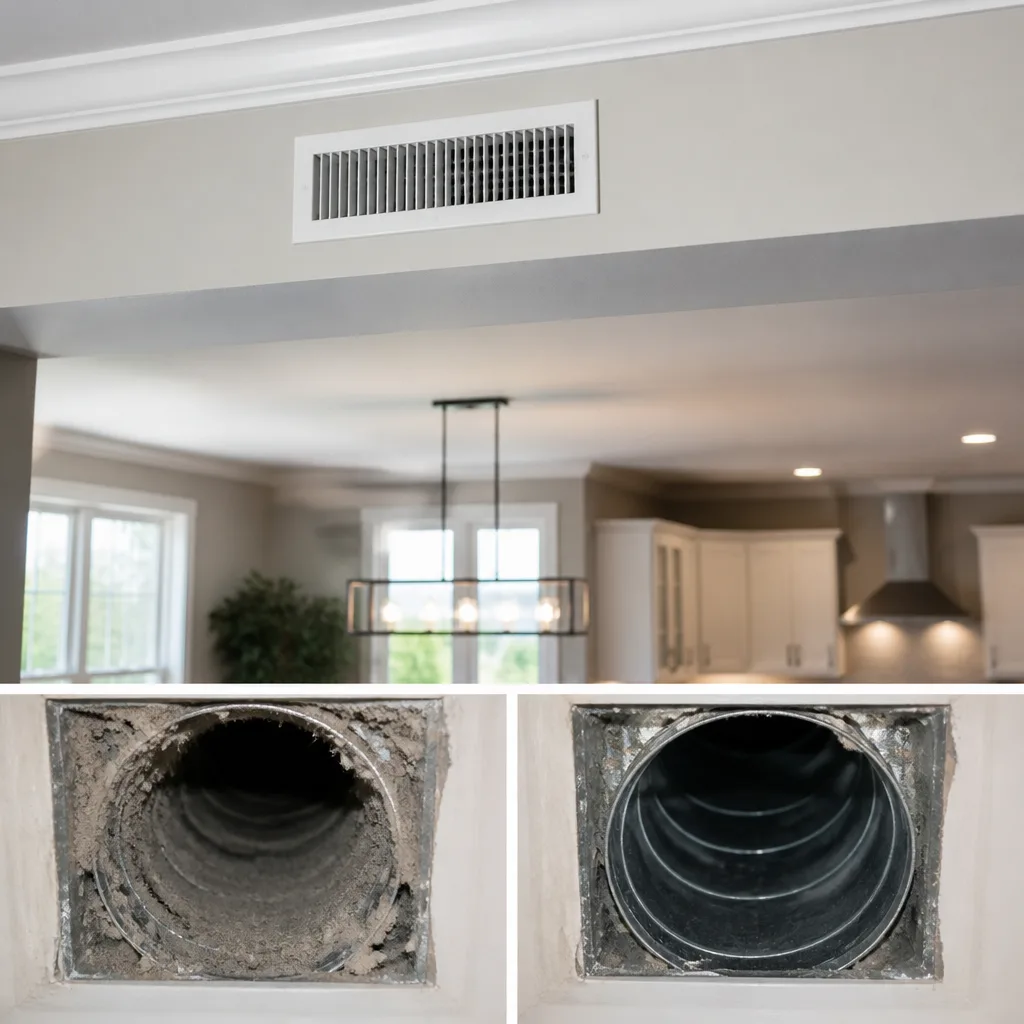 Whole-home duct cleaning
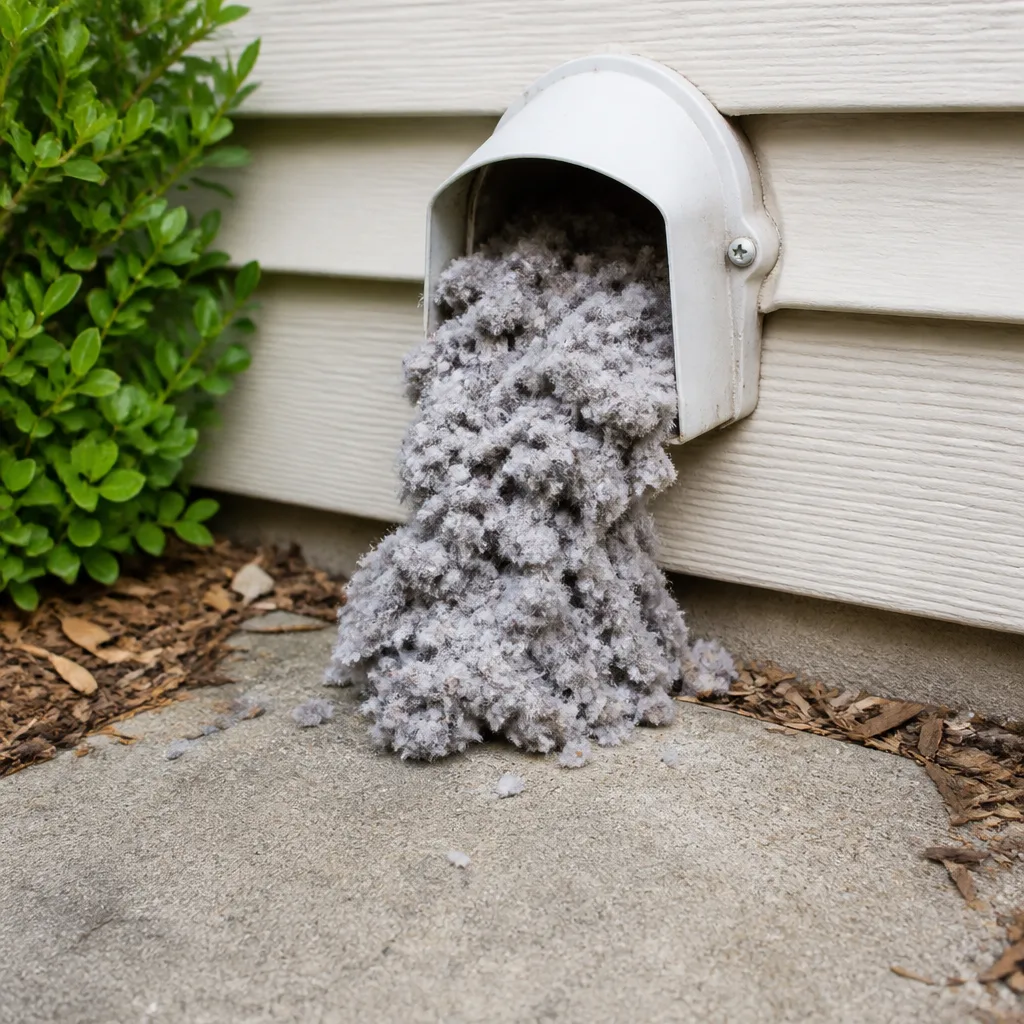 Dryer vent cleaning
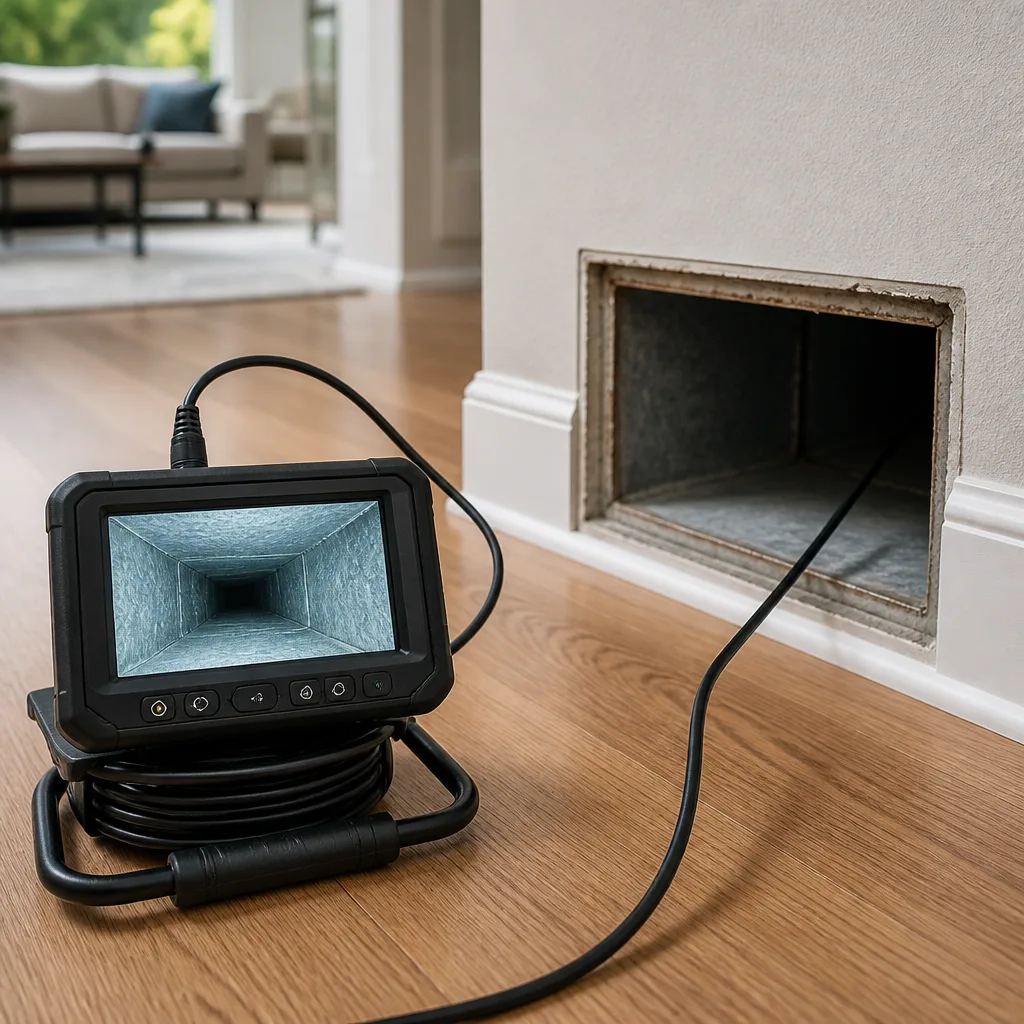 Camera inspection
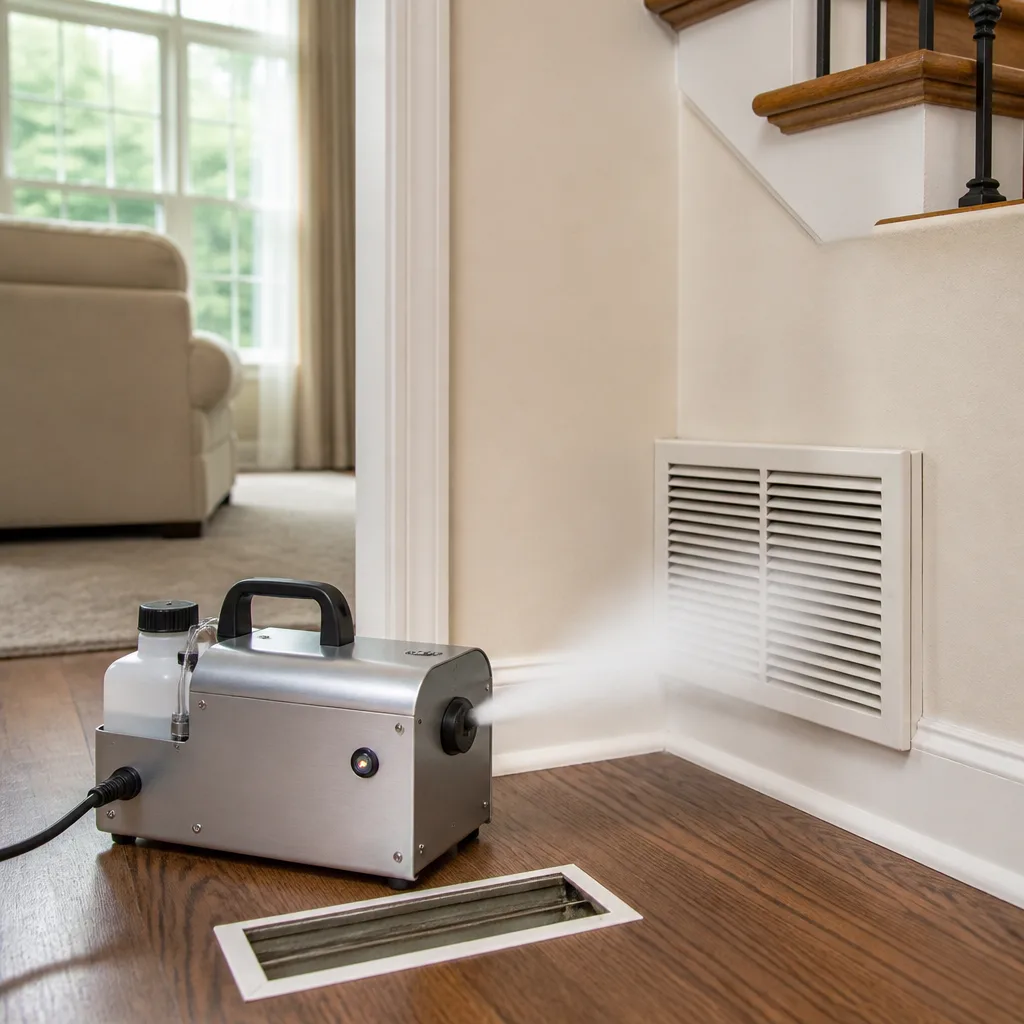 Sanitizing & deodorizing
Whole-system duct and dryer vent check with before-and-after photos - you see exactly what came out of your vents
That "$99 whole-house special" is a bait ad - the real number appears once they are in your hallway, or the "clean" is a shop-vac at the register. We photograph the inside of your ducts before and after instead.
The Complete Air Duct Cleaning Guide for Apple Valley Homeowners
The EPA’s often-cited ‘clean every 3 – 5 years’ guideline was never calibrated for a Mojave Desert zip code where particulate matter routinely spikes above 150 µg/m³ during wind events. Apple Valley homeowners are working from the wrong baseline. This guide explains what actually accumulates inside High Desert ductwork, which equipment matters, how a proper cleaning is sequenced, and how to verify the work was done correctly. If you own a home in Apple Valley, the information here will change how you evaluate any duct cleaning service.
Quick Answer
Air duct cleaning in Apple Valley removes accumulated Mojave Desert dust, construction debris, and allergens from supply and return ductwork using mechanical agitation plus HEPA extraction. For High Desert homes, an inspection is warranted every 2 – 3 years, with cleaning when visible buildup, airflow changes, or post-renovation debris are present. A verifiable process uses equipment like Rotobrush rotary brushes and Nikro HEPA vacuums, not a shop vac, and pricing for a full single-system home typically ranges $450 – $1,200 depending on system size and access.
Styles & brands we work with
- Whole-home duct cleaning
- Dryer vent cleaning
- Camera inspection
- Sanitizing & deodorizing
Table of Contents
- Why Apple Valley Ducts Get Dirtier Than National Averages
- What Actually Ends Up Inside Your Ductwork
- Equipment That Matters: Agitation and Extraction as Two Separate Steps
- The Step-by-Step Cleaning Sequence
- How to Read Your HVAC System Before the Technician Arrives
- Post-Cleaning Verification: A Homeowner’s Checklist
- When Duct Cleaning Is the Wrong Solution
- What Duct Cleaning Costs in Apple Valley
Why Apple Valley Ducts Get Dirtier Than National Averages
Apple Valley sits at roughly 2,900 feet in the Victor Valley, surrounded by dry lake beds and open desert. That geography produces a dust profile unlike anything in coastal or humid climates. The particulate matter here is fine, alkaline, and abrasive. During Santa Ana wind events, sustained gusts lift PM2.5 and PM10 into the air column, and much of that ends up pulled into homes through fresh-air intakes, window gaps, and the natural negative pressure of a running HVAC system. In our work across Duct Cleaning Apple Valley home inspections, we consistently find a gray-white talc-like powder coating the interior of return ducts in homes that have never been cleaned, even when filters were changed regularly.
What makes High Desert dust different from, say, Gulf Coast humidity-driven mold or Midwest pollen seasons is density and alkalinity. The dust is mineral-heavy, which means it settles fast and compacts. It does not simply blow through and exit the registers. It bonds to duct walls, especially in the return side where airflow is slower and larger volumes of unfiltered are drawn in from living spaces. That compacted layer reduces effective duct diameter over time, forcing your blower to work harder to move the same CFM.
The practical takeaway: the national every-3-to-5-years guidance risks waiting too long here. A more realistic Apple Valley baseline is an inspection every two to three years, with cleaning performed when visible buildup exceeds roughly 1/8 inch on duct surfaces or when a renovation has introduced drywall dust and debris into the return system.
What Actually Ends Up Inside Your Ductwork
Before you can evaluate whether cleaning is necessary, it helps to know what you’re dealing with. In Apple Valley homes, we classify duct contamination into four broad categories. Each responds differently to cleaning methods, and each points to a different remediation priority.
1. Mojave Desert Dust and Fine Particulate
This is the dominant material in nearly every Apple Valley duct system we inspect. It is fine enough to remain airborne for hours after a wind event and light enough to circulate through the return plenum even with a MERV 8 filter in place. It coats duct interiors as a uniform film, often 1/16 to 1/4 inch thick after three to five years. This material responds well to rotary agitation and HEPA extraction, which is why we specify both steps rather than one or the other.
2. Construction and Renovation Debris
Apple Valley has seen steady residential building and remodeling since the early 2000s. Drywall dust, sawdust, paint overspray, and even small flooring fragments end up in ductwork when contractors run the HVAC system during construction or fail to seal off return vents. This debris is heavier than ambient desert dust, often collects in piles at return boots and plenum corners, and cannot be removed by suction alone. It requires mechanical agitation to break it loose before extraction.
3. Biological Material and Allergens
Pet dander, skin cells, and dust mite byproducts accumulate in every home, Apple Valley included. While the High Desert’s low humidity suppresses mold growth compared to coastal California, biological allergens still embed in the dust layer inside ducts and recirculate whenever the blower runs. If a household member has asthma or persistent allergy symptoms indoors, duct cleaning addresses one documented source of that exposure, though we are careful not to frame it as a medical intervention.
4. Pest and Rodent Evidence
Less common but worth flagging: desert pack rats and mice occasionally find their way into ductwork through disconnected joints or damaged boots. Their droppings, nesting material, and urine residue require a higher-level cleaning and, often, duct repair to close the entry point. This is one scenario where cleaning alone will not solve the problem long-term.
Equipment That Matters: Agitation and Extraction as Two Separate Steps
Most homeowners evaluating duct cleaning services have never seen the inside of a duct. That information asymmetry is exactly what low-end providers exploit. A shop vac and a brush attachment are not duct cleaning equipment, regardless of what the marketing says. Those tools reach maybe three to six feet into a run and leave the compacted layer largely untouched. They also redistribute more particulate than they capture, because consumer-grade vacuums lack the filtration to retain fine desert dust.
Professional-grade cleaning, the kind that produces verifiable results in Apple Valley homes, is built around two distinct functions performed in sequence: mechanical agitation, then HEPA extraction.
Mechanical agitation breaks the bond between the dust layer and the duct wall. We use Rotobrush rotary-contact cleaning systems for this step. A Rotobrush head spins against the duct interior at high speed, dislodging compacted High Desert dust that a straight brush or vacuum alone cannot move. The phrase “rotary-contact” matters: the tool physically contacts the duct surface, which is what separates it from a blow-and-go air whip approach.
HEPA extraction removes the dislodged particulate from the airstream and captures it. We run Nikro HEPA vacuum equipment for this step. The HEPA filtration is the critical detail, because it traps fine PM2.5 particles rather than exhausting them back into the home. On larger or heavily contaminated systems, we pair this with Abatement Technologies negative-air and containment protocols, the same class of equipment used in professional remediation work. That capability matters for Apple Valley homes where rodent contamination or significant renovation debris has been identified.
The sequence matters too: agitation comes before extraction, not instead of it. A company that runs only a vacuum is skipping the step that breaks loose the compacted layer. A company that runs only a brush is kicking dust into suspension and hoping the HVAC filter catches what floats. You need both, in that order, with HEPA capture on the back end. If a contractor cannot name their equipment, that is your signal to find one who can.
Beyond the cleaning pass itself, the same visit can address air quality at the source. We carry and install Honeywell and Aprilaire filtration products, which means a homeowner can upgrade from a basic MERV 8 filter to a MERV 13 or higher media cabinet in the same appointment. For Apple Valley families sensitive to wind-season particulate, that upgrade often makes a measurable difference in indoor dust accumulation between cleanings.
The Step-by-Step Cleaning Sequence
A contractor-grade duct cleaning in an Apple Valley home follows a defined sequence. Each step exists for a reason, and skipping any of them degrades the result. Here is the full process, in order.
- System inspection and access mapping. The technician walks the entire system: furnace or air handler location, return drops, supply trunk lines, each register, and the plenum connections. This identifies the number of access points needed and flags any disconnected or crushed sections before cleaning begins.
- Filter removal and system shutdown. The existing filter is removed and inspected. The HVAC system is powered down at the thermostat and, where accessible, at the equipment disconnect. Running the blower during cleaning can push loosened debris deeper into the system.
- Containment setup. For standard residential cleaning, registers are sealed with covers to create a controlled negative-pressure environment. For heavy contamination, we deploy Abatement Technologies negative-air equipment and polyethylene containment barriers to prevent cross-contamination of living spaces.
- Access cutting (where required). Depending on the duct configuration, technician may need to cut access ports in the main trunk line or plenum. These are clean round cuts sized for the Rotobrush and vacuum hose, and they are properly capped and sealed after cleaning. This step is permanent, so a competent technician will plan access to minimize unnecessary openings.
- Mechanical agitation. The Rotobrush rotary head is run through each supply run, return drop, trunk line, and plenum. This is where the compacted Mojave dust layer is broken loose from the duct walls. The operator works each section methodically, not as a single quick pass.
- HEPA extraction. With the Nikro HEPA vacuum connected to the system and drawing negative pressure, loosened debris is pulled out of the ductwork and captured in the vacuum’s filtration. Extraction runs concurrently with agitation in most cases, so debris is removed at the moment it is dislodged, not allowed to resettle.
- Component cleaning. Supply registers, return grilles, and accessible plenum interiors are cleaned by hand or with contact tools. These components are often the most visually fouled part of the system and are frequently skipped by low-bid providers.
- Final inspection and filter installation. The technician performs a visual inspection at each access point, confirms airflow at each register, installs a new filter (or the upgraded Honeywell or Aprilaire media the homeowner selected), and restores the system to operation.
- Documentation. A competent company provides before-and-after photos of the duct interiors at key access points. For homeowners who want verification, these photos are the single most useful piece of documentation they can receive.
This sequence takes four to six hours for a typical single-system Apple Valley home of 1,800 to 2,800 square feet. A company quoting two hours on a full-system cleaning is not performing this level of work, and the price difference reflects that gap.
How to Read Your HVAC System Before the Technician Arrives
You do not need to be an HVAC technician to understand the layout of your own system, and a quick walkthrough before your appointment changes the conversation. A homeowner who can point to the return drop and identify the trunk lines is far less likely to be shortchanged on access points or skipped sections. For a deeper look at how a full service visit works, see our guide to Air Duct Cleaning in Apple Valley.
Start with the equipment itself. Find your furnace or air handler. In most Apple Valley tract homes, it will be in the garage, a hall closet, or occasionally the attic. The large duct connected to it is the main return, which draws air from the living space back to the equipment. Trace it as far as you can. You should be able to identify at least one large return grille inside the home, typically in a hallway ceiling or wall.
Now look for the supply side. These are the smaller registers, usually in floors, ceilings, or high walls, that blow conditioned air into each room. Walk the house and count them. A typical Apple Valley home has between eight and fourteen supply registers, depending on square footage and layout. Write that number down.
Finally, note where the plenum sits. The supply plenum is the box or transition immediately downstream of the air handler, where the main trunk line branches into individual supply runs. The return plenum is the equivalent on the intake side. These are critical cleaning zones, and a technician who only cleans the branch runs and skips the plenums has done half a job. Ask, when the quote is being written, how many access points the technician plans to cut and where. If the answer is vague, push for specificity.
This walkthrough also tells you something about the condition of your system. Disconnected sections, crushed flex duct, gaps at register boots, or obvious airflow discrepancies between rooms are red flags for duct repair, not cleaning. If you see those, read the section below on when cleaning is the wrong call.
Post-Cleaning Verification: A Homeowner’s Checklist
The most common complaint in the duct cleaning industry, across the country and in Apple Valley, is that the homeowner paid for a service they could not verify. A trunk line is invisible behind drywall. Before-and-after photos, the kind captured with an inspection camera at actual access points, solve most of this concern. But you can also perform your own verification in the hours and days after the service.
- Ask for and review before-and-after photos during the final walkthrough. The technician should have images from the return plenum, main trunk, and at least the most heavily loaded supply runs. If the after photos show bare metal or fiberglass duct board rather than a gray dust layer, the cleaning worked.
- Check airflow at each register with your hand. A clean system should show noticeably improved volume at the far-end registers. If the room at the end of the longest trunk line still feels weaker than rooms nearest the air handler, mention it before the crew leaves. That may indicate an imbalance that cleaning alone does not solve.
- Inspect the new filter after the first 48 hours of runtime. A properly cleaned system should not immediately load a new filter with debris. If your filter is visibly clogged within two days, either the cleaning missed a section or there is an upstream issue in the return path. Take a photo and call the company back.
- Use your phone camera at accessible grilles. Remove a supply register and photograph the boot and the first visible section of the run. You are looking for bare surfaces, not a film of dust. This works best on floor registers, which offer a direct sightline in many Apple Valley homes.
- Check for access cap reinstallation. Any access holes cut in the trunk or plenum should be capped with a metal plate and sealed. Verify they are in place and secure. A missing or loose cap is a leak and a rework item.
These checks take less than half an hour total. They are the difference between trusting a receipt and trusting the work.
When Duct Cleaning Is the Wrong Solution
Duct cleaning is a specific intervention for specific conditions. There are several common Apple Valley scenarios where cleaning addresses a symptom and leaves the underlying problem untouched. In these cases, the honest recommendation is a different service.
Visible disconnects or crushed sections. If your walkthrough or a technician’s inspection reveals sections of flex duct that have pulled away from boots, collapsed under attic weight, or been damaged by rodents, cleaning will not restore function. That is a repair issue. Our guide to Air Duct Repair in Apple Valley covers what those repairs involve and how they are priced.
Persistent airflow imbalance. If one room is always hot in summer and cold in winter, and the problem predates any visible duct contamination, the issue is likely design, damper settings, or poorly sized runs. Cleaning removes debris; it does not re-engineer airflow. A competent contractor will tell you this before quoting work.
Dust appearing within 48 hours of a cleaning, every time. This pattern usually points to a return-side leak, often in the attic or crawlspace, where unsealed joints are pulling unfiltered High Desert air directly into the system. Duct sealing, not cleaning, is the fix. Alternatively, a severely undersized or bypassed filter cabinet allows dust to pass around the filter media entirely.
High humidity or odor issues. Apple Valley’s arid climate keeps indoor humidity low most of the year, so persistent musty odors are unusual here. When they occur, they often trace to a condensate pan or drain line, not duct contamination. That is an HVAC maintenance item, not a cleaning item.
Post-renovation dust that keeps reappearing. If contractors worked with the HVAC system running and drywall dust entered the return side, a single cleaning removes what is there. But if drywall dust remains in wall cavities, attic insulation, or carpet fibers, it will continue to enter the system until those sources are addressed. Cleaning fixes the ducts; it does not fix the rest of the house.
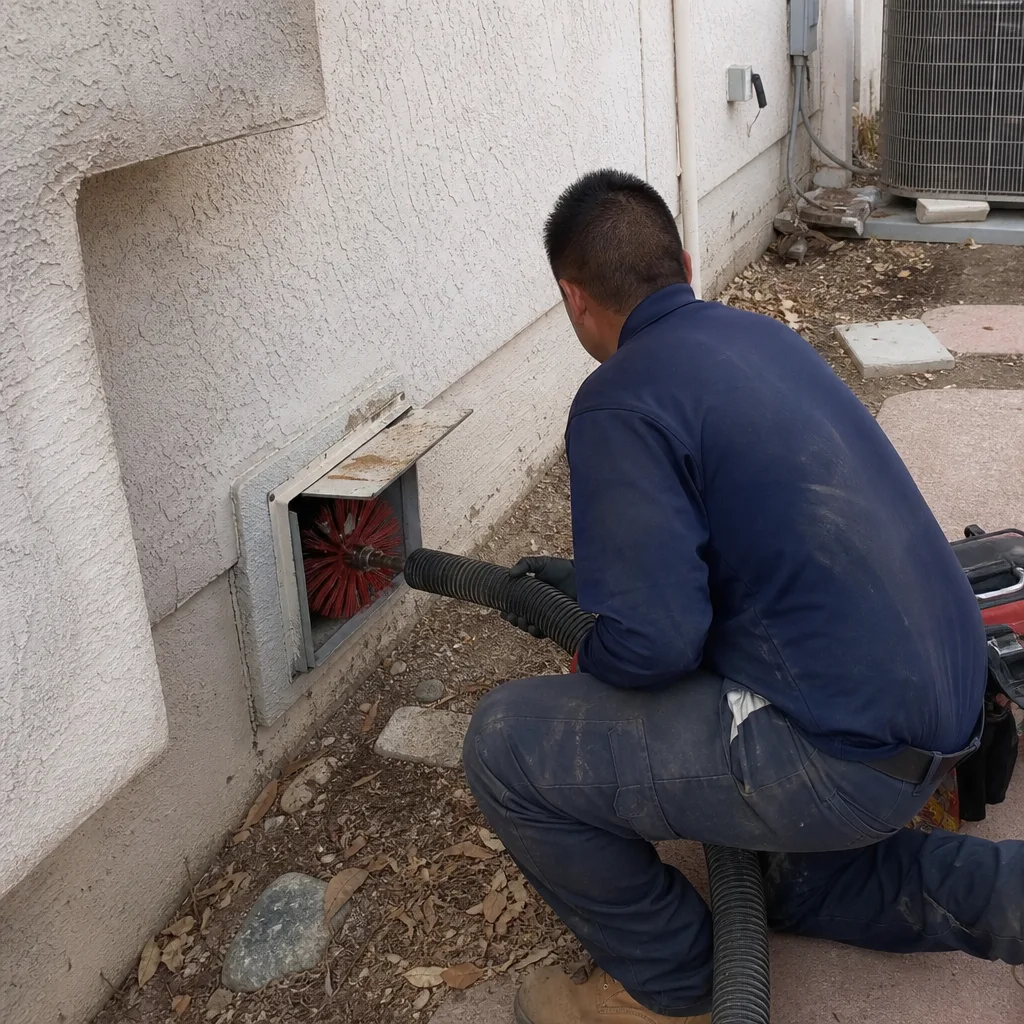
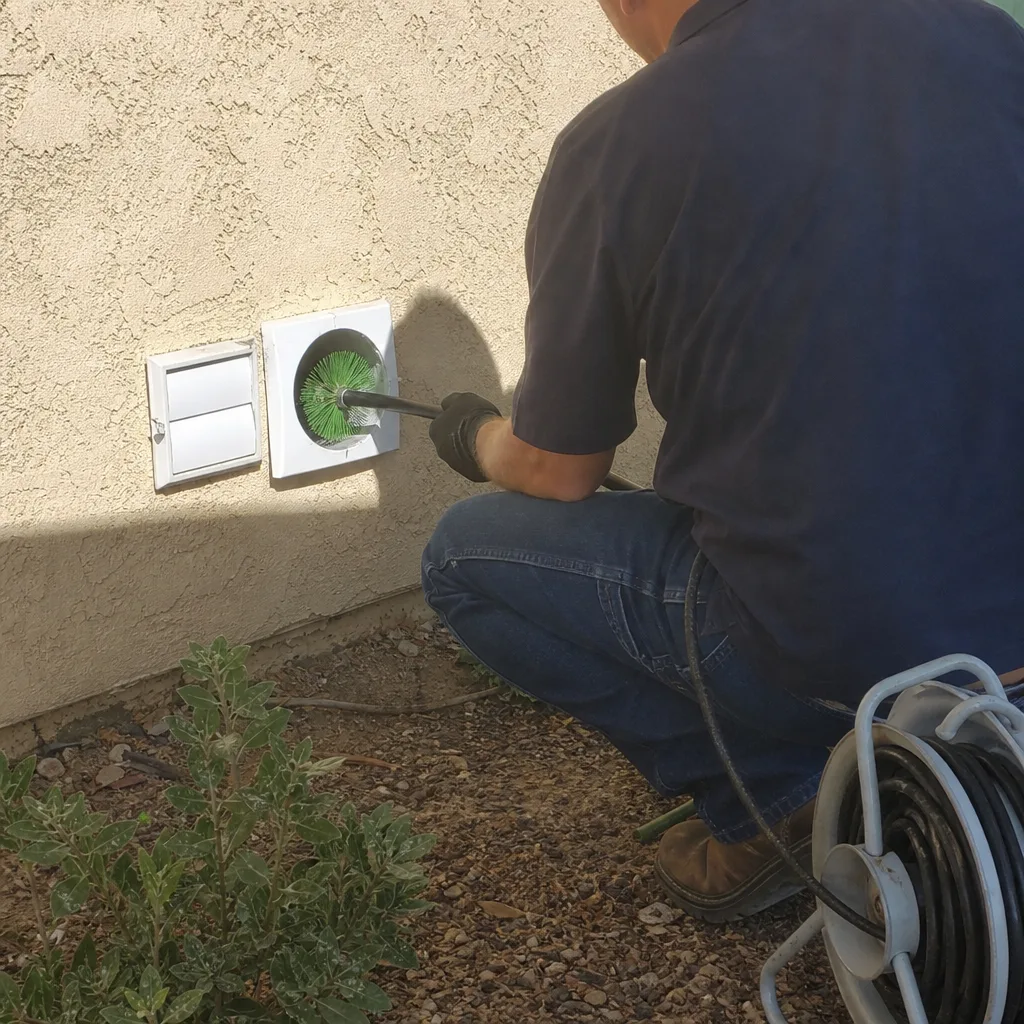
Dryer-related lint or burning smells. These are not duct cleaning issues at all. They point to the dryer vent system. Lint accumulation inside a dryer vent is a documented fire risk and requires dedicated equipment. We cover that separately in our guide to Dryer Vent Cleaning in Apple Valley.
What Duct Cleaning Costs in Apple Valley
Pricing for duct cleaning in Apple Valley varies by system size, access difficulty, contamination level, and equipment quality. A single-system home with eight to fourteen supply runs typically falls between $450 and $1,200. Homes with two HVAC systems, extensive trunk lines, or contamination requiring Abatement Technologies containment will land higher, sometimes $1,500 to $2,500. Homes with minimal visible buildup and well-maintained filtration sometimes do not need cleaning at all, and a reputable company will say so on inspection.
| Scope | Typical Apple Valley Range | What’s Included |
|---|---|---|
| Inspection only | $0 – $150 | Visual walkthrough, access mapping, honest recommendation. Often credited toward cleaning if recommended. |
| Single system, standard cleaning | $450 – $800 | Full agitation and HEPA extraction, supply and return, plenums, register cleaning, new standard filter. |
| Single system with heavy contamination | $800 – $1,200 | Includes longer agitation time, additional access points, possibly negative-air containment. |
| Dual system or large home (3,000+ sq ft) | $900 – $1,800 | Two full systems or extended trunk runs, more registers and access points. |
| Duct repair add-on | $150 – $600+ | Per-repair pricing for disconnects, crushed sections, boot resealing. Quoted after inspection. |
Be wary of quotes under $200 for a full-system cleaning. The math does not work for the equipment and time a proper job requires. The industry’s bait-and-switch reputation is built on that low coupon price becoming a far larger invoice once the technician is on site and the homeowner is committed. We quote one flat price per system, agreed before work starts, with no per-vent upcharges and no surprise add-ons presented mid-job. If additional work is discovered during the cleaning, we stop, show the homeowner what we found, and provide a separate written quote before proceeding.
For an exact quote on your home, call (855) 619-4509. Estimates are free, and an inspection includes the same walkthrough we described above, with no obligation.
Common Mistakes to Avoid
- Choosing based on coupon price alone. A $99 whole-house duct cleaning in Apple Valley is mathematically incapable of funding the equipment time a real cleaning requires. The low price is a lead generator for upsells, or the job is performed with a shop vac and a brush that reaches six feet into one duct. Either way, you pay for it eventually.
- Skipping the return side. The return ducts carry the dirtiest air in the entire system and are often the most heavily contaminated. A company that cleans only supply runs has cleaned half the system. Ask explicitly whether the return plenum, return drops, and all return grilles are included.
- Accepting a job with no before-and-after photos. If a company cannot show you what the ducts looked like before and after, you are taking their word on the most important aspect of the service. Inspection cameras are standard equipment for any serious provider.
- Replacing the filter immediately before cleaning. The cleaning will disturb particulate that the filter will catch. Install a fresh filter after the cleaning, not before. If you upgraded to a Honeywell or Aprilaire media cabinet, this is the ideal time to install the better filter.
- Ignoring register count discrepancies. If your own walkthrough counted twelve supply registers and the quote is written for eight, the job is underpriced and under-scoped. Bring your count to the conversation.
- Assuming duct cleaning fixes every indoor air problem. If the system has leaks, crushed sections, or an undersized return, those are separate issues requiring repair. Cleaning removes debris, period. A competent company in Apple Valley will tell you when cleaning is not the answer.
- Not asking about dryer vent capability. Many duct cleaning companies do not clean dryer vents at all, or refer the work out. If your provider cannot address the dryer vent during the same visit, you are scheduling a second company for a second service call. Ask before booking.
See the difference
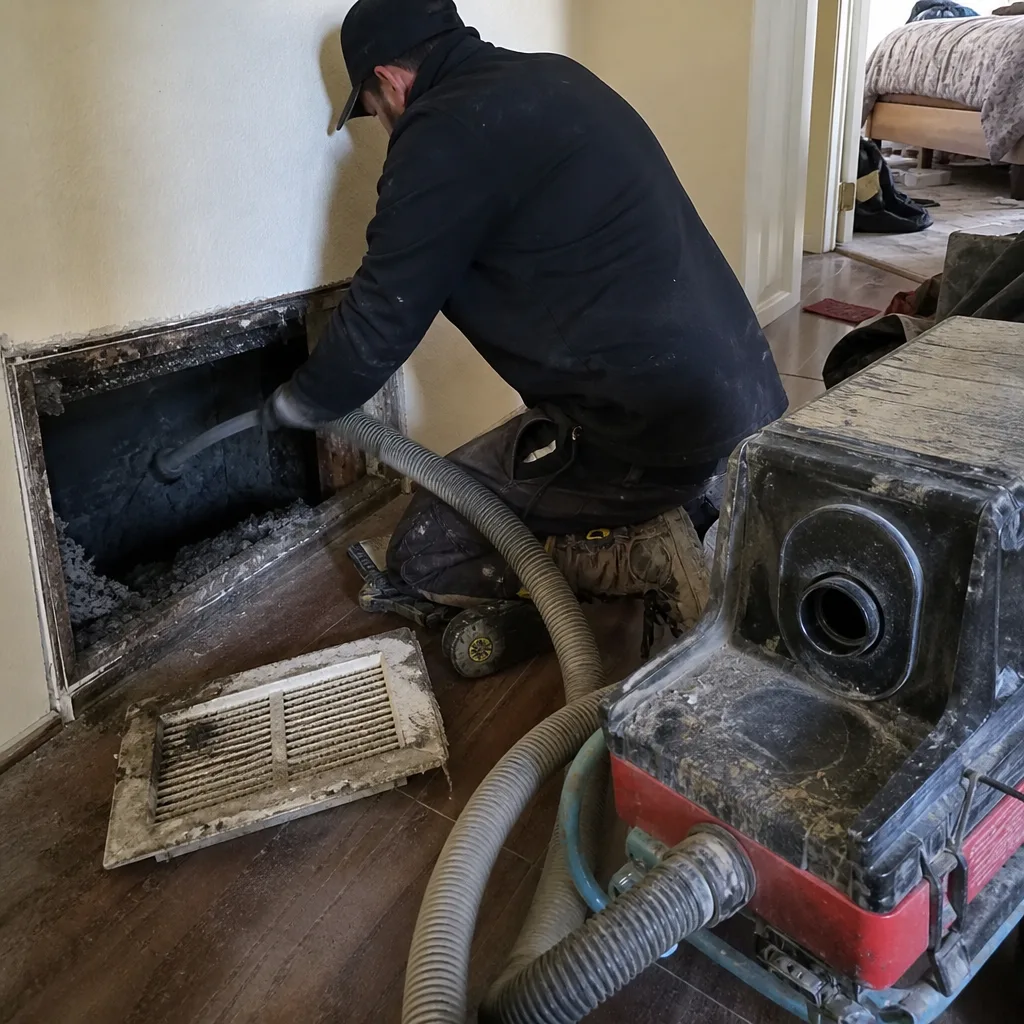 Before
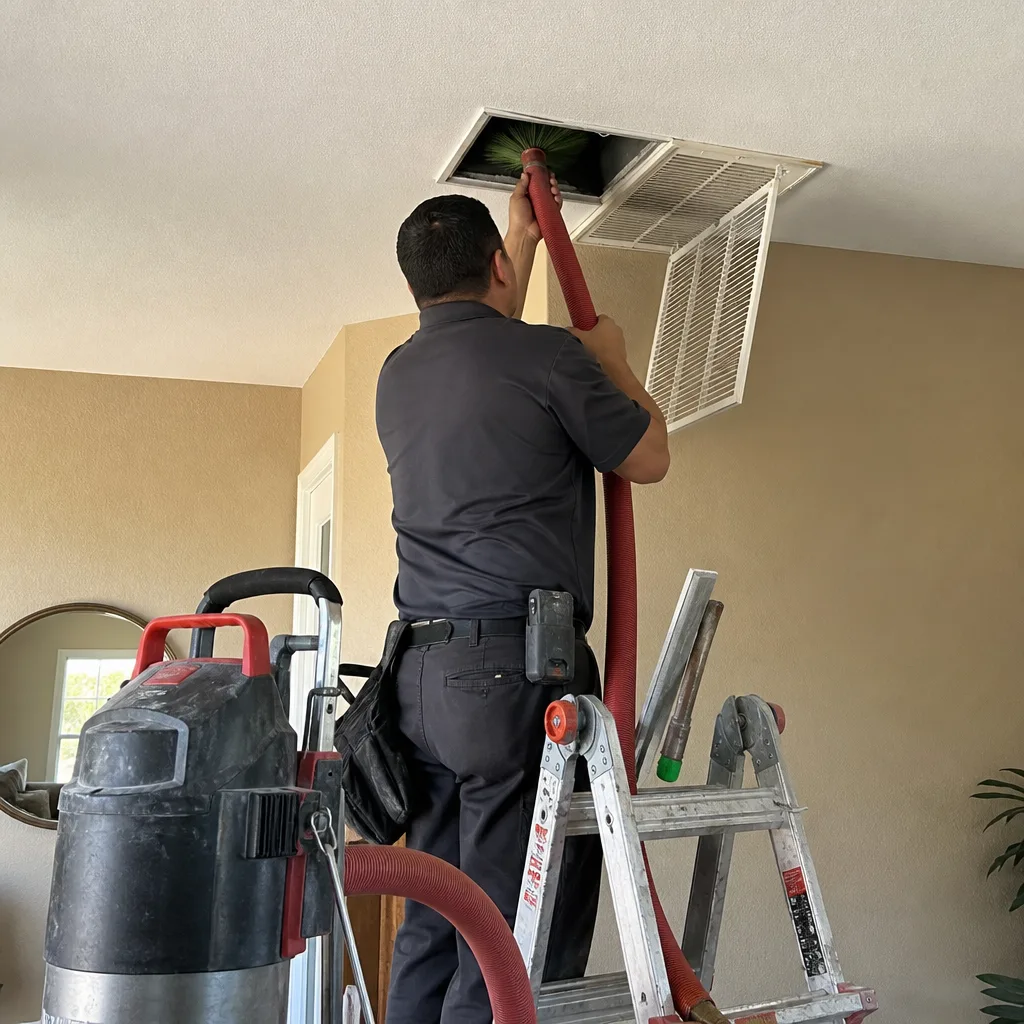 After
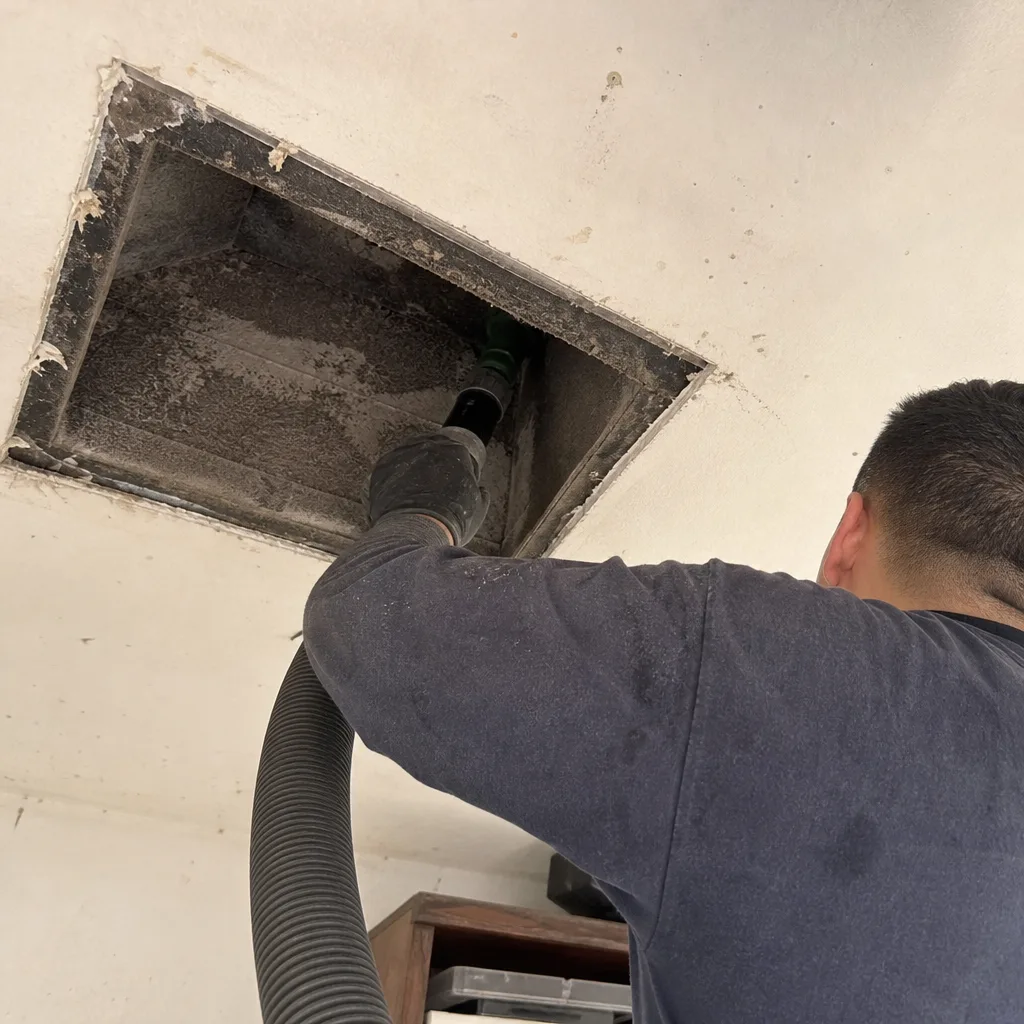 Before
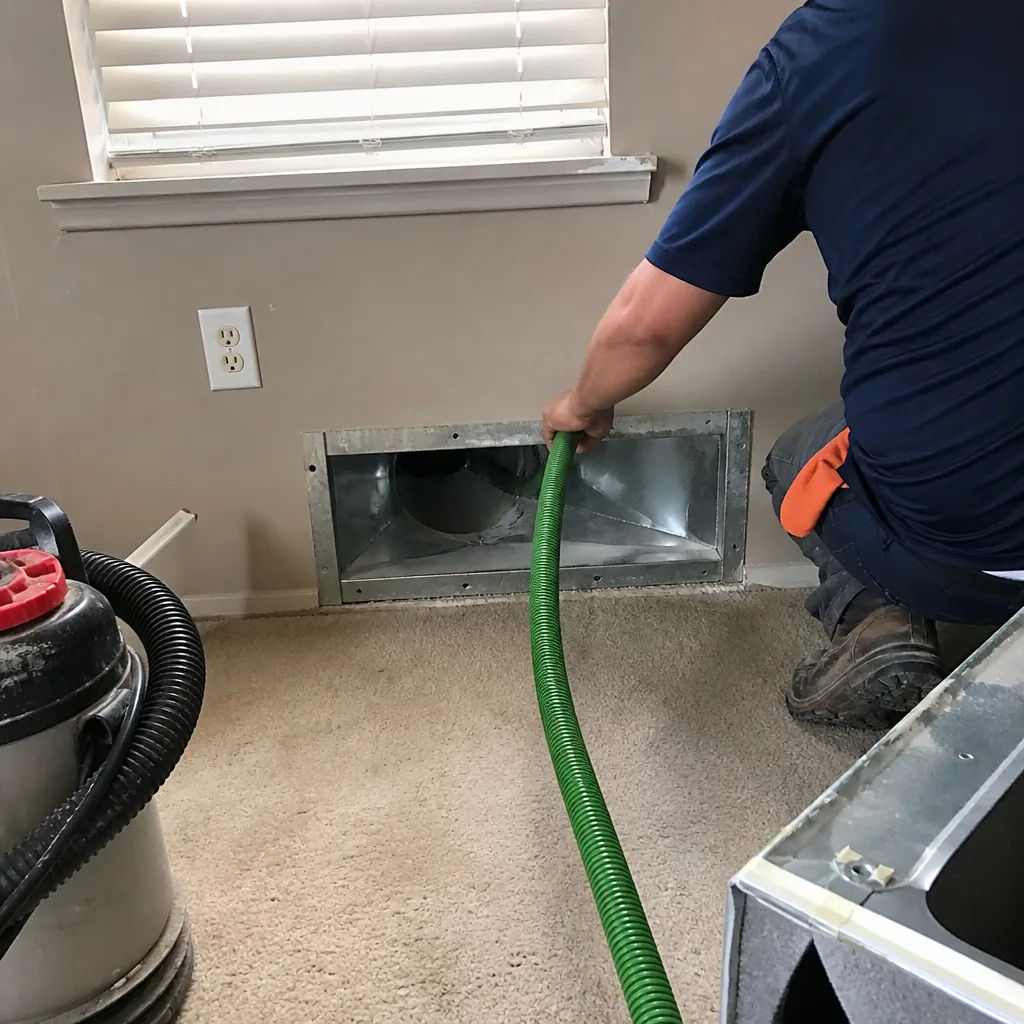 After
 Before
 After
When to Call a Professional
You should schedule an inspection, not necessarily a cleaning, if any of these conditions apply: visible dust accumulation at supply registers or return grilles that returns within days of wiping; a home renovation completed since the last cleaning, especially drywall or flooring work with the HVAC running; unexplained dust accumulation on surfaces despite regular filter changes; airflow from certain registers that feels noticeably weaker than others; or a home purchase where the previous owner’s maintenance history is unknown. If a home inspection flagged ductwork concerns, start with the inspection and expect an honest recommendation about whether cleaning, repair, or both is the right call. Duct Cleaning Apple Valley offers free estimates in Apple Valley and the surrounding Victor Valley. Call (855) 619-4509 to schedule a walkthrough, and we will show you what is actually inside your ducts before we recommend anything.
Frequently Asked Questions
For most Apple Valley homes, an inspection every two to three years is the right cadence, with cleaning when visible buildup, airflow changes, or renovation debris are present. The High Desert’s fine alkaline dust and seasonal Santa Ana wind events load ducts faster than the national every-3-to-5-years average assumes. Homes with pets, occupants with allergies, or recent construction may need more frequent attention. Call (855) 619-4509 for a free inspection to see whether your system is due.
A full single-system duct cleaning in Apple Valley typically costs $450 to $1,200, depending on system size, access, and contamination level. Larger homes with two systems or heavy contamination run higher. The honest cost is a flat price per system agreed before work starts, not a low per-vent rate that multiplies once the technician is on site. For an exact quote on your home, call (855) 619-4509.
Cheaper quotes usually mean cheaper equipment, fewer access points, skipped sections, or a bait-and-switch pricing model where the coupon price is a down payment on upsells. A cleaning that uses consumer-grade vacuums and brushes cannot reach the full duct system, and it redistributes more fine dust than it captures. The price difference between a $99 job and a $700 job is the difference in what actually gets removed.
Ask for before-and-after photos taken with an inspection camera at the return plenum and main trunk line. After the job, check airflow at each register, inspect the new filter after 48 hours of runtime, and look inside accessible floor registers with your phone camera. A properly cleaned system shows bare duct surfaces, not a gray film. If any of these checks fail, call the company back.
Duct cleaning removes accumulated dust, pet dander, and allergens that recirculate through the home when the HVAC system runs. In Apple Valley, where wind-season particulate loads indoor air heavily, a clean system plus an upgraded MERV 13 filter from Honeywell or Aprilaire can reduce measurable indoor dust. We frame the benefit around removing documented debris and improving airflow, not as a medical guarantee.
Sometimes, but not always. If the weak airflow is caused by a heavily obstructed supply run or a debris-clogged boot, cleaning restores it. If the problem stems from an undersized run, a disconnected section, or a crushed flex duct, cleaning will not solve it and the system needs repair work instead. A proper inspection identifies which situation you have before any money is spent.
The Bottom Line
Apple Valley homeowners face a dust load that national guidelines simply do not account for. Fine alkaline particulate from the Mojave, seasonal wind events, and the particulate load of desert living mean ductwork here accumulates material faster and compacts it harder than in most of the country. The right cleaning is not a shop vac pass through a few registers. It is mechanical agitation with equipment like Rotobrush, HEPA extraction with Nikro filtration, and honest verification with before-and-after photos. If you suspect your ducts are due, start with an inspection. Duct Cleaning Apple Valley provides Air Duct Cleaning in Apple Valley, Dryer Vent Cleaning in Apple Valley, and Air Duct Repair in Apple Valley as a single-company solution. Call (855) 619-4509 for a free estimate.
Written by the team at Duct Cleaning Apple Valley, serving Apple Valley since 2013.