
Last updated November 2, 2026
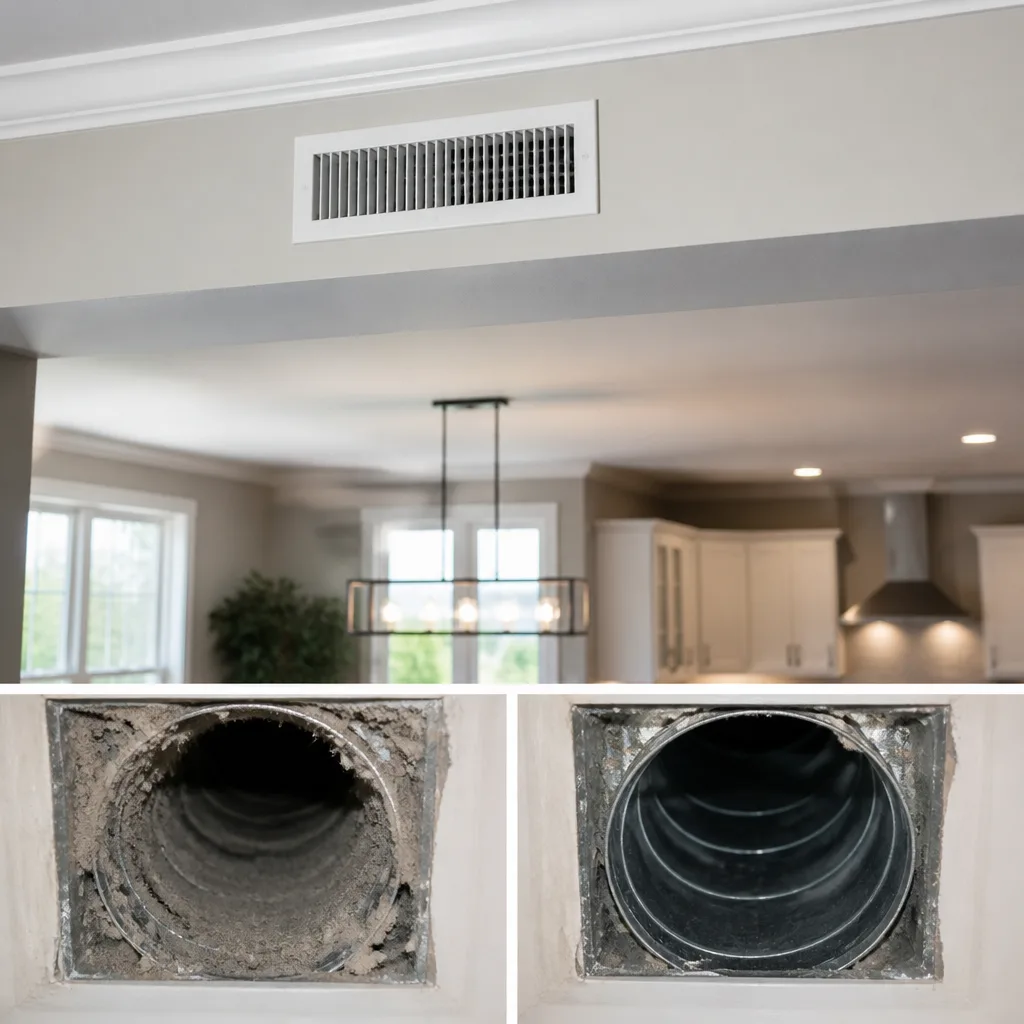 Whole-home duct cleaning
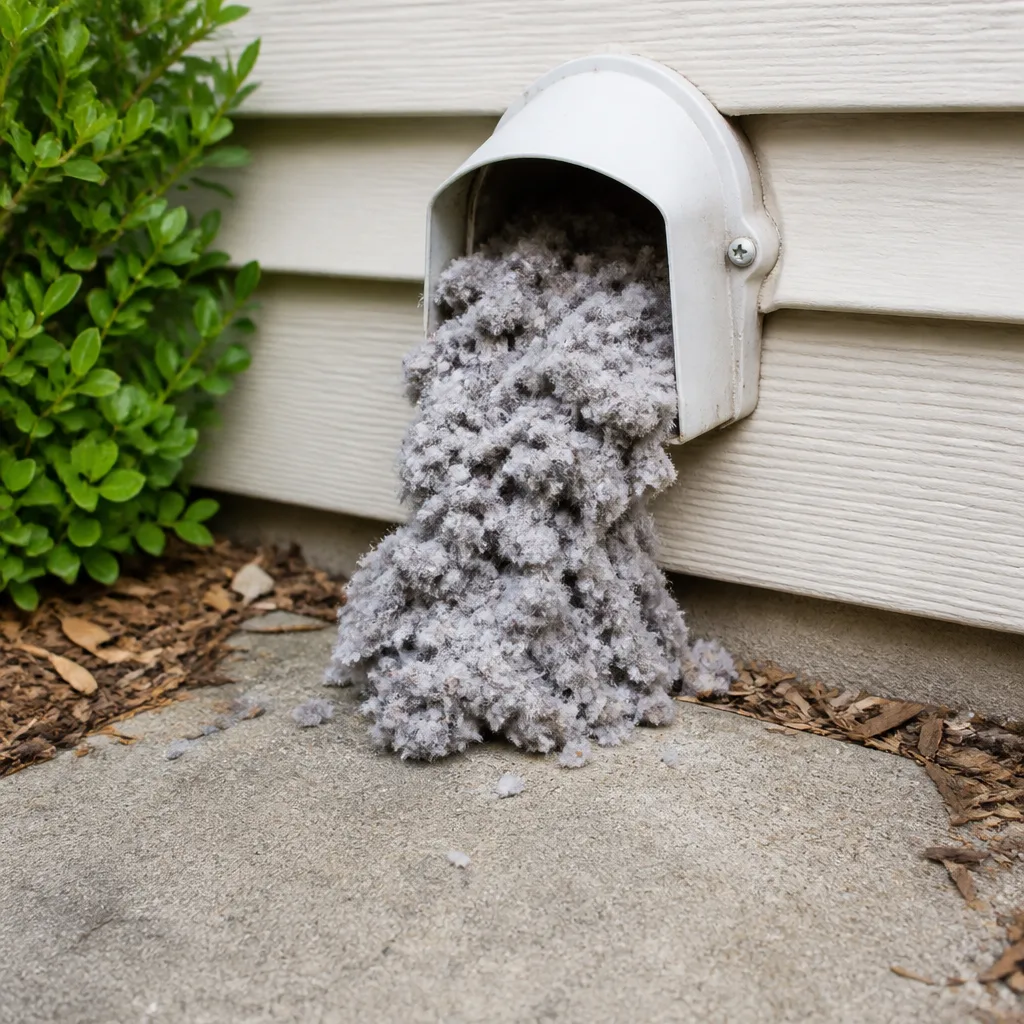 Dryer vent cleaning
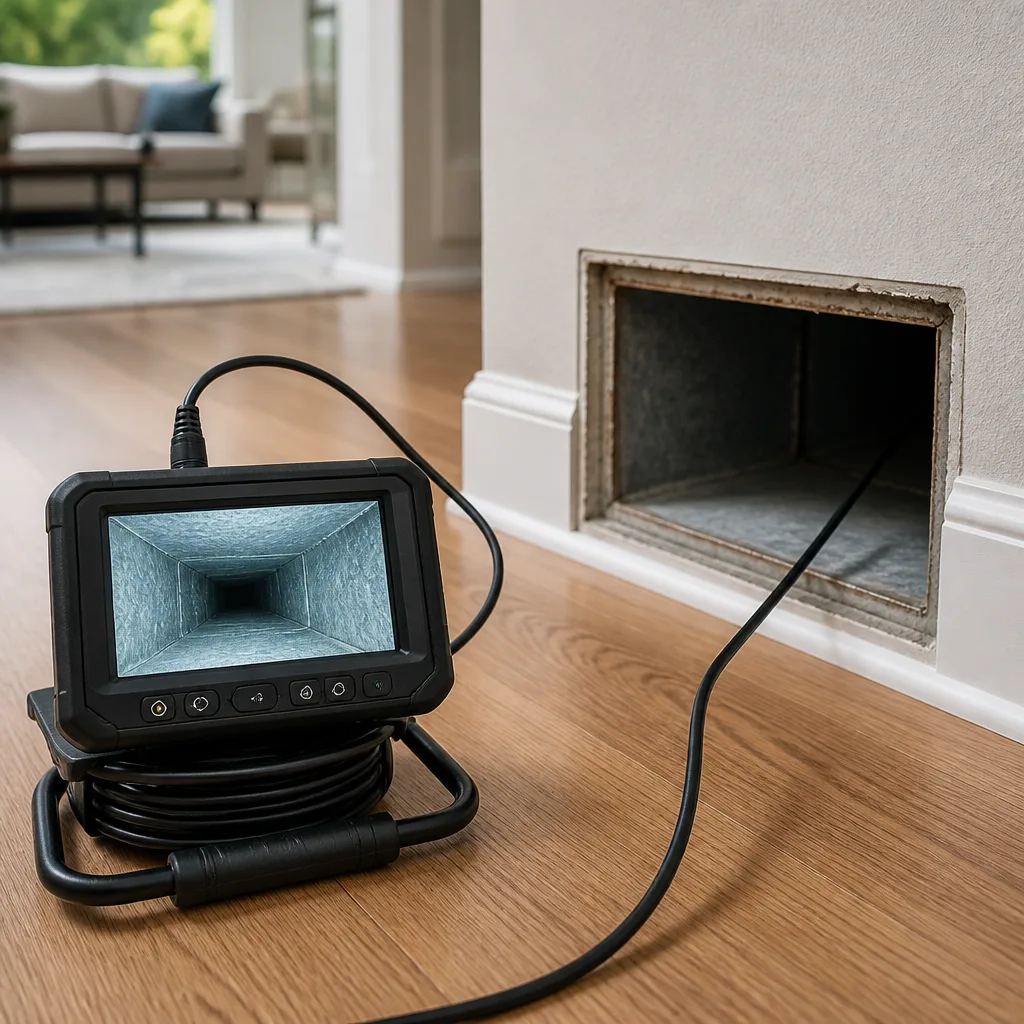 Camera inspection
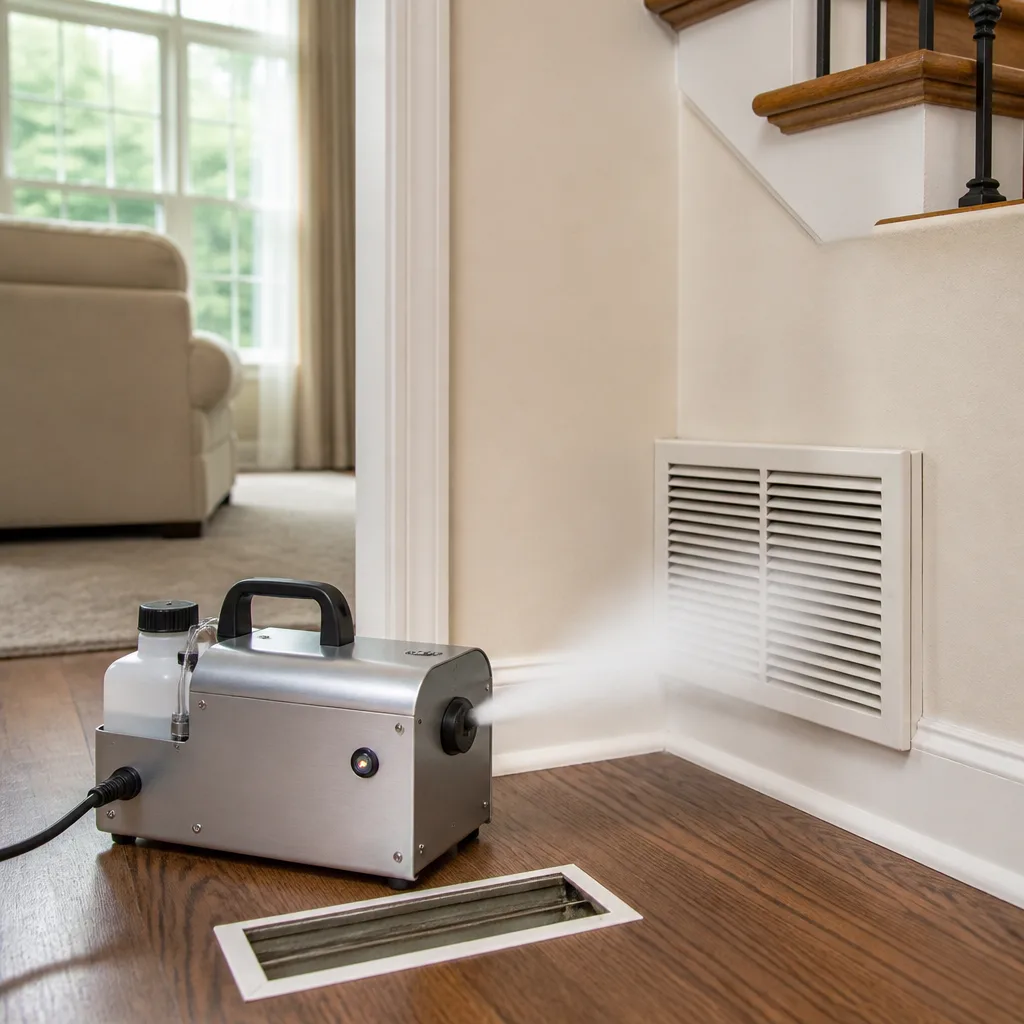 Sanitizing & deodorizing
Whole-system duct and dryer vent check with before-and-after photos - you see exactly what came out of your vents
That "$99 whole-house special" is a bait ad - the real number appears once they are in your hallway, or the "clean" is a shop-vac at the register. We photograph the inside of your ducts before and after instead.
Seasonal Air Duct Cleaning Care for Apple Valley: Year-Round Homeowner’s Guide
Spring in the High Desert doesn’t mean mild. It means sustained wind events that push fine Mojave particulates through any gap in your duct system, often during the same weeks your HVAC transitions from heating to cooling and the system is running near-continuously. Apple Valley sits at roughly 3,000 feet of elevation in a basin that collects airborne dust from the Mojave River corridor, the dry lakebeds to the north, and the open desert stretching toward Barstow. This guide explains what actually happens inside your ductwork during each of Apple Valley’s four distinct seasons, and why a year-round care plan beats a single Air Duct Cleaning in this climate. You’ll learn what to check yourself, when to schedule professional work, and how to avoid the two most expensive mistakes High Desert homeowners make with their HVAC systems.
Styles & brands we work with
- Whole-home duct cleaning
- Dryer vent cleaning
- Camera inspection
- Sanitizing & deodorizing
Quick Answer
Seasonal air duct cleaning care in Apple Valley means scheduling professional cleaning in early fall (October), inspecting the return side after winter’s gas-furnace season, changing filters monthly during spring wind events and summer peak cooling, and treating each season as a distinct contamination scenario rather than one generic problem. A year-round plan combines owner-performed filter changes and vent inspections with professional-grade mechanical agitation and HEPA extraction at least once per year, timed before heating season loads the system. The goal is maintaining documented airflow and removing debris before it becomes a measurable efficiency loss or an indoor air quality problem; see our Air Duct Cleaning Emergency Preparedness Guide for Apple Valley Homes for critical warning signs.
Table of Contents
- Why Apple Valley’s Climate Demands Seasonal Duct Care
- Winter: Return-Side Inspection and Gas Furnace Byproducts
- Spring: Wind Season as a Contamination Event
- Summer: Peak Cooling Loads and Obstructed Duct Consequences
- Fall: The Optimal Professional Cleaning Window
- Owner-Performed Interim Maintenance Between Cleanings
- What Professional-Grade Duct Cleaning Actually Involves
- Common Mistakes to Avoid
- When to Call a Professional
- Frequently Asked Questions
- The Bottom Line
Why Apple Valley’s Climate Demands Seasonal Duct Care
Apple Valley’s climate doesn’t just create dust. It creates four seasonally distinct contamination scenarios, and a year-round duct care plan has to address each one on its own terms rather than treating “annual cleaning” as a single undifferentiated event. Most national guides write about duct cleaning as if every home sits in a humid, pollen-heavy Eastern suburb. Apple Valley is a high-desert environment with single-digit humidity, temperature swings of 30 to 40 degrees in a single day, and a wind regime that redistributes fine particulate matter on a schedule all its own.
Here’s what the four seasons actually mean inside your ducts:
- Winter (December-February): Overnight lows drop into the 30s. Gas furnaces run for hours. Combustion byproducts and reduced outdoor air exchange concentrate in the return-side ductwork. Static electricity from dry air makes dust cling to duct walls rather than settling on floors where you can see it.
- Spring (March-May): Santa Ana and Mojave wind events push fine particulates through weather stripping, attic vents, and any gap in the return plenum. Filters load up in weeks, not months. The HVAC transitions from heating to cooling, often cycling between both in a single week.
- Summer (June-September): Temperatures regularly exceed 100°F. The AC runs near-continuously from June through August. Any obstruction in the duct system compounds the efficiency loss, forcing the compressor to work harder and longer. Dust that settled during spring gets baked onto duct surfaces by hot, dry airflow.
- Fall (October-November): A brief window of moderate temperatures when the system runs least. This is the optimal time for professional cleaning because the ducts are accessible and the system isn’t under load. Cleaning in October means the furnace enters heating season with clean airflow paths.
In our experience serving Apple Valley homes, the homeowners who follow a seasonal schedule report fewer surprise HVAC failures and measurably better airflow than those who clean on a random schedule or not at all. The reason isn’t complicated: each season deposits a different type of debris, and the next season’s operation cures that debris into something harder to remove if left alone. This guide is built around that observation. For a broader look at professional duct services in the area, see our Air Duct Cleaning in Apple Valley page.
Winter: Return-Side Inspection and Gas Furnace Byproducts
Most seasonal guides ignore winter duct care entirely, assuming that a closed house means clean ducts. That assumption is wrong for Apple Valley. Here’s what actually happens: when outdoor temperatures drop and the furnace runs for hours each night, the return side of your duct system continuously pulls indoor air back toward the blower. That indoor air contains residue from natural gas combustion, cooking byproducts, pet dander, and the fine dust that infiltrated during fall. Because High Desert homes are sealed tighter in winter to retain heat, outdoor air exchange drops, and whatever is in the air stays in the air.
The return side matters in winter because it’s where the system ingests the home’s air. A dirty return plenum, return duct, or filter box means the furnace is pulling air through a layer of accumulated debris before it ever reaches the heat exchanger. That debris can include carbon residue from gas burners, which, while not a health emergency in normal concentrations, does indicate that combustion byproducts are cycling back through the living space rather than venting cleanly.
What to check during Apple Valley’s cold months:
- Inspect the return grille visually. In January, take off the return grille (it usually has two tabs or screws) and look inside with a flashlight. Gray dust is normal. Black or greasy residue is not, and suggests combustion particulate or soot entering the return path.
- Check the filter for gray-black discoloration. A filter that turns dark gray within three weeks during winter indicates fine particulate loading from indoor sources, not outdoor dust.
- Listen for whistling at the return. If the return grille whistles when the furnace runs, the filter may be undersized or fully loaded, forcing the blower to work against excessive resistance.
- Sniff near the return during startup. You’re checking for a dusty or faintly burnt smell that lingers more than a minute. This indicates debris on the heat exchanger or nearby duct surfaces.
If the return side shows dark residue, schedule a professional inspection before heating season ends. The return side of a duct system is accessible to a trained technician with the right inspection tools. We’ve found disconnected return ducts in Apple Valley homes where the homeowner had been heating the attic along with the living room for an entire winter, and the only symptom was a higher gas bill and a dusty house. For homes where return-side damage or disconnection is found, our Air Duct Repair in Apple Valley service addresses it directly, including reconnecting separated duct runs and sealing return plenum leaks.
Spring: Wind Season as a Contamination Event
Apple Valley’s spring wind season is a contamination event, not a weather pattern. Between March and May, sustained winds from the Mojave corridor push particulates through every available opening in a home’s envelope: ridge vents, soffit vents, door sweeps, window seals, and any gap where the duct system penetrates the attic or crawlspace. The dust isn’t just surface soil. It includes fine silica particles from the Mojave River’s dry bed, playa dust from the dry lakebeds near Lucerne Valley, and whatever the wind picks up crossing the high desert floor.
What gets past the filter? Fiberglass and polyester filters rated at MERV 8 to MERV 11 capture larger dust particles, but the finest particulates in wind-borne Mojave dust pass through standard residential filters and enter the supply side of the duct system. Once inside, those particles don’t just sit there. The cooling coil’s condensation during the AC shoulder season creates just enough moisture to make the first layer of dust stick to the supply plenum and duct walls. Subsequent wind events deposit more dust on that tacky base layer, and by late spring, the supply side carries a measurable layer of fine High Desert particulate.
The practical symptoms during spring in Apple Valley:
- Visible dust on supply registers within days of wiping them down
- A filter that loads up in two to three weeks instead of two to three months
- Fine dust accumulating on horizontal surfaces even with windows closed
- Reduced airflow at the farthest supply registers from the air handler
Interim response during wind months: change the filter monthly from March through May, vacuum supply registers weekly, and after a major blow event (sustained winds over 25 mph for more than a day), visually inspect the return grille and supply registers for new dust accumulation. You’re not going to clean the inside of the duct system yourself, and you shouldn’t try. Spring wind dust in the duct system is exactly what professional mechanical agitation and HEPA extraction is built to remove. The question is whether you schedule that professional cleaning in spring or wait until fall. We recommend fall, which the section below on the optimal cleaning window explains in detail.
For homeowners who want a deeper understanding of what professional duct cleaning accomplishes in this environment, our Duct Cleaning Apple Valley home page covers the full service scope.
Summer: Peak Cooling Loads and Obstructed Duct Consequences
Summer in Apple Valley tests a duct system harder than any other season. From June through September, daytime highs sit above 100°F, and the cooling system runs for 10 to 14 hours daily. That’s not hyperbole. Southern California Edison’s usage data for High Desert ratepayers consistently shows peak cooling demand from June through August, with AC compressors cycling continuously during afternoon hours.
Here’s the consequence of partially obstructed ducts during peak cooling: the blower moves air against increased static pressure. The evaporator coil gets less airflow across its surface. Less airflow means less heat exchange, which means the refrigerant leaves the coil colder than it should. The compressor then runs longer to satisfy the thermostat setting. A system that should cycle off at 3:00 PM keeps running until 5:00 PM to hit the same setpoint.
That extra runtime translates directly into higher electricity costs and accelerated wear on the compressor, which is the single most expensive component in the HVAC system to replace. A layer of wind-season dust plus winter combustion residue in the supply side reduces airflow just enough that some Apple Valley homes see a measurable increase in cooling hours from late June onward. The homeowner experiences it as a house that “just doesn’t cool down,” or a thermostat that’s set to 78 but the back bedrooms sit at 82.
What summer does to duct contamination:
- Baking effect: Hot, dry airflow through the supply side cures the spring dust layer into a hard, adhered coating that resists casual airflow. It doesn’t blow off. It stays until mechanically removed.
- Condensate interaction: The cooling coil produces condensation whenever the AC runs. That moisture interacts with the first layers of dust in the supply plenum, contributing to a crust that forms on the coil’s downstream side.
- Reduced air exchange: Apple Valley homes stay sealed tight all summer to keep cool air in. Whatever is in the duct system stays there, circulating repeatedly through the living space.
If you’re experiencing reduced cooling performance during summer months, short of a full professional cleaning, there are two interim steps that help: change the filter more frequently (every 4 to 6 weeks under peak load), and make sure no supply registers are blocked by furniture or closed off in an attempt to redirect airflow. Closing registers raises static pressure upstream and makes the airflow problem worse, not better.
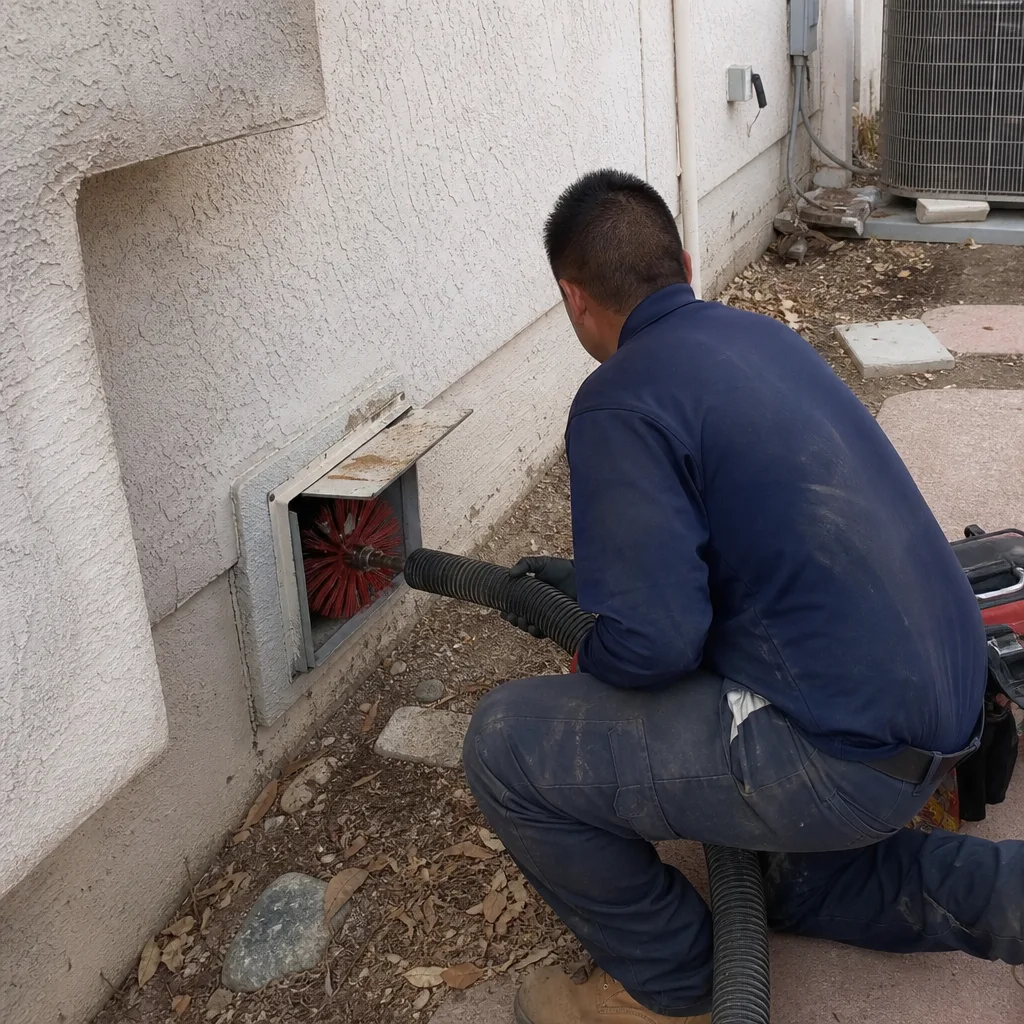
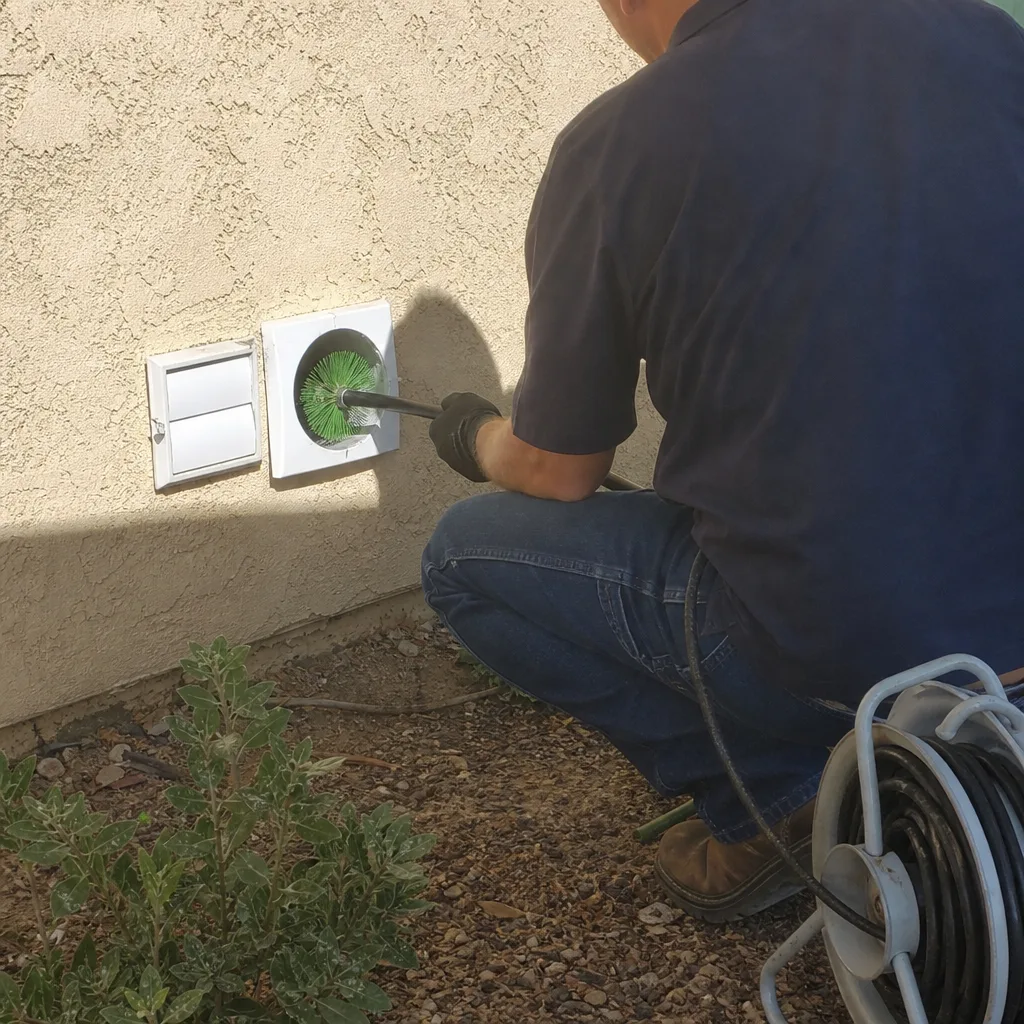
A note on the dryer vent side: summer is also when dryer vents that accumulated winter lint and spring dust reach their highest fire-risk state. A dryer vent clogged with lint restricts exhaust flow, and the dryer’s heating element runs hotter to compensate under the same ambient heat load. If your dryer vent hasn’t been cleaned in over a year, summer is not the season to defer it. See our Dryer Vent Cleaning in Apple Valley page for specifics on how this service works and why it matters in High Desert conditions.
Fall: The Optimal Professional Cleaning Window
October is the right month for professional duct cleaning in Apple Valley. Not December. Not “whenever the schedule opens up.” October specifically, for three practical reasons that have nothing to do with marketing.
First, October is the shoulder month when the HVAC system runs least. The overnight lows haven’t dropped consistently into the 30s yet, so the furnace isn’t cycling daily. The daytime highs have dropped below 100°F, so the AC isn’t under peak load. The system is idle or near-idle, which means a professional cleaning crew can power the air handler off, access the supply and return sides without time pressure, and complete the mechanical agitation and extraction without the system fighting the process.
Second, October cleaning means the furnace enters heating season with clean airflow paths. Whatever the spring wind season deposited, whatever summer baking cured onto the duct walls, and whatever combustion residue the previous winter left behind gets removed before the furnace fires up for its first full heating season. That’s the difference between running a gas furnace through a clean system and running it through a system that’s been accumulating debris for 12 to 18 months straight.
Third, scheduling in October avoids the December/January rush. HVAC contractors across the High Desert see a surge in furnace service calls in late November when the first real cold snap hits. Duct cleaning crews that operate on a scheduled basis fill up in advance. Booking in October means you’re not competing with emergency furnace repairs for the same calendar windows.
What a fall professional cleaning should include, at minimum:
- Mechanical agitation of all accessible supply and return duct interiors using rotary contact equipment, not a shop vac and brush. This dislodges the adhered dust layer that formed during summer.
- HEPA-filtered negative-air extraction that captures dislodged particulates and pulls them out of the home rather than redistributing them into the living space.
- Inspection of the supply plenum, return plenum, and filter box for gaps, disconnections, or damage that cleaning alone won’t fix.
- Post-cleaning verification including before-and-after photo documentation of the duct interiors. If a company can’t show you what the ducts looked like before and after, you can’t verify the work was actually done.
If the inspection during cleaning turns up disconnected runs, torn flex duct, or leaking plenums, that’s a repair issue, not a cleaning issue. Our Air Duct Repair in Apple Valley service handles those findings directly, which means you don’t have to find a separate contractor to finish what the cleaning uncovered.
Owner-Performed Interim Maintenance Between Cleanings
Professional cleaning once a year handles the accumulated contamination that owner maintenance can’t reach. Owner-performed maintenance between cleanings handles the things you can reach: filters, registers, and visual inspections. The two aren’t redundant if they’re staggered correctly.
Here’s a season-by-season owner maintenance schedule that complements professional cleaning rather than replacing it:
Winter (December-February)
- Inspect the return grille and filter box once in January
- Change the filter every 6 to 8 weeks under normal furnace load
- Vacuum visible supply registers once monthly
- Note any burning smell, whistling, or dark residue for the next professional visit
Spring (March-May)
- Change the filter monthly during sustained wind events
- Vacuum supply and return registers weekly
- Check door sweeps and window seals for dust infiltration paths
- If the HVAC cycles between heat and cool in the same week (common in March), expect faster filter loading
Summer (June-September)
- Change the filter every 4 to 6 weeks under peak cooling load
- Keep all supply registers open and unobstructed
- Check the condensate drain line for visible blockage if you can access it safely
- Monitor cooling runtime; extended runtimes with unchanged thermostat settings suggest airflow restriction
Fall (October-November)
- Schedule professional cleaning before heating season
- Replace the filter with a fresh one immediately after professional cleaning
- Vacuum all registers before the professional visit to minimize surface dust that could re-enter the system during cleaning
- If the professional cleaning uncovers repair needs, get them addressed before the furnace’s first sustained run
This schedule is not complicated, but it is specific. The filter changes matter because clean filters are the first line of defense against whatever each season throws at the duct system. The register vacuuming matters because it removes surface dust before it gets pulled back into the ducts when the system cycles on. And the fall professional visit matters because it’s the only step in this entire schedule that actually cleans the duct interiors, not just the components you can reach.
What Professional-Grade Duct Cleaning Actually Involves
There’s a difference between vacuuming a duct system and cleaning it. A shop vac attached to a register opening can pull loose dust from the first few feet of duct. It cannot reach the adhered layer deeper in the duct runs, and it cannot capture the fine particulates that a HEPA-rated extraction system is designed to handle. In Apple Valley’s dry, dusty environment, that distinction matters more than in most places.
Professional-grade duct cleaning uses a two-step process. The first step is mechanical agitation: a rotary brush system makes physical contact with the interior duct walls and dislodges the adhered dust layer. We use Rotobrush rotary-contact systems for this step, which are purpose-built for duct interiors rather than improvised from consumer cleaning tools. The brush head spins against the duct wall and knocks loose the dust that a vacuum alone would leave behind.
The second step is extraction under negative air. A HEPA-filtered vacuum unit pulls the dislodged particulates out of the duct system while the system is under containment, so the dust doesn’t simply relocate into the living space during the cleaning process. We use Nikro HEPA vacuum equipment and Abatement Technologies negative-air containment protocols, the same class of equipment used in professional remediation work. That’s the difference between cleaning ducts and just moving dust around in them.
For homeowners who want to upgrade filtration at the same time, we supply and install Honeywell and Aprilaire air-quality products. This includes media filter cabinets, electronic air cleaners, and whole-house dehumidification where the home’s layout calls for it. The advantage of doing this during a cleaning visit is practical: the system is already open, the air handler is accessible, and the technician can see exactly what the filtration system needs to handle based on what came out of the ducts during cleaning.
Understand what professional duct cleaning is and isn’t. It’s not a medical intervention. We don’t make health benefit claims that imply duct cleaning cures allergies or respiratory conditions. What it does is mechanically remove documented debris from the duct interiors and improve measured airflow. In Apple Valley’s high-dust environment, that’s a meaningful maintenance step on its own terms.
Common Mistakes to Avoid
- Deferring the fall cleaning until December. By December, the heating season has started, and whatever sat in the ducts all year is now being pushed through the living space by the furnace blower. A December cleaning works, but the system has already been circulating contaminated air for six to eight weeks.
- Trusting a coupon-price cleaning that uses a shop vac and brush. The High Desert’s wind-season dust layer requires mechanical agitation to remove. A shop vac reaches the first few feet of duct and leaves the rest intact. If the quote sounds too low to include rotary brush equipment and HEPA extraction, it probably doesn’t.
- Closing supply registers to redirect airflow. In many Apple Valley homes, the furthest bedrooms run warm in summer, so homeowners close registers in unused rooms to push more air elsewhere. This raises static pressure and can worsen the airflow problem by forcing the blower to work against restricted openings.
- Ignoring the dryer vent because “it’s separate from the HVAC.” It is separate, but it’s subject to the same wind-season dust and winter lint accumulation, and a clogged dryer vent is a fire risk, not a convenience issue. Apple Valley’s dry air makes accumulated lint highly flammable.
- Assuming the ducts are clean because the house is new. During a new build or renovation, construction dust enters the duct system before the registers are installed. Drywall dust, sawdust, and insulation fibers settle in the duct interiors, and the first year of operation circulates that debris throughout the living space.
- Skipping the post-cleaning verification. If the cleaning company can’t produce before-and-after photos of the duct interiors, you can’t confirm the work was done. Request photo documentation of the supply plenum, return plenum, and at least one representative duct run in each direction.
- Treating all four seasons the same. A single annual filter change schedule doesn’t work in Apple Valley. Spring wind season and summer peak cooling load both demand more frequent filter changes than winter or fall. A year-round plan means different actions in different seasons.
When to Call a Professional
Some duct system conditions are beyond owner-level maintenance and need professional equipment to assess and address. Call for professional service if you see visible mold growth on duct interiors or register surfaces (a rare but possible condition in homes with condensation leaks). Call if you hear loose debris rattling inside ducts when the blower starts. Call if a home inspection flagged duct contamination, disconnected runs, or leaking plenums. Call if reduced airflow persists after filter changes and register vacuuming, or if your cooling runtime has increased measurably with the same thermostat settings. And call if your dryer vent hasn’t been cleaned in over a year. Duct Cleaning Apple Valley offers free estimates in Apple Valley. Reach us at (855) 619-4509.
Frequently Asked Questions
Air Duct Cleaning Cost Breakdown: The Apple Valley Homeowner’s Reference for 2026 shows that air duct cleaning in Apple Valley typically costs between $400 and $800 for a full residential system, depending on the number of supply and return runs, overall duct condition, and whether the system includes accessible attic or crawlspace runs. Homes with 15 to 20 duct runs, typical for Apple Valley single-family homes built since the 1990s, generally fall in the $450 to $650 range. Add-on services like dryer vent cleaning or duct repair are priced separately. For an exact quote based on your system, call (855) 619-4509 for a free estimate.
Cheaper quotes generally come from companies using portable vacuum equipment and hand brushes rather than rotary contact agitation and HEPA extraction. A shop-vac cleaning can’t reach the dust layer deeper in the duct runs, and it can’t verify the work was actually done. In Apple Valley’s high-dust environment, the difference between a surface-level vacuum and a professional-grade mechanical agitation plus HEPA extraction is the difference between cleaning the first few feet of duct and cleaning the full system. Ask any company you’re evaluating what agitation equipment they use and what extraction method they run. If they can’t name the equipment, that’s your answer.
Request before-and-after photo documentation of the duct interiors. A professional-grade cleaning crew should be able to show you photos of the supply plenum, return plenum, and representative duct runs before and after the cleaning. You should also notice reduced dust on horizontal surfaces within two to three weeks of the cleaning, assuming the spring wind season isn’t actively loading new dust into the house. If a company cannot provide photographic evidence of the cleaning, treat that as a red flag.
Once per year for most Apple Valley homes, timed to October before heating season begins. The High Desert’s wind season deposits fine particulates in the duct system every spring, and summer’s peak cooling bakes that dust onto the duct walls where it won’t blow off on its own. A home with multiple pets, recent renovation work, or a history of construction dust in the system may benefit from a second cleaning six months after the first, but annual October cleaning addresses the normal seasonal loading for most single-family homes.
No. You can reach the first few feet of duct from each register, but the dust layer extends well beyond arm’s reach. Consumer vacuums lack the HEPA filtration needed to capture the fine particulates that cleaning dislodges, and without negative-air containment, the dislodged dust simply recirculates into the living space. Duct cleaning involves confined-space work with professional extraction equipment operating under negative pressure. The components you can safely maintain yourself are the filters, the registers, and the return grilles. The duct interiors themselves are professional territory.
Yes, but indirectly. Apple Valley’s municipal water has high mineral content, which contributes to scale buildup in humidifier components and any evaporative cooling equipment attached to the system. That scale doesn’t enter the duct system directly unless the humidifier or cooler is malfunctioning and blowing mineral dust. The more direct water-related issue in Apple Valley is the cooling coil’s condensation interacting with dust to form a crust on the coil’s downstream side. Seasonal cleaning addresses this, and the October timing ensures the crust from summer cooling is removed before heating season starts.
The Bottom Line
Apple Valley’s duct systems face four different contamination patterns across the year: winter combustion residue concentrating in the return side, spring wind events loading fine Mojave particulate into the supply side, summer peak cooling curing that dust into an adhered layer, and fall offering the only practical window for professional removal before heating season. The right maintenance schedule changes filters at different intervals depending on the season, inspects the return side during winter, and schedules a professional-grade cleaning with rotary agitation and HEPA extraction every October. Skip the seasons, and you’re running your HVAC through a year’s worth of layered High Desert dust. Handle the schedule, and the system runs cleaner, moves air more effectively, and costs less to operate over time. Call (855) 619-4509 for a free estimate, or reach out through our Duct Cleaning Apple Valley home page to schedule a fall cleaning or discuss repair findings from a previous inspection.
Written by the team at Duct Cleaning Apple Valley, serving Apple Valley since 2013. Explore more guides & resources.
See the difference
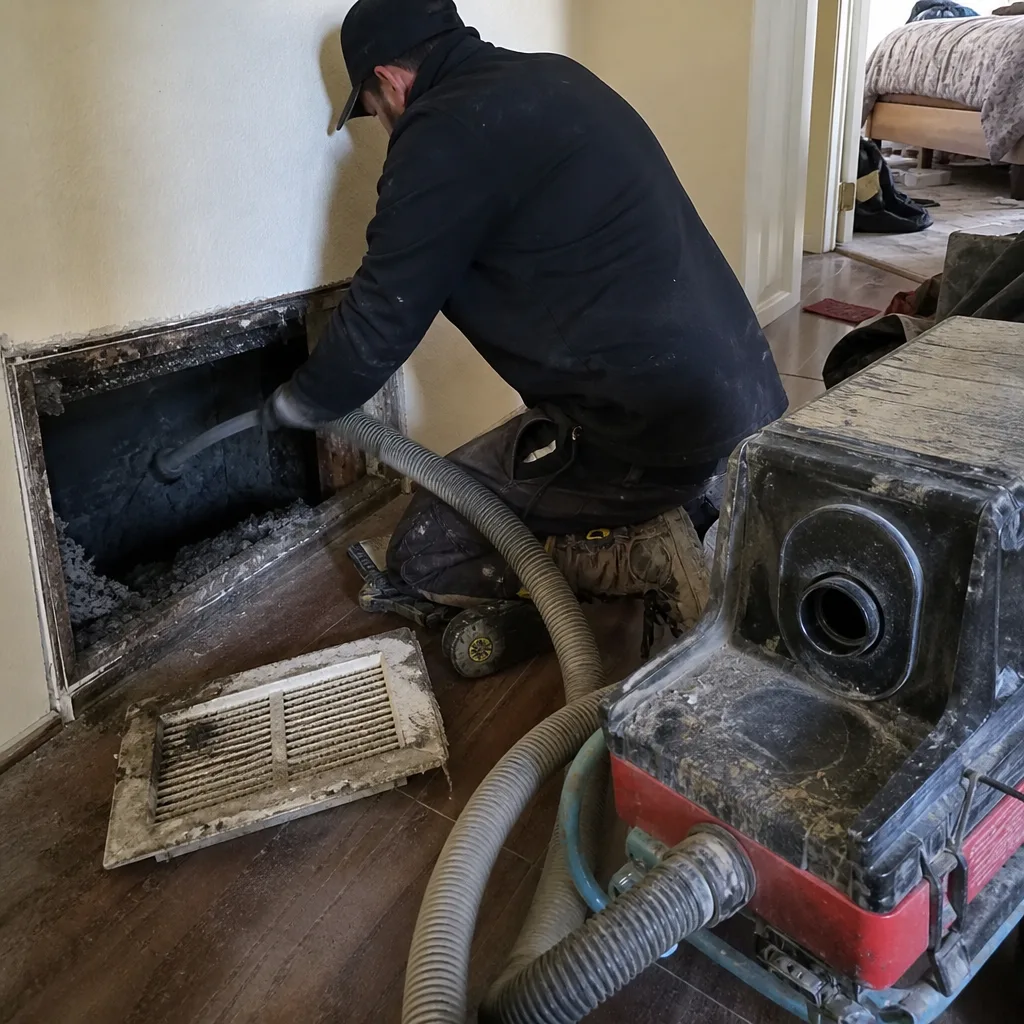 Before
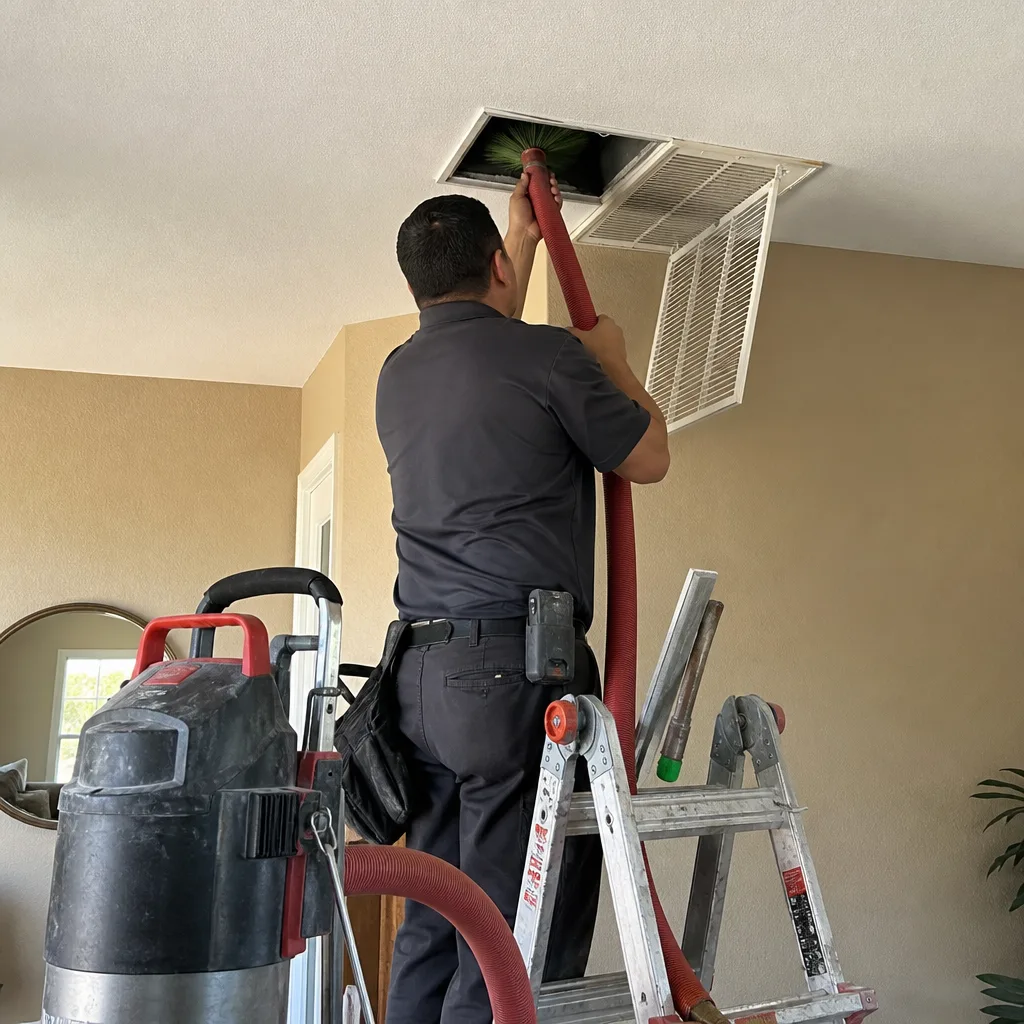 After
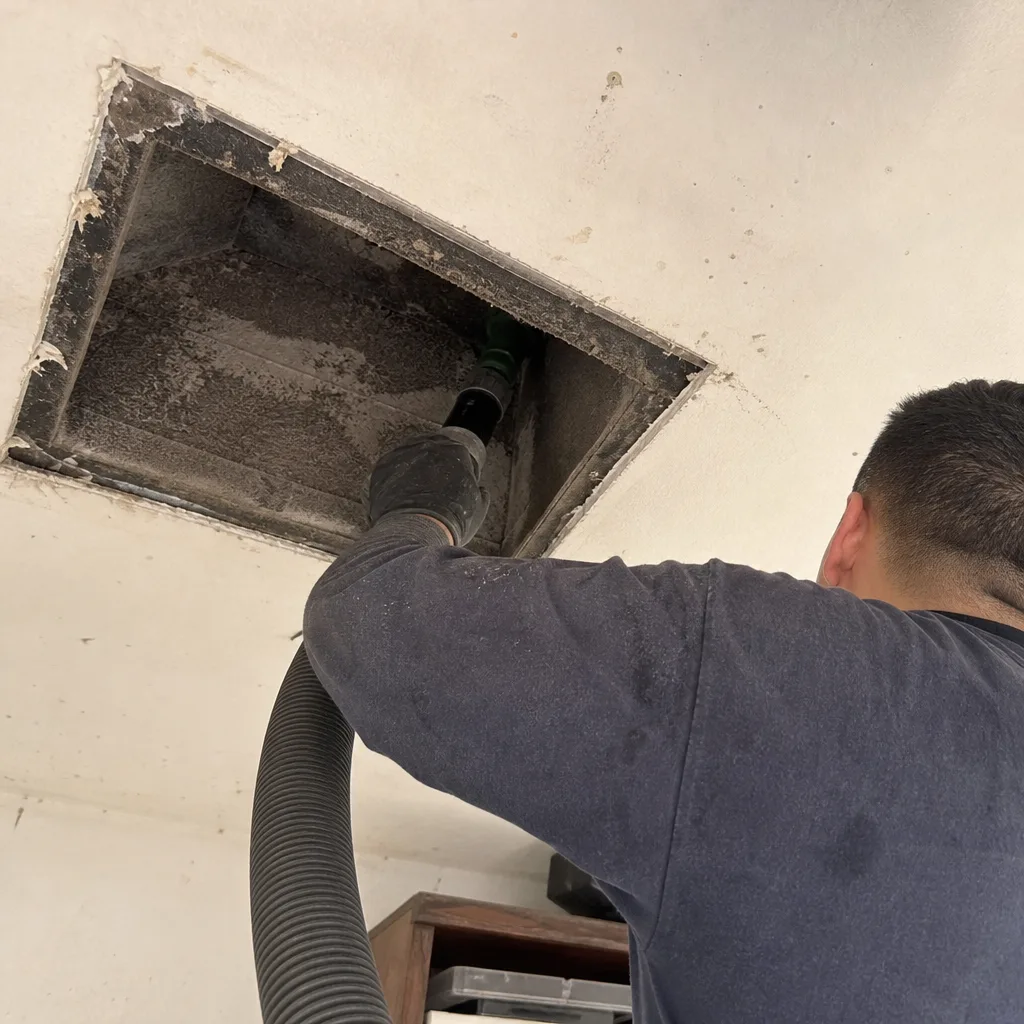 Before
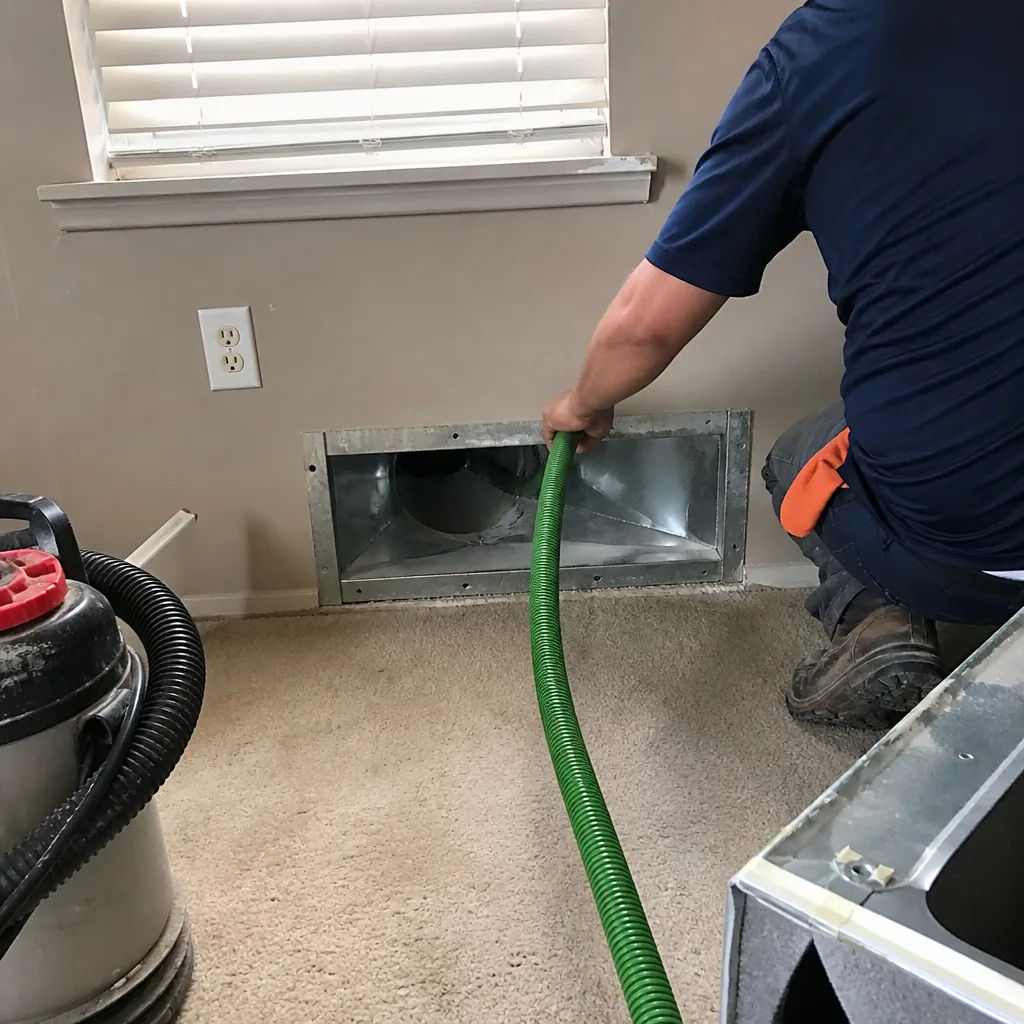 After
 Before
 After